0%

Choosing Pallet Storage Racks in 2026 is not just a matter of comparing prices or counting beams. The right system must fit your pallets, forklifts, building, and daily workflow. A rack that looks efficient on a drawing can create delays when aisles feel tight or loads vary. Small details matter.

Warehouse systems specialist Jordan Lee puts it this way: “Choose the rack around the load and the work—not the other way around.” Treat that as a useful design principle, not a substitute for a site assessment. Start with pallet dimensions, loaded weight, and the number of storage positions you actually need. Then check clear heights, column locations, floor conditions, sprinkler clearance, and forklift turning space. Bring real measurements. Estimates can be wrong.

This guide explains how to compare selective, drive-in, and other rack layouts for different inventory patterns. It also covers capacity, expansion, inspections, and the practical trade-offs between storage density and access. A high-density layout may save floor space, yet slow picking if products move frequently. That is easy to overlook. Your best choice depends on how inventory flows today—and how it may change next year. Even a careful plan can miss something; review the layout with qualified rack and warehouse professionals before ordering. A second look helps.
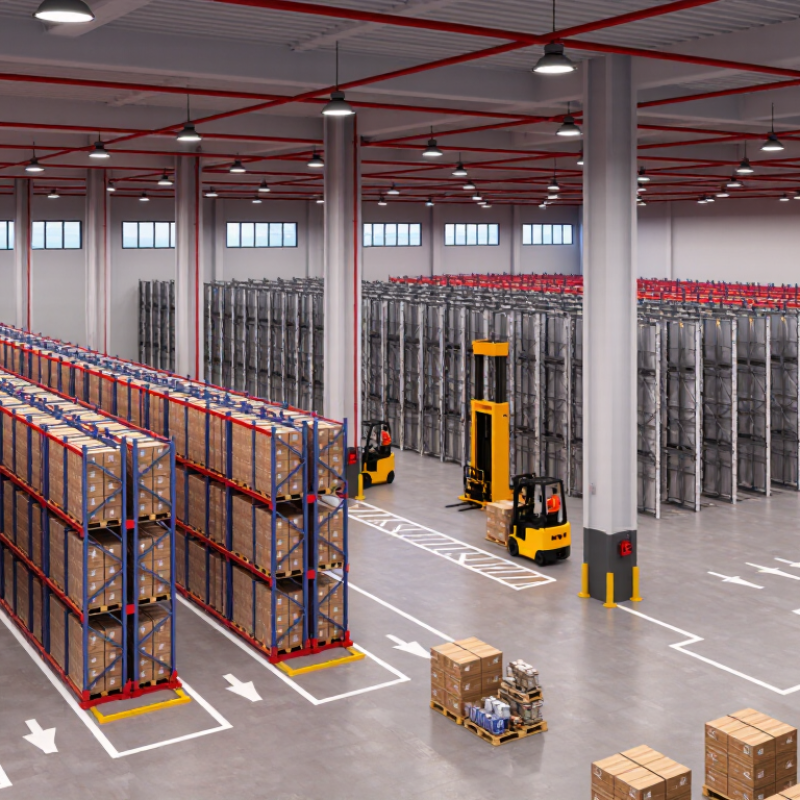
How to Choose Pallet Storage Racks in 2026

Assess Inventory, Pallet Types, and Material-Handling Needs

Choosing pallet storage racks starts with an honest inventory review. Record each SKU’s pallet dimensions, loaded weight, and weekly movement. Include the awkward items, not just the standard loads. A pallet that overhangs a beam or carries an uneven load can change the rack design. Measure twice. Check seasonal peaks and planned stock growth, too; otherwise, a system sized for today may feel cramped within a year. These estimates are imperfect, so note where demand data is uncertain.

Pallet construction matters. Wood pallets may vary in condition, while plastic pallets can have different support requirements. Confirm that the rack configuration suits the pallet’s base and load, rather than assuming every pallet sits safely on beams. Then match the layout to material-handling equipment. Measure forklift width, turning radius, lift height, and aisle needs in the actual facility. A narrow aisle can save floor space but may slow retrieval or require different equipment. Walk the routes with operators. They often spot bottlenecks that drawings miss. Before installation, verify floor conditions and rated capacities with a qualified rack professional. A little humility helps here: a neat plan on paper is not proof of a safe, workable layout.

Measure Warehouse Space, Aisles, and Equipment Clearances

How to Choose Pallet Storage Racks in 2026: Measure Warehouse Space, Aisles, and Equipment Clearances

Measure usable floor space, not just the building’s listed area. Mark columns, dock doors, exit routes, and fixed equipment on a scaled plan. Then record pallet dimensions, including any load overhang. A few inches can change whether a forklift can turn safely.

Aisle width depends on the truck, load, rack depth, and turning path. Check the truck manufacturer’s right-angle stacking and turning specifications, then test the proposed aisle with your widest typical load. Measure twice. OSHA requires adequate clearance for safe aisle use but does not set one universal aisle width (29 CFR 1910.176(a)). The Bureau of Labor Statistics reported 4.4 recordable injury and illness cases per 100 full-time workers in transportation and warehousing in 2023, versus 2.4 across private industry. That is a useful reminder to treat maneuvering space as part of the layout, not leftover space.

Check vertical clearances around lights, sprinkler heads, beams, and doors before setting rack heights. Confirm required sprinkler clearances with a qualified fire-protection professional; building conditions vary. Mark the planned rack footprint and aisle edges with tape, then walk the route with the actual handling equipment. I still find turning space easy to underestimate, especially near end-of-aisle columns. A drawing can look generous. The floor may disagree.

Compare Rack Configurations, Capacity, and Selectivity

How to Choose Pallet Storage Racks in 2026
Compare Rack Configurations, Capacity, and Selectivity

Choosing pallet storage racks starts with comparing access, density, and load—not just price. Selective racks provide direct access to every pallet, making them useful for varied products or frequent picking. They also need wider aisles. Double-deep systems store more pallets in less space, but require compatible handling equipment and limit access to rear pallets. Drive-in and push-back layouts can suit larger runs of similar goods. Product rotation matters here. A dense layout may slow replenishment, and that trade-off is easy to underestimate.

Capacity must match real loads. Record pallet weight, dimensions, overhang, and how each load is arranged. Then check beam, upright-frame, and bay ratings for the proposed configuration. Moving beam levels can change frame capacity. Verify floor conditions, anchoring, sprinkler clearance, and forklift turning space with qualified professionals. A published capacity is not a blanket rating. The neatest drawing may fail on a busy Tuesday.

Tips: Measure your largest pallet, not the average one. Include space for damaged-pallet removal and routine inspection. Recheck ratings after any layout change. It is an easy step to miss.

How to Choose Pallet Storage Racks in 2026 - Compare Rack Configurations, Capacity, and Selectivity

Rack Configuration Pallet Access and Selectivity Typical Lane Depth Lane Capacity Relative Storage Density Capacity and Operating Considerations Best Suited For
Selective pallet rack Direct access to every pallet; typically 100% pallet selectivity. 1 pallet deep 1 pallet position per level per channel. Low to moderate; aisle space is needed between rack rows. Beam and frame ratings must match the pallet load, number of levels, rack height, and layout. Aisle width depends on the handling equipment. Many SKUs, frequent picking, and operations that need direct access to individual pallets.
Double-deep rack Two pallets deep; the rear pallet is reached using a deep-reach truck. Approx. 50% of pallet positions are directly accessible from the aisle in a fully occupied two-deep arrangement. 2 pallets deep 2 pallet positions per level per channel. Moderate; fewer aisles may be needed than with selective rack. Requires compatible handling equipment and consistent pallet dimensions. Rear positions are less accessible and may require planned loading and picking sequences. Fewer SKUs with multiple pallets per SKU, where some reduction in selectivity is acceptable.
Drive-in rack Access is by lane; pallets are generally stored and retrieved using a LIFO sequence. Selectivity is lower than in aisle-based selective rack. Commonly 3–10+ pallets deep, depending on design. Lane depth × storage levels; for example, a 5-deep lane with 4 levels provides 20 positions. High; storage lanes reduce the number of aisles. Forklifts enter the rack structure. Pallets must be compatible with the rails, and impact protection and operating clearances should be considered. Large quantities of the same SKU and relatively low rotation or LIFO-compatible stock.
Push-back rack Multiple pallets are stored in a lane; usually operates LIFO, with access to the front pallet in each lane. Commonly 2–6 pallets deep. Lane depth × storage levels; a 4-deep lane with 4 levels provides 16 positions. High; more pallet positions can fit in less aisle space than selective rack. Lane depth, pallet weight, pallet condition, and load distribution affect system design and operation. Each lane is typically assigned to one SKU. Multiple pallets per SKU where higher density is preferred and LIFO rotation is suitable.
Pallet flow rack Gravity rollers or wheels move pallets through the lane; commonly designed for FIFO, with loading and picking at opposite ends. Often several pallets deep; final depth is project-specific. Lane depth × storage levels; a 10-deep lane with 4 levels provides 40 positions. High; separate loading and picking aisles support dense storage. Requires suitable pallets and properly engineered flow components. Braking, lane controls, and maintenance help manage pallet movement. High-throughput operations, date-sensitive inventory, and products that benefit from FIFO rotation.
Automated pallet shuttle rack A powered shuttle moves pallets within deep lanes. LIFO or FIFO operation is possible depending on the system layout and operating method. Multiple pallets deep; lane depth is set by the site design and operating requirements. Lane depth × storage levels; a 12-deep lane with 5 levels provides 60 positions. Very high; deep lanes can reduce aisle requirements. Capacity depends on rack engineering, shuttle and pallet specifications, operating clearances, and the number of storage levels. Charging, controls, and service access should be included in planning. High-volume, high-density storage with many pallets per SKU and a suitable automation budget.

Capacity planning note: Lane capacity figures are illustrative pallet-position counts, calculated as lane depth multiplied by storage levels; they do not represent a structural load rating. Have a qualified rack designer verify the rated capacity for the actual pallet weight and dimensions, beam layout, frame height, floor conditions, seismic requirements, and local codes. Confirm forklift clearances, fire-protection requirements, and SKU rotation before selecting a configuration.

Check Safety Standards, Inspections, and Future Adaptability

How to Choose Pallet Storage Racks in 2026

Choosing pallet storage racks in 2026 starts with the loads, not the catalog. Confirm the heaviest pallet, load distribution, lift-truck clearances, and floor condition. Compare rack capacities with applicable safety requirements and current engineering documents. Capacity ratings assume correct assembly and balanced loading. Keep load notices visible in every aisle. If pallet sizes or site conditions differ from the design, ask a qualified rack engineer to review the layout before installation.

Tips: Walk each aisle and inspect uprights, beams, locking pins, and footplates. Look for fresh bends, cracks, missing pins, or impact marks. Small defects matter. Record findings with dates and photos. Arrange prompt assessment after a truck strike, and follow a documented inspection schedule suited to the warehouse’s use.

Plan for change, too. Measure likely future pallet sizes and consider whether bays or beam levels can be adjusted safely. Leave practical room for new handling equipment and changing aisle needs. Do not modify a rack or exceed its posted capacity without engineering review. A tidy spreadsheet can still miss a bent footplate behind a wrapped load; inspections need clear sightlines and staff who know what damage looks like. No checklist catches everything, so make it easy to report concerns between formal checks.

Evaluate Total Cost, Installation, and Supplier Support

When choosing pallet storage racks in 2026, compare the full installed cost, not just the price per bay. Include freight, floor preparation, anchors, permits, installation labor, inspections, and future changes to beam levels. MHI and Deloitte’s 2024 Annual Industry Report found that 55% of surveyed supply-chain leaders expected to increase technology and innovation investment over the next two years. That is not a rack-cost benchmark, but it signals why compatibility with scanners, forklifts, and warehouse systems deserves attention. Small costs add up.

Ask suppliers for a site-specific layout, load calculations, and a written installation schedule. Check that quoted capacities match your pallet weights and actual beam spacing; a neat drawing can hide awkward aisle turns. Confirm who handles unloading, anchoring, and post-installation checks. Supplier support matters after handover: request lead times for replacement components, clear inspection guidance, and a named contact for layout changes. A low quote may exclude these services. Read the exclusions carefully.

Before signing, walk the proposed layout with the people who move pallets daily. Measure clearances at dock doors and around columns, then test the busiest routes. It can feel overly cautious. Still, an hour with a tape measure may prevent costly rework. Compare at least two detailed proposals, and keep assumptions visible; even experienced teams can underestimate downtime during installation.

Example 5-Year Cost Profile for a 100-Position Pallet Rack Project

Compare purchase, delivery, installation, ongoing support, and expected disruption when evaluating rack options.

Illustrative planning example, not a market benchmark or supplier quote. Assumptions: 100 pallet positions, a five-year evaluation period, and estimated costs in U.S. dollars. Replace these inputs with comparable written quotes and site-specific estimates.

FAQS

What should I measure before planning pallet racks?

Measure usable floor space, not just the building’s listed area. Mark columns, dock doors, exits, and fixed equipment. Include the largest pallet’s overhang. A few inches matter.

How wide should warehouse aisles be?

Aisle width depends on the truck, rack depth, load, and turning path. Check equipment specifications and test the route with your widest typical load. Measure twice.

What clearances should I check above the racks?

Check around lights, beams, doors, and sprinkler heads before setting rack heights. Confirm required sprinkler clearances with a qualified professional. Conditions vary.

Which rack layout works best for different products?

Selective racks offer direct access to every pallet, but need wider aisles. Double-deep, drive-in, and push-back layouts can increase density. Access may take longer.

How do I check rack capacity?

Record each load’s weight, dimensions, and overhang. Match them to the ratings for beams, frames, and the proposed bay setup. Moving beam levels can change capacity. Recheck after changes.

What costs should a rack quote include?

Compare freight, floor preparation, anchors, permits, installation, inspections, and future adjustments. Ask for exclusions in writing. Small costs add up.

What should I ask a supplier before installation?

Request a site-specific layout, load calculations, and an installation schedule. Confirm who handles unloading, anchoring, and post-installation checks. Ask about replacement parts and inspection guidance.

How can I spot layout problems before installation?

Mark rack footprints and aisle edges with tape, then walk busy routes using actual handling equipment. Check turns near columns and dock doors. I still underestimate tight corners sometimes. The floor may disagree.

Conclusion

Choosing Pallet Storage Racks in 2026 starts with understanding what your warehouse needs to store and how it operates. Review inventory volume, pallet dimensions, product weight, and how frequently items are accessed. Then measure the available floor space, ceiling height, aisle widths, and clearances required by forklifts or other handling equipment. These details help narrow down rack configurations that fit the building while supporting safe, efficient movement.

Compare options for load capacity, storage density, and selectivity, considering both current operations and potential changes in inventory. Check applicable safety requirements, plan regular inspections, and look for designs that can be adjusted as needs evolve. Finally, evaluate the full cost, including delivery, installation, and ongoing support—not just the initial purchase price. A well-planned choice can make better use of space, simplify daily handling, and provide a practical foundation for future warehouse growth.

Averic

Averic

Averic is a professional marketing specialist with a strong understanding of the company’s products, their practical applications, and the needs of the customers they serve. Through ongoing collaboration with product and service teams, Averic turns detailed information into clear, useful guidance......