2-Deep System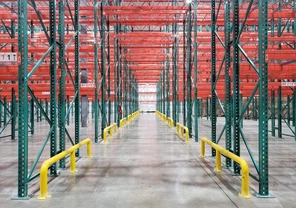
2-Deep Push Back Racking
Utilizes 1 nested cart per lane. Ideal for high-turnover SKUs requiring fast LIFO picking with standard counterbalanced or reach trucks.
Send an Inquiry
Maximize warehouse floor utilization by up to 75% while maintaining rapid pallet accessibility with dynamic nested cart technology by CanalRack Industrial Storage S.A.
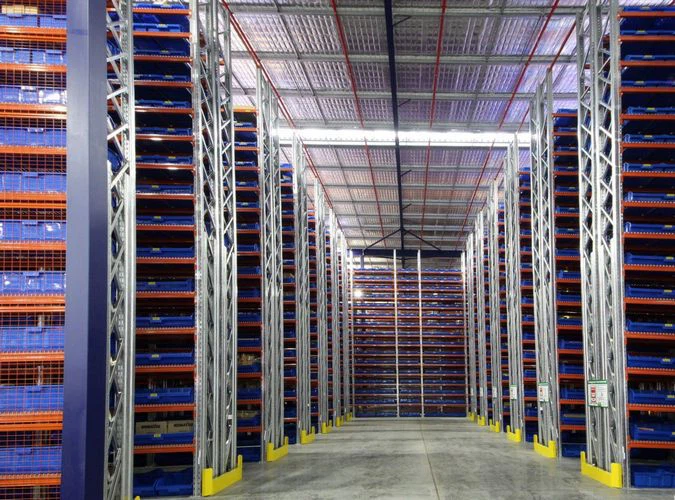
A Push Back Racking System is an engineered high-density pallet storage solution that utilizes inclined structural steel rails and a sequence of telescoping, nested wheeled carts. Operating on a Last-In, First-Out (LIFO) inventory control principle, this dynamic system allows warehouse operators to store pallets from 2 to 6 deep per lane while maintaining independent access to individual storage bays across multiple vertical levels.
Unlike traditional Drive-In racking systems where lift trucks must enter the structural matrix, a Push Back Racking System keeps forklifts strictly in the main aisle. The forklift operator places the first pallet onto the top nested cart. When the second pallet is inserted, it gently pushes the first cart back along the sloped track, exposing the second cart. Upon unloading, gravity seamlessly brings the rear pallets forward to the aisle face, delivering superior picking speed, dramatically reducing frame damage risk, and maximizing cubic volumetric efficiency.
CanalRack Industrial Storage S.A. custom-engineers each Push Back Racking System based on unit load weight, pallet style, clear height, and environmental operational conditions.
Utilizes 1 nested cart per lane. Ideal for high-turnover SKUs requiring fast LIFO picking with standard counterbalanced or reach trucks.
Send an Inquiry
Engineered with 2 telescoping carts. Delivers an optimal balance between storage density and SKU flexibility for medium-sized distribution hubs.
Send an Inquiry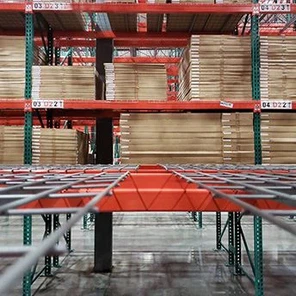
Uses 3 nested carts per lane. Maximizes floor density in high-cost warehouse footprints, food processing facilities, and cold storage units.
Send an Inquiry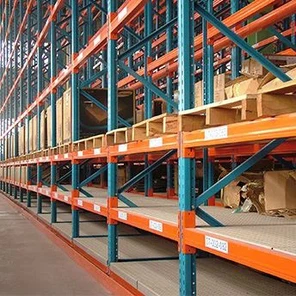
Custom structural C-channel cart engineering designed for extreme pallet volume re-export hubs, supporting up to 1,500 kg per pallet position.
Send an Inquiry| Technical Parameter | 2-Deep Push Back | 3-4 Deep Push Back | 5-6 Deep Push Back |
|---|---|---|---|
| Pallet Capacity per Lane | 2 Pallets Deep | 3 to 4 Pallets Deep | 5 to 6 Pallets Deep |
| Cart Configuration | 1 Steel Cart per Lane | 2 to 3 Telescoping Carts | 4 to 5 Heavy Structural Carts |
| Load Rating per Pallet | 500 kg to 1,500 kg | 500 kg to 1,500 kg | Up to 1,500 kg (Custom Heavy Duty) |
| Track Incline Angle | 1.5° to 2.0° pitch slope | 2.0° to 2.5° pitch slope | 2.5° calibrated gravity slope |
| Wheel & Bearing Type | Precision Shielded Ball Bearings | Hardened Steel Low-Friction Bearings | Heavy Duty Flanged Steel Wheels |
| Steel Standard Compliance | Q235B / Q355B Cold-Rolled Steel | Q355B Structural Grade Steel | ASTM A36 / S355 Structural C-Channel |
| Surface Finish Options | Epoxy Powder Coat / Galvanized | Epoxy Powder Coat / Hot-Dip Galv | Hot-Dip Galvanized (Cold Stores) |
Choosing the correct industrial racking architecture requires evaluating floor space costs, handling efficiency, SKU turnover rate, and maintenance expenses.
When procurement officers evaluate high-density storage, the primary comparison involves Push Back Racking Systems, Drive-In Racking Systems, Selective Pallet Racking, and Radio Shuttle Racking Systems. A Push Back Racking System provides significant operational advantages over Drive-In racking because forklifts never enter the rack structure. This eliminates up to 80% of rack frame collision damage, drastically cuts loading cycle times, and allows each level in a lane to hold a distinct SKU.
Selective racking provides 100% pallet accessibility but consumes over 50% of floor space in aisleways. Push Back Racking reduces aisle counts by half, increasing pallet storage density by up to 75% on the same building footprint.
Drive-In racking requires forklifts to drive inside narrow bays, causing frequent rack damage and limiting selectivity to an entire lane. Push Back Racking allows independent SKU selection per level with zero internal forklift exposure.
Radio Shuttle systems utilize motorized shuttles for extreme depth (up to 30 pallets). However, Push Back Racking requires zero electronic batteries, software maintenance, or electrical charging stations, offering lower maintenance overhead.
By combining mechanical reliability, fast pallet cycle times, and minimal ongoing maintenance, a Push Back Racking System by CanalRack Industrial Storage S.A. delivers complete capital ROI within 18 to 24 months.
Insights into how global supply chain dynamics, cold chain expansion, and ESG compliance are shaping next-generation push back storage systems.
Modern distribution centers are expanding Push Back Racking System designs to interface directly with Autonomous Mobile Robots (AMRs) and automated forklifts. Precision laser sensors align cart entry points to enable 24/7 unassisted pallet storage.
With global cold chain logistics expanding rapidly, push back systems are becoming the standard for refrigerated and frozen warehouses (-25°C). High energy costs drive demand for high-density storage that minimizes refrigerated air volumes.
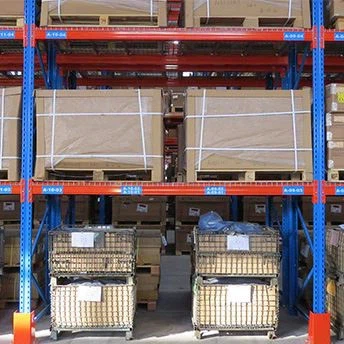
Global logistics facilities located near coastal port zones mandate extreme finish durability. Hot-dip galvanizing and electrostatic polyester powder coatings ensure long-term resistance to high humidity and atmospheric salt spray.
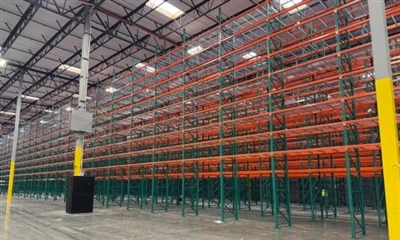
International building codes demand dynamic seismic modeling for high-density push back systems. Advanced anti-lift cart clips, safety forward stops, and high-tensile column anchors prevent cart dislodgement during seismic shocks.
CanalRack Industrial Storage S.A. combines factory-direct manufacturing power with rigid structural engineering expertise to deliver end-to-end reliability.
Operating three state-of-the-art manufacturing plants equipped with automated roll-forming lines, robotic welding stations, and continuous powder coating facilities.
Every Push Back Racking System undergoes strict raw material testing and structural analysis to comply with European, American, and Australian standards.
In-house structural engineers evaluate floor slab loads, pallet tolerances, forklift spec sheets, and local seismic requirements to craft optimized CAD layouts.
Specially engineered export packaging utilizes steel strapping, protective corner guards, and plastic wrapping to ensure components arrive flawless via ocean freight.
Authoritative answers to common engineering, operational, and procurement queries asked by international buyers and warehouse logistics directors.
A Push Back Racking System maximizes storage density by eliminating multiple forklift access aisles required in standard selective rack layouts. By consolidating storage into 2 to 6 deep lanes, warehouses increase pallet storage capacity by up to 75% on the same floor footprint. Additionally, since forklifts remain in the main aisleway, travel times are cut by up to 40%, and structural frame collisions are virtually eliminated, reducing long-term maintenance overhead.
Push Back Racking operates on a Last-In, First-Out (LIFO) inventory flow. The last pallet loaded into a specific lane is positioned at the front face of the rack and is the first to be retrieved. This makes push back systems ideal for high-volume non-perishable goods, seasonal products, or multi-pallet shipments of identical SKUs. For strict First-In, First-Out (FIFO) requirements, gravity Pallet Flow racking or Radio Shuttle racking systems are recommended.
Yes. Standard counterbalanced forklifts, reach trucks, and deep-reach lift trucks are fully compatible with Push Back Racking Systems. No specialized mast attachments or custom forks are required. The forklift operator simply pushes the front pallet back using the incoming pallet load. CanalRack designs cart entry bevels to ensure smooth engagement regardless of forklift type.
Push Back Racking Systems are widely utilized in cold storage and blast freezer operations operating at temperatures as low as -30°C. Cold storage facilities benefit immensely from high cubic space utilization because cooling ambient air is costly. CanalRack engineers push back carts for cold environments using specialized low-temperature lubricants, stainless steel or galvanized wheels, and sealed precision bearings to prevent icing and binding.
CanalRack Industrial Storage S.A. incorporates multiple redundant safety features in every Push Back Racking System: robust front safety stops to hold the frontmost pallet securely, anti-lift safety hooks on nested carts to prevent accidental cart dislodgement during push loading, heavy-duty structural cart bumpers, and engineered rack column protectors at main aisle entry points.
To prepare an engineered CAD layout and detailed quote, please provide: warehouse dimensions and clear ceiling height, pallet dimensions (width, depth, height including goods), weight per loaded pallet, target SKU count and pallet count per SKU, forklift model and maximum lifting height, and facility operating environment (standard ambient, cold room, or coastal zone). Contact our team at [email protected] to get started.
Connect with senior structural engineers at CanalRack Industrial Storage S.A. to receive a custom CAD layout, load calculations, and factory-direct pricing.