0%

Choosing among China’s leading Pallet Rack Systems manufacturers requires more than comparing prices. A rack may look solid in a catalog, yet details like beam connectors, upright thickness, and finish quality matter on a busy warehouse floor. Small details count.

This guide introduces ten manufacturers for buyers assessing storage projects, from selective pallet racks to higher-density configurations. It considers product range, customization, engineering support, quality-control practices, export experience, and after-sales service. These factors can help narrow a shortlist, but they do not replace a project-specific review. Load capacity, pallet dimensions, forklift type, aisle width, and building conditions all affect the right design. A supplier should provide clear specifications and drawings for evaluation.

“Top ten” is a useful starting point, not a universal verdict. Rankings can vary with market, project scale, and buyer priorities. That is an imperfect shortcut. Before requesting a quotation, confirm what the price includes, how finishes are specified, and whether installation guidance is available. Ask for relevant project references and documentation, then compare proposals on consistent requirements. A lower initial price may not reflect the full cost of ownership. Neither does a polished brochure. The manufacturers covered here offer a framework for further research, while final selection should depend on verified capabilities and the needs of your warehouse.
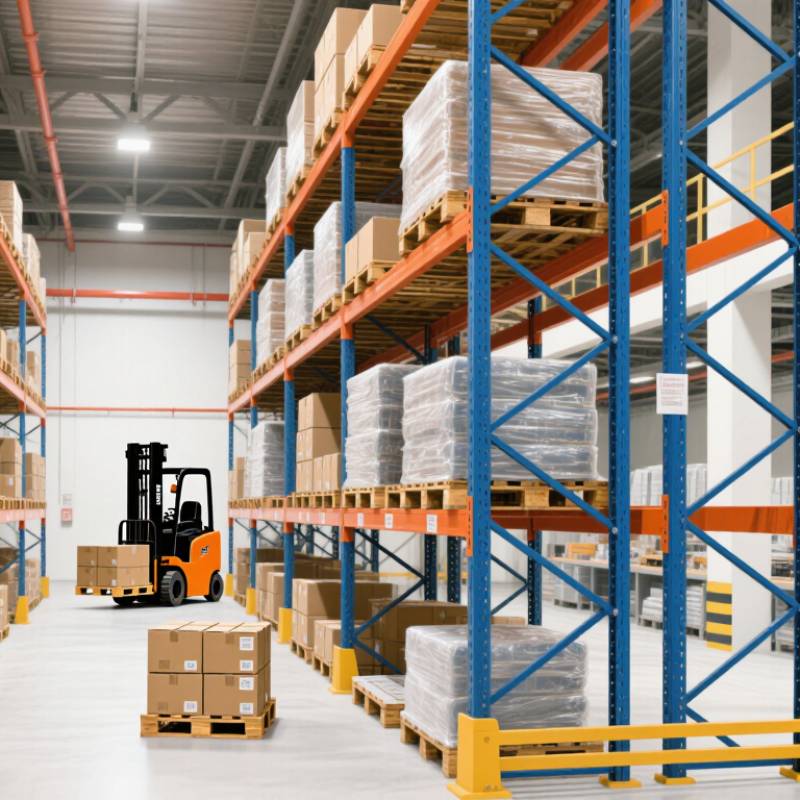
China Top 10 Pallet Rack Systems Manufacturers

What Pallet Rack Systems Are and How They Support Warehouse Operations

Pallet rack systems are steel structures that hold palletized goods above the warehouse floor. Upright frames and horizontal beams create bays, with forklifts placing and retrieving loads. Selective racks give direct access to each pallet. Drive-in layouts trade some access for denser storage, while pallet-flow lanes use gravity to move goods toward picking points. The right layout depends on pallet size, inventory turnover, equipment, and available aisle space. Small choices matter.

Racking supports daily work by organizing stock, freeing floor area, and making locations easier to identify. It can also reduce unnecessary pallet handling when fast-moving items sit near dispatch doors. MHI’s 2024 Annual Industry Report found that 55% of surveyed supply-chain professionals planned to adopt or increase robotics and automation within five years. That figure is not specific to racks, but it signals growing interest in connected warehouse operations. Rack design must still match the actual workflow; automation cannot fix poor slotting or unclear load limits. A layout drawing may look efficient, yet a blocked aisle or awkward pallet can slow a real shift. Include inspections, load signage, and room for safe forklift turns in the operating plan.

China’s Pallet Rack Manufacturing Industry and Its Main Product Types

China’s Pallet Rack Manufacturing Industry and Its Main Product Types

China’s pallet rack industry serves warehouses, factories, cold-storage facilities, and distribution centers. Manufacturers commonly work with steel profiles, automated cutting, welding, and surface coating. Product dimensions and beam configurations can be adapted to pallet size, forklift access, and available building height. Details matter.

Selective pallet racks are widely used because each pallet remains directly accessible. They suit warehouses with many product lines and frequent picking. Drive-in racks use deeper lanes to store larger quantities of similar goods, but forklifts must enter the structure. This changes operating requirements. Pallet-flow systems use inclined tracks and rollers to move loads forward, while shuttle systems use powered carts inside storage lanes. Each option affects throughput, maintenance, and investment differently.

Choosing a system requires more than comparing storage density. Planners need accurate pallet weights, load dimensions, floor conditions, aisle widths, and handling-equipment details. Rack capacity should follow engineered specifications, not a rough estimate from a catalog. In practice, layout assumptions can be wrong; even a small change in forklift turning space may disrupt daily work. Buyers should review drawings, material specifications, installation plans, and inspection arrangements before production.

How to Evaluate and Compare China’s Leading Pallet Rack Manufacturers

Comparing China’s leading pallet rack manufacturers means checking engineering evidence, not just quoted price. Grand View Research’s Warehouse Racking Market report estimated the global market at about US$8.8 billion in 2023. Its outlook projected continued growth through 2030. This is market context, not proof that any supplier is reliable. Details matter. Ask for beam and upright load tables, steel-grade certificates, weld inspection records, and dimensional tolerances. Confirm whether stated capacities match your beam lengths, rack heights, and installation conditions. A capacity figure without those details is weak evidence.

For technical comparison, request drawings and design assumptions aligned with the applicable standard, such as ANSI MH16.1 for industrial steel storage racks. Compare identical configurations: bay width, levels, pallet dimensions, rated loads, finish, anchors, and delivery scope. Ask how the factory traces steel batches and handles rejected welds; a neat sample upright cannot show that process. Check references for similar warehouse layouts, installation support, spare-part lead times, and inspection guidance. A low price can hide thinner components or missing accessories, but a higher price proves little by itself. I would score engineering evidence and service separately, leaving unanswered questions visible in the bid sheet.

Profiles of Ten Notable Pallet Rack Systems Manufacturers in China

China’s pallet-rack market includes manufacturers with different strengths, from standard warehouse storage to engineered systems. These profiles highlight capabilities buyers can compare, rather than ranking unnamed companies.

One manufacturer may focus on selective racks for forklifts and straightforward access. Another builds heavy-duty frames for dense pallet loads. A third designs shuttle-compatible lanes. A fourth combines racks with automated storage equipment.

Some specialize in drive-in systems, where forklifts enter deep storage lanes. Others produce rack-supported mezzanines with stairways and guarded platforms. One profile centers on long-span shelving for cartons and mixed inventory.

Another serves cold-storage projects, where finishes and clearances need careful review. A further manufacturer handles unusual dimensions through custom steel fabrication. An export-oriented producer may emphasize modular parts, installation documents, and protective packaging.

Details matter.

Ask for load tables, steel specifications, and drawings for the actual layout. Check weld quality, beam connections, and baseplate anchoring during review.

A polished catalog is not proof of a suitable system. Nor does a low quote reveal future maintenance needs.

These profiles are starting points, not verified performance ratings; site conditions and engineering checks can change the decision.

Key Factors for Selecting a Chinese Pallet Rack Supplier

China Top 10 Pallet Rack Systems Manufacturers

A supplier’s catalogue can look convincing, but real performance depends on engineering details. The World Bank’s 2023 Logistics Performance Index ranked China 19th among 139 economies. This offers useful logistics context, not proof of an individual factory’s quality. Ask for evidence.

Request load calculations for your actual beam lengths, rack heights, pallet weights, and floor conditions. The Rack Manufacturers Institute’s ANSI MH16.1 specification covers the design, testing, and use of industrial steel storage racks. Check whether the proposed system follows standards required in your destination market. Ask for material certificates, weld inspection records, and clear drawings showing loads at each level. A single maximum-load figure is not enough.

Visit the factory or request a live video walk-through. Look closely at steel thickness checks, weld consistency, coating coverage, and how parts are labeled for installation. Speak with customers operating similar layouts, and confirm spare-part availability and response times in writing. Compare delivery terms and packaging; bent uprights can turn a low quote into a costly delay. One limitation: a factory audit cannot guarantee careful installation at your site. That part deserves equal attention.

China Top 10 Pallet Rack Systems Manufacturers: Key Supplier Selection Factors

Suggested evaluation weights for comparing pallet rack suppliers. These are a practical scoring framework, not measured market statistics; adjust them to suit your project requirements.

Prioritize verified load capacity and structural safety, then assess manufacturing quality, customization, and compliance documentation. Confirm delivery, warranty, and total cost as part of the same evaluation.

FAQS

What is a pallet rack system?

It is a steel structure that stores palletized goods above the warehouse floor. Upright frames and horizontal beams form storage bays.

How do selective, drive-in, and pallet-flow racks differ?

Selective racks give direct access to each pallet. Drive-in racks store similar goods in deeper lanes, while pallet-flow lanes move goods toward picking points using gravity. Access changes.

What should guide the choice of rack layout?

Consider pallet sizes and weights, inventory turnover, forklift type, aisle width, and building height. A small turning-space mistake can disrupt a shift.

What information is needed to check rack capacity?

Use engineered specifications for the actual beam lengths, rack heights, and loads. A catalog number alone is weak evidence.

How can buyers compare manufacturers?

Request drawings, steel-grade certificates, load tables, weld inspection records, and dimensional tolerances. Compare the same configuration and delivery scope.

What details should warehouse plans include?

Allow room for safe forklift turns, clear aisles, load signage, and inspections. A polished drawing can still miss a practical problem.

Can automation make a poor rack layout work?

Not by itself. A 2024 industry report found growing interest in robotics, but automation cannot fix unclear load limits or poor slotting.

What should buyers check beyond the initial price?

Review installation support, spare-part lead times, steel-batch tracking, and inspection guidance. Higher prices prove little by themselves. I would keep unanswered questions visible.

Conclusion

Pallet Rack Systems are essential to efficient warehouse operations, helping businesses organize inventory, make better use of vertical space, and support smoother storage and retrieval. China’s pallet rack manufacturing industry serves a wide range of warehouse needs, with product options suited to different loads, layouts, and handling methods. Understanding the main system types and how they function can help buyers identify solutions that fit their facilities.

This overview explains how to evaluate and compare leading manufacturers by considering factors such as product range, material quality, engineering capability, production capacity, customization, and after-sales support. It also introduces ten notable manufacturers in China without relying on brand rankings alone. By assessing warehouse requirements, safety and quality standards, delivery expectations, and long-term service, buyers can make a more informed choice when selecting a Chinese pallet rack supplier.

Ethan

Ethan

Ethan is a professional marketing specialist who combines a strong understanding of the company’s products with a clear, customer-focused approach to communication. Through ongoing research and close attention to product features, applications, and industry developments, he helps readers understand......