0%

A warehouse can look spacious at floor level and still run out of usable capacity. Pallets wait in receiving lanes, forklifts turn around blocked aisles, and fast-moving stock gets buried behind slower inventory. A Pallet Storage Racking System can use vertical space more effectively while giving each load a defined storage location. The right design can also support safer, more predictable picking.

The business case is growing. MHI’s 2024 Annual Industry Report, produced with Deloitte, found that 55% of surveyed supply-chain professionals planned to increase technology and innovation investments. That figure does not prove that racking alone improves performance. It does show why many operators are reviewing warehouse systems, space, and material flow together. Racking is one practical part of that review.

Still, a rack is not a cure-all. Poorly matched beam heights, aisle widths, or pallet loads can create new bottlenecks. The useful question is not simply how many pallets fit, but how safely and quickly teams can access them. A careful assessment should consider inventory turnover, forklift type, building clearances, floor conditions, and future growth. Small details matter. A column in the wrong place can change an aisle plan. This guide explores why businesses choose pallet racking, what benefits it can offer, and which trade-offs deserve attention before installation.
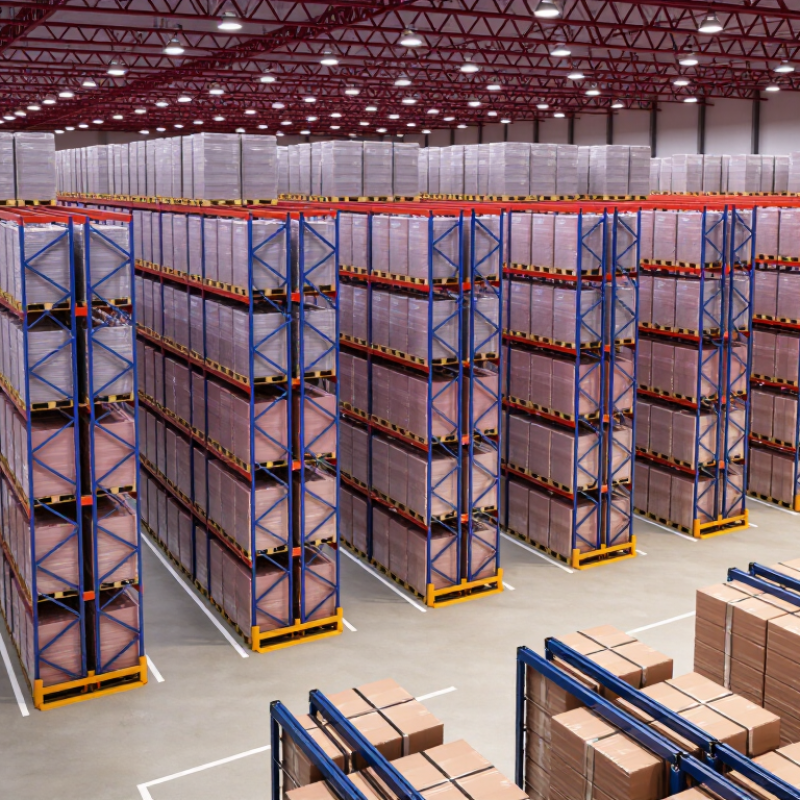
Why Choose a Pallet Storage Racking System?

What Is a Pallet Storage Racking System?

A pallet storage racking system is a freestanding steel framework that stores palletized goods above the floor. Upright frames carry horizontal beams, creating bays where forklifts place and retrieve loads. The pallet rests on the beams, not on the floor. It is a simple idea, but the details matter: pallet size, load weight, beam height, and forklift access all affect the layout.

Rack styles serve different storage needs. Selective racking gives direct access to each pallet, while drive-in systems let forklifts enter storage lanes to reach deeper loads.

A 2024 MHI Annual Industry Report found that 55% of surveyed supply-chain professionals planned to increase technology investment over the next two years. That figure reflects wider interest in warehouse technology, not a measured benefit of racking itself. Useful distinction.

In practice, a rack should fit the building and the daily work. A warehouse team might check whether a loaded pallet clears a sprinkler line, whether aisles allow a forklift to turn, and whether beams show impact damage.

Load limits should be visible and based on the installed configuration. Rack capacity can change when components or layouts change. A rack is not a cure-all. Poorly sized aisles or inconsistent pallets can still slow picking, and those problems are easy to underestimate during planning.

How Does Pallet Racking Organize Warehouse Space?

Pallet racking turns floor area into a planned grid of storage positions. Upright frames support beams, and each bay holds pallets at defined levels. This vertical layout can leave more floor space for receiving, picking, and travel lanes. Selective racking gives direct access to each pallet, which helps when products change often. For many identical pallets, drive-in or push-back layouts can fit more loads into a smaller footprint, but access becomes less immediate. Trade-offs matter.

The 2023 MHI Annual Industry Report found that 55% of respondents planned to increase supply-chain technology investment within five years. Rack labels and location records connect that investment to physical storage. A picker can head to bay B-14, level three, rather than search. Small details count. Incorrect locations can slow picking and make stock checks less reliable.

A practical layout starts with actual pallet dimensions, load weights, forklift turning space, and sprinkler clearances. Beam levels should suit common pallet heights, not just the tallest load. Measure real equipment, not idealized drawings. One awkward corner can waste capacity. Dense storage is not automatically better; restricted access may create extra handling. Rack capacity and aisle widths also need review by qualified professionals against site conditions and applicable safety standards.

What Types of Pallet Racking Suit Different Storage Needs?

Choosing pallet racking starts with the goods, not just the available floor space. Selective racking gives forklifts direct access to every pallet. Its open aisles make picking and stock checks straightforward. It suits varied products with frequent turnover. The trade-off is lower storage density, since each row needs access space. Space matters.

Drive-in racking stores pallets several positions deep, using fewer aisles. This can work well for large quantities of similar goods. Forklifts enter the rack lanes, so operators need clear procedures and careful driving. Push-back racking stores pallets on nested carts. Loading a new pallet moves earlier ones back, while unloading brings the next pallet forward. Pallet-flow systems use inclined rollers to move pallets toward the picking face. These systems can support first-in, first-out rotation, but pallet condition and consistent loading matter. Not every pallet rolls smoothly.

Cantilever racking is useful for long or awkward loads, such as pipes or timber, that do not sit safely on standard beams. Before choosing a system, consider pallet size, load weight, inventory turnover, and forklift turning space. Check the floor and rack requirements with a qualified storage professional. A layout may look efficient on paper, yet feel cramped during a busy shift. That detail is easy to miss.

What Operational Benefits Does Pallet Racking Provide?

Pallet racking turns floor space into usable vertical storage. With clearly defined locations, operators can identify a pallet, scan its label, and move it without searching through floor-stacked goods. Selective racks also provide direct access to each pallet, which helps when stock turns quickly or orders contain mixed products. The benefit is practical. Less searching can mean fewer avoidable forklift trips and smoother replenishment.

Rack layout can support inventory accuracy and future automation, but only when location codes, aisle widths, and handling equipment work together. MHI’s 2024 Annual Industry Report found that 55% of surveyed supply-chain professionals expected to invest more than $1 million in innovation over the following two years. That figure covers supply-chain innovation broadly, not racking alone; it signals why adaptable storage infrastructure matters. Racking can provide consistent pallet positions for scanners and automated equipment, while leaving room for changing workflows.

There are limits. Poorly planned beams may block access, and overly narrow aisles can slow truck movements. A site assessment should consider pallet dimensions, load weights, picking frequency, and equipment turning space. A rack is not a cure-all. Operators still need clear load labels, routine damage checks, and disciplined housekeeping. One bent upright can disrupt a busy aisle, so inspection routines matter as much as storage capacity.

Why Choose a Pallet Storage Racking System?

How additional storage levels can increase pallet positions within the same floor footprint

The chart shows theoretical storage positions relative to single-level floor storage: two, three, or four usable levels provide 2×, 3×, or 4× the positions in the same storage footprint. This is a simple level-count comparison, not a guaranteed warehouse capacity; actual results depend on aisle layout, clear height, pallet loads, and safety requirements.

What Factors Should Guide a Pallet Racking System Choice?

Choosing pallet racking starts with inventory, not an aisle sketch. Record pallet dimensions, loaded weights, SKU counts, and peak stock levels. Include damaged or irregular pallets. They happen. Measure clear height, columns, sprinklers, and forklift turning space. A layout may fit on paper but still leave drivers unable to place loads safely. OSHA’s material-handling standard, 29 CFR 1910.176(b), requires stored materials not to create hazards. Safe access and stable loads belong in the design brief.

Then weigh selectivity against storage density. Selective racks offer direct access to each pallet; denser drive-in layouts can reduce access. Check whether your operation needs first-in, first-out rotation, frequent picking, or room for seasonal stock. MHI’s 2024 Annual Industry Report found that 55% of respondents planned to increase investment in supply-chain technology and innovation. That survey is a useful signal to consider future automation compatibility, not a reason to automate every aisle. Ask an experienced rack designer to verify load capacities, floor conditions, clearances, and local engineering requirements. A spreadsheet can miss a real bottleneck. Walk the proposed layout with forklift operators before approving it.

Why Choose a Pallet Storage Racking System? - What Factors Should Guide a Pallet Racking System Choice?

Decision factor What to assess How it guides the choice Practical check
Inventory selectivity How many different products are stored and how often individual pallets need to be accessed. Selective rack provides direct access to each pallet position. Higher-density systems may reduce direct access or require pallets to be handled in a sequence. Compare the number of active pallet SKUs with the number of pallet positions required per SKU.
Inventory rotation Whether stock is managed using FIFO (first in, first out), LIFO (last in, first out), or another picking policy. FIFO-compatible layouts can support date-sensitive stock rotation. Some drive-in configurations operate on a LIFO basis; system design and loading method determine the flow. Confirm rotation rules for each product group, especially where expiration dates or batch tracking apply.
Required storage density Available floor area, building height, aisle requirements, and the proportion of space needed for picking or staging. Selective racks typically prioritize access. Drive-in, push-back, pallet-flow, and mobile systems can increase storage density, subject to product mix and operating needs. Evaluate usable pallet positions together with aisle space, staging areas, clearances, and access routes—not rack footprint alone.
Pallet dimensions and condition Pallet length, width, height, overhang, load stability, and variation between pallet types. Beam lengths, clearances, support details, and bay layout must suit the actual unit loads. Common pallet footprints differ by region and industry. Measure representative loaded pallets; do not design from nominal pallet dimensions alone.
Load and rack capacity Maximum pallet weight, load distribution, number of beam levels, and loads placed on each beam and frame. Rack components must be selected and configured for the intended loads. Capacity depends on the complete design and cannot be determined from a single component dimension. Provide load data to a qualified rack designer and follow the approved load signage and operating instructions.
Handling equipment Forklift type, turning requirements, lift height, load reach, and the operator’s working clearances. Aisle width and rack height must be compatible with the selected equipment. Narrower aisles may require specialized trucks and corresponding operating procedures. Confirm aisle and clearance requirements using the equipment manufacturer’s specifications and a site layout review.
Building and site constraints Clear height, column positions, floor condition, doors, sprinklers, lighting, and emergency routes. These conditions limit rack dimensions and layout. Floor capacity and local building or fire requirements may also affect the design. Use verified site measurements and obtain the required engineering and code reviews before installation.
Throughput and picking pattern Pallet movements per shift, replenishment frequency, order profile, and separation of picking from reserve storage. High movement and frequent individual access may favor layouts with direct access or dedicated pick faces. Dense storage can suit larger quantities of fewer product lines. Review movement and order data across a representative operating period before selecting a layout.
Safety and maintenance Vehicle impact exposure, load placement practices, inspections, damaged components, and pedestrian access. Rack protection, clear operating procedures, competent inspection, and prompt repair of damaged components help manage operational risk. Establish inspection and incident-reporting procedures and keep aisles and access routes unobstructed.
Future flexibility Expected changes in SKU count, pallet sizes, storage volume, and handling equipment. A modular layout may be easier to adapt, but changes to rack configuration or loading conditions require appropriate review and approval. Plan for likely changes and verify any proposed reconfiguration against the system’s approved design and capacity.

Note: Rack capacity, layout, clearances, and installation requirements are project-specific. Confirm them with a qualified designer and applicable local requirements.

FAQS

What is a pallet storage racking system?

It is a freestanding steel frame with upright supports and horizontal beams. Pallets rest on the beams above the floor. Simple in concept.

How does pallet racking organize warehouse space?

It creates bays and storage levels, turning vertical space into planned pallet locations. This can free floor area for receiving, picking, and forklift travel.

What is the difference between selective and drive-in racking?

Selective racking gives direct access to each pallet, which suits mixed or frequently changing stock. Drive-in racking stores pallets deeper in lanes, but access is less immediate.

What should be measured before planning a rack layout?

Check pallet dimensions, load weights, forklift turning space, and sprinkler clearances. Measure the actual equipment. Drawings can miss an awkward corner.

How can racking support faster picking?

Clear location codes help workers find a pallet, such as bay B-14, level three. Less searching can reduce unnecessary forklift trips. Small details matter.

Does denser storage always improve warehouse operations?

No. Dense layouts can increase capacity, but restricted access may add handling time. It is easy to overvalue density during planning.

Can pallet racking support scanners or automated equipment?

Yes, consistent pallet positions and location records can support scanning and automation. Aisle widths and handling equipment must also fit the workflow.

How should rack capacity and condition be managed?

Display load limits based on the installed configuration, and review them when components or layouts change. Check for impact damage regularly. One bent upright matters.

Conclusion

A Pallet Storage Racking System is a structured way to store palletized goods on durable shelving, making inventory easier to access and manage. By using vertical space and arranging loads in clearly defined locations, it can help warehouses increase storage capacity, keep aisles organized, and support more efficient picking and replenishment. Different designs suit different needs: selective racks offer direct access to each pallet, while drive-in, push-back, and flow systems can store larger quantities of similar goods or support particular stock-rotation patterns.

Choosing the right system depends on the goods being stored, pallet dimensions and weight, available floor space and ceiling height, equipment used for handling loads, and expected inventory movement. A well-matched setup can improve workflow, reduce unnecessary product handling, and make better use of warehouse space. Careful planning, including attention to safe loading and clear operating procedures, helps ensure the racking system supports both day-to-day productivity and changing storage requirements.

Olivia

Olivia

Olivia is a professional marketing specialist who combines clear communication with a deep understanding of the company’s products and the needs they are designed to address. She regularly updates the company website with practical, informative blog articles, helping readers understand product......