CE Certified Cantilever Racking Solutions
Explore our premium factory-direct inventory of heavy-duty cantilever rack configurations, optimized for high load capacity, spatial safety, and long-span material handling.
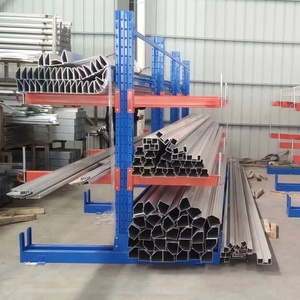
Heavy Duty Industrial Steel Cantilever Racking System
Finish: Powder Coated / HDG
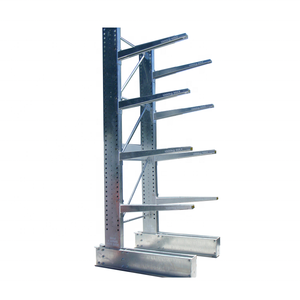
Large Capacity Galvanized Logistics Cantilever Racking
Structure: Hot-Rolled I-Beam
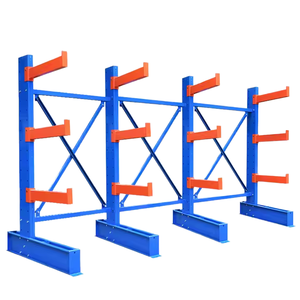
Industrial Cantilever Rack Boltless Heavy Duty Shelving
Pitch: 100mm / 140mm Adjustable
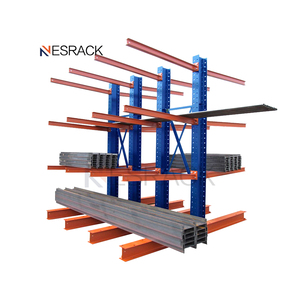
Heavy Duty Double Sided Storage Cantilever Racks
Applications: Pipes, Hose, Tubing
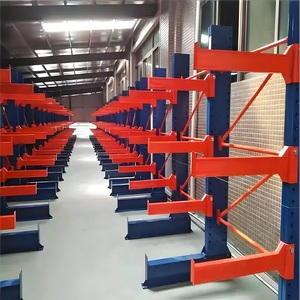
Single Sided Steel Cantilever Corrosion Protected Rack
Steel Grade: Premium Q235B / Q355B
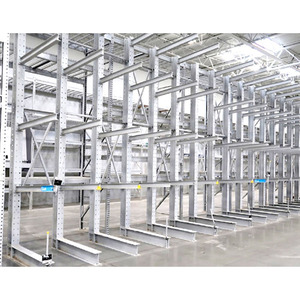
Industrial Cantilever Rack for Steel & Aluminum Profiles
Arm Length: 600mm to 2000mm
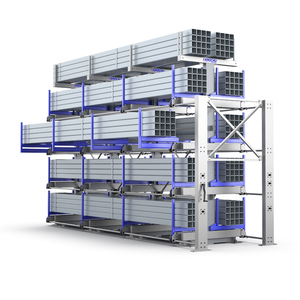
5-Layer Steel Telescopic Cantilever Pipe Storage Rack
Access: 100% Overhead Crane Access
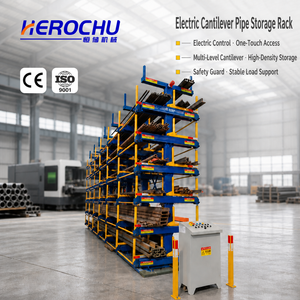
Electric Cantilever Rack Automated Retrieval System
Efficiency: +300% Handling Velocity
Technical White Paper: Structural Engineering & Physics of Cantilever Racking
An authoritative guide to load dynamics, material selection, mechanical safety factors, and compliance standards for industrial B2B procurement managers.
In modern intra-logistics, storing long, bulky, or awkward loads such as structural steel I-beams, PVC conduits, aluminum extrusions, timber bundles, and heavy industrial tubing presents distinct engineering challenges. Standard pallet racking systems rely on front vertical columns that impede horizontal linear loading. Cantilever warehouse racking eliminates front vertical obstructions, substituting them with load-bearing vertical columns attached to extended horizontal arms cantilevered outward.
1. Mechanical Principles of Load Distribution & Flexural Rigidity
The structural stability of a cantilever rack rests upon pure bending moment calculations ($M = F \times L$, where $F$ is load weight and $L$ is effective arm length) applied to the connection interface between the upright column and the cantilever arm. Unlike standard selective pallet racks, cantilever arms act as free-ended structural beams subjected to point loads or uniformly distributed loads (UDL).
To prevent localized buckling and angular sagging, structural engineers calculate flexural rigidity ($EI$) using high-tensile Q235B and Q355B cold-rolled or hot-rolled structural steel (typically ASTM A36 or S355JR equivalent). The column profile must absorb combined axial compression forces and high eccentric bending moments without twisting.
2. Comparative Engineering Analysis: Roll-Formed vs. Structural Hot-Rolled Steel
Selecting between roll-formed sheet steel cantilever systems and hot-rolled structural I-beam systems dictates long-term load safety, impact durability, and initial procurement expenditure.
| Engineering Attribute | Roll-Formed Cantilever Systems | Structural Hot-Rolled (H-Beam) Systems |
|---|---|---|
| Steel Manufacturing Process | Cold-rolled coil steel formed into multi-flange profiles | Hot-rolled solid I-Beam (WF/H-Beam) structural steel |
| Load Capacity Range | Light to Medium Duty (200kg – 800kg per arm) | Extra Heavy Duty (800kg – 4,500kg+ per arm) |
| Forklift Impact Resistance | Moderate; requires external column guards | Exceptional deflection and dynamic impact tolerance |
| Connection Type | Keyhole connection with hairpin lock pins | High-strength Grade 8.8 / 10.9 structural bolting plates |
| Optimal Storage Inventory | Plastic pipes, light wood trim, copper tubing, light sheet metal | Solid steel rebar, thick steel plates, heavy lumber, aerospace alloys |
3. International Quality Standards & Safety Compliance (CE, FEM, RMI)
Procuring warehouse racking from global wholesale suppliers requires verification against rigorous international engineering guidelines:
- CE Mark Certification (EN 1090-1 / EN 15635): Guarantees structural factory production control (FPC), steel traceability, and mechanical safety compliance under European Union mandates.
- FEM 10.2.09 Code: Specially dictates design criteria for steel cantilever racking systems, establishing safety parameters for arm deflection, structural column sway limits, and sway bracing layout configurations.
- RMI (Rack Manufacturers Institute ANSI MH16.3): Standardizes American specification guidelines for cantilever design, anchor bolting dynamics, and seismic resistance factors.
Future Procurement & Development Trends (2025–2030)
How automation, sustainable steel manufacturing, and smart warehouse software are transforming industrial cantilever storage systems globally.
Automated Electric & Telescopic Cantilever Systems
Traditional manual forklift access is rapidly shifting toward motorized telescopic cantilever racks and automated storage/retrieval systems (ASRS). Electric push-out arms allow overhead gantry cranes or AGVs to extract 6-meter steel pipes in seconds, saving up to 70% floor space by narrowing handling aisles.
Advanced Anti-Corrosion Finishes & Outdoor Galvanization
With industrial open-air stockyards facing harsh marine and chemical environments, demand for hot-dip galvanizing (HDG according to ISO 1461) has grown by 40%. HDG coatings provide self-healing zinc sacrificial protection against rust, guaranteeing a 25+ year lifespan for exterior pipe and lumber yards.
Seismic Engineering & Finite Element Analysis (FEA)
Modern enterprise procurement guidelines require suppliers to deliver Finite Element Analysis (FEA) computer simulations. Advanced structural engineering accounts for dynamic seismic forces, floor slab load distribution, and wind shear loads for outdoor clad-rack cantilever buildings.
Modular Sourcing & Rapid Structural Reconfigurability
Supply chains require agile space allocation. Modern cantilever designs feature standardized 100mm/140mm vertical arm adjustment pitches, enabling warehouse managers to quickly modify tier clearances without taking down vertical columns or cutting steel components.
Direct Factory B2B Wholesale & Turnkey Supply Chains
Industrial buyers are bypassing localized intermediaries to work directly with certified OEM/ODM manufacturers. Factory-direct procurement offers custom column engineering, optimized container shipping loads, and comprehensive cost savings of 20% to 35% on major projects.
Why Global Enterprises Choose CanalRack Industrial Storage
As an established global manufacturer of heavy-duty warehouse racking systems, CanalRack Industrial Storage S.A. combines raw engineering excellence with full-suite OEM/ODM supply capability.
-
✓70,000+ m² Intelligent Production Facility: Outfitted with high-precision automated continuous cold-roll forming lines, laser welding robots, and automated powder coating chambers.
-
✓Rigorous CE & ISO Quality Control: Full compliance with ISO 9001, CE, AS 4084, FEM 10.2.02, and SEMA standards across all structural steel components.
-
✓Custom CAD/BIM Layout Engineering: Free technical site layout consultations, static load calculations, and tailored arm/column sizing within 24 hours.
-
✓Export-Grade Seaworthy Packaging: Specialized steel-strapped wooden crate framing and moisture-barrier protective films to ensure zero surface damage during ocean transit.
Turnkey Project Execution Framework
1. Engineering Assessment & CAD Layout
Custom sizing tailored to floor slab capacity, forklift turning radius, and load dimensions.
2. Precision Manufacturing & Testing
Mill-certified raw steel processed through robotic welding and automated surface treatment.
3. Global Logistics & Freight Optimization
Container stacking engineered for maximum cubic meter utilization to reduce ocean freight costs.
4. Installation Supervision & After-Sales Support
Complete assembly manuals, structural load signage, and on-site engineering assistance.
Cantilever Racking Procurement FAQ
Answers to common technical, structural, and procurement inquiries from B2B buyers, warehouse managers, and project engineers.
What certifications are required when importing cantilever racking systems? +
For international supply contracts, racking systems should comply with international structural standards such as CE Certification (EN 1090-1 / EN 15635 for Europe), ISO 9001:2015 for manufacturing quality control, and design principles established under FEM 10.2.09, RMI (American Standard), or AS 4084 (Australian Standard). Valid certificates guarantee steel quality, structural safety factors, and weld integrity.
How do I calculate the correct load capacity required for cantilever arms? +
Arm load capacity is calculated by dividing the maximum total weight of stored items across the number of supporting arms for that level, accounting for Uniformly Distributed Loads (UDL). For example, if a 3,000 kg bundle of steel pipes rests across 3 cantilever arms, each arm must support a minimum rated load of 1,000 kg. An additional safety factor (typically 1.5) is engineered into column and connection designs.
What is the difference between single-sided and double-sided cantilever racks? +
Single-sided cantilever racks feature arms extending from one side of the vertical column and are designed to sit flush against facility walls. Double-sided racks feature load-bearing arms extending from both front and rear faces of a central column. Double-sided racks provide superior structural balance and maximum storage density within central warehouse aisles.
Which surface treatment finish is best for my climate? +
For dry indoor industrial warehouses, electrostatic epoxy powder coating provides robust impact resistance, custom color coding, and sleek aesthetics. For outdoor storage yards, coastal environments, or cold storage facilities exposed to high humidity and chemical exposure, Hot-Dip Galvanizing (HDG) is recommended to prevent rust and surface breakdown.
Can cantilever racks be customized for unique or non-standard material lengths? +
Yes. As a primary OEM manufacturer, we design column heights (up to 12+ meters), arm lengths (600mm to 2000mm+), arm incline angles (flat or 2°-5° upward tilt), removable end-pipe stoppers, and custom arm spacing to accommodate specialized profiles, sheet metals, or heavy machinery parts.
How are cantilever racking systems packaged and shipped for overseas ocean freight? +
Upright columns, arms, and bracing structures are bundled in heavy-duty steel-strapped units with protective corner guards, non-scratch plastic wraps, and wooden dunnage bases. Accessories and hardware are packed in reinforced wooden crates to ensure zero damage during ocean shipping and container handling.
Ready to Optimize Your Heavy-Duty Material Storage?
Contact our structural engineering team today for a free warehouse CAD layout, technical consultation, and competitive direct factory wholesale pricing tailored to your operational requirements.