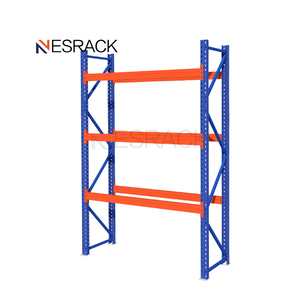
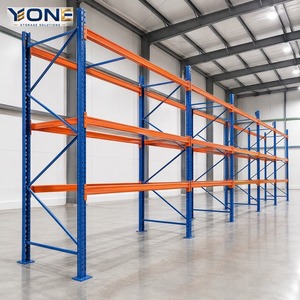
Precision cold-rolled Q235B structural steel adjustable pallet rack engineered with multi-pitch beam connections, high beam stiffness ratio, and load capacities up to 4500kg per level.
View Details
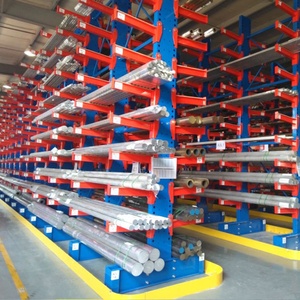
Specialized continuous longitudinal storage system designed for steel tubes, timber, PVC piping, and heavy structural profiles with single or double-sided column configurations.
View Details
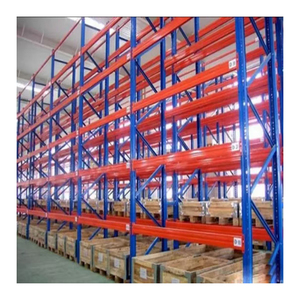
Full CE EN 15512 compliance standard rack system with custom bay widths, adjustable beam elevations, electrostatic powder finish, and reinforced base plate anchored structure.
View Details
High-payload industrial metal framework supporting 500kg to 5000kg load capacities per level. Optimized for fast forklift turnover and high-bay distribution logistics.
View Details
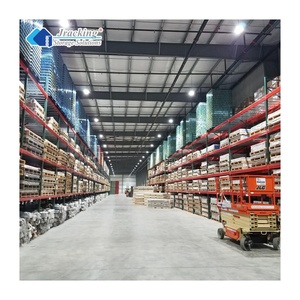
Provides 100% direct pallet accessibility for multi-SKU warehousing. Compatible with standard reach trucks, counterbalanced forklifts, and automated inventory software.
View Details
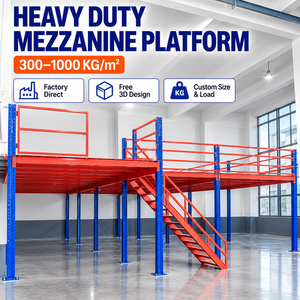
Multi-tier structural steel platform doubling or tripling floor usability. Combines heavy duty rack-supported columns with steel grating or plywood floor deckings.
View Details
Standard 2-inch pitch teardrop connection style fully compatible with North American inventory standards. Features automatic safety locks and rigid column punchings.
View Details
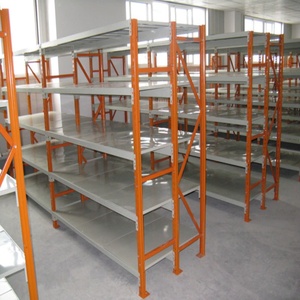
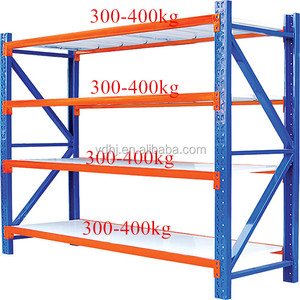
Versatile medium to heavy-duty modular racking system with boltless beam assembly for rapid reconfiguration across commercial retail and industrial fulfillment centers.
View Details
20+ Years
Racking Manufacturing Excellence
100,000 t
Annual Steel Processing Capacity
100%
CE EN 15512 & ISO Compliance
90+
Global Export Hubs & Free Zones
Technical Architecture & Structural Engineering Matrix
Modern logistics operations demand structural stability under intense dynamic and static loads. As a leading certified exporter and manufacturer of warehouse storage solutions, our engineered systems utilize premium Q235B and Q355B cold-rolled steel profiles. Each component undergoes rigorous finite element analysis (FEA) to ensure optimal weight-to-strength ratios, compliant with European FEM 10.2.02, EN 15512, American RMI, and Australian AS 4084 guidelines.
Information Gain Insight: Selecting the correct beam connection mechanism and upright column profile directly influences frame buckling resistance, seismic safety margins, and maximum allowable beam deflection ratios (typically engineered to L/200 under maximum total load capacity).
| Racking System Type |
Max Load Capacity / Level |
Space Utilization |
Direct Accessibility |
Applicable Standards |
Ideal Storage Application |
| Selective Pallet Rack |
Up to 4,500 kg |
40% - 50% |
100% Direct Access |
CE EN 15512, RMI, FEM |
High SKU variety, fast pallet rotation logistics |
| Radio Shuttle Racking |
Up to 1,500 kg / pallet |
up to 85% |
FILO / FIFO (Batch) |
CE, ISO 9001, FEM 10.2.02 |
Cold storage, food & beverage, high-density bulk |
| Heavy Duty Cantilever |
500 kg - 3,000 kg / arm |
65% - 75% |
100% Longitudinal |
CE, EN 1090-2 structural |
Steel pipes, lumber, aluminum profiles, long bars |
| Mezzanine Floor System |
300 kg - 1,500 kg / m² |
100% Multi-Tier |
Manual / Conveyor |
CE EN 1090 structural steel |
E-commerce order picking, spare parts inventory |
| Drive-In Racking |
Up to 1,500 kg / pallet |
75% - 80% |
FILO Batch Access |
FEM 10.2.02, ISO 9001 |
Homogeneous bulk cargo, seasonal goods storage |
Future Procurement Trends in Industrial Warehouse Racking (2025–2035)
As global supply chains transition toward hyper-automation, environmental sustainability, and regional distribution resilience, procurement decision-makers must evaluate storage infrastructure beyond immediate upfront material costs. Below are four key trends shaping global racking procurement:
1. Integration with Automation & ASRS / Shuttle Systems
Traditional static storage is rapidly merging with semi-automated and fully automated technology. Modern procurement contracts prioritize rack structures tolerance-engineered for Automated Storage and Retrieval Systems (ASRS) and Radio Shuttle carts. Structural straightness, tight installation tolerances, and rigid runner rails are non-negotiable to prevent automated vehicle jamming.
2. Sustainability, ESG & Low-Carbon Steel Manufacturing
International buyers now evaluate the environmental footprint of their storage vendors. Procurement specifications increasingly mandate energy-efficient roll-forming manufacturing processes, non-toxic lead-free epoxy powder coatings, and recyclable structural steel alloys (such as Q235B and Q355B) that comply with ISO 14001 and EU Green Deal supply chain guidelines.
3. Strict CE & Seismic Safety Compliance Frameworks
With warehouse vertical heights pushing past 12 to 15 meters, structural failure risk is a serious legal and operational liability. Global engineering contracts mandate compliance with European EN 15512 static standards, EN 16681 seismic design principles, and rigorous EN 15635 rack inspection protocol readiness.
4. Modular Modularity & Rapid Scalability
To keep pace with dynamic e-commerce SKU changes, procurement leads favor boltless adjustable racking systems with versatile 50mm, 75mm, or 76.2mm beam pitch increments. Modular beam connectors allow seamless adjustments without interrupting wider facility workflows.
Advanced Manufacturing & Structural Development Trends
The structural rack manufacturing industry has evolved from crude welded angle steel into sophisticated cold-formed thin-walled structural profile engineering. Understanding these engineering developments enables supply chain directors to specify higher performing systems at lower total life-cycle costs:
A. High-Yield Cold-Formed Steel Profiles (Q235B vs. Q355B)
Modern racking structural columns utilize high-yield strength steel grades. Upgrading structural uprights from standard Q235B (yield strength $\ge 235$ MPa) to high-strength Q355B (yield strength $\ge 355$ MPa) increases upright column axial load bearing capacity by up to 30% while reducing structural weight and ocean freight shipping volume.
B. Advanced Anti-Corrosion Finishing Techniques
Surface treatment technology has advanced beyond basic liquid painting. Today’s industrial standard utilizes a multi-stage automated pretreatment process (degreasing, phosphating, and deionized water rinsing) followed by electrostatic epoxy-polyester powder coating cured at 180°C–200°C. For extreme high-humidity environments, coastal logistics hubs, or cold storage facilities, hot-dip galvanizing (HDG) per ISO 1461 provides lifetime sacrificial zinc corrosion protection.
C. Finite Element Analysis (FEA) & Digital Twin Testing
Leading exporters rely on CAD/CAM and 3D FEA software to simulate physical stress concentrations, beam-to-column connector rigidity, and baseplate anchor shear forces under dynamic seismic loading. This digital design approach ensures guaranteed compliance before raw material roll-forming begins.
Enterprise Manufacturing Capabilities & Export Advantage
With over two decades of dedicated industrial racking production experience, our manufacturing infrastructure serves as a reliable supply chain partner for logistics hubs, third-party logistics (3PL) operators, retail distribution centers, and industrial plants worldwide.
70,000+ m² Production Base
Equipped with high-precision automated continuous roll-forming production lines, robotic welding arms, and automated powder coating plants capable of converting over 100,000 tons of raw steel annually.
Strict Quality Control & CE Certification
Certified under ISO 9001 quality management systems. Raw materials undergo tensile testing, chemical analysis, coating thickness verification, and weld penetration testing per batch.
Global Turnkey Engineering & Export Support
From initial DWG/CAD warehouse layout design, structural engineering calculations, container export bundle packaging, to overseas on-site installation supervision and after-sales support.
What is the operational significance of CE Certification for industrial racking systems?
CE certification confirms that the storage system meets strict European health, safety, and environmental protection standards (specifically EN 15512 for static steel racking design). For enterprise buyers and warehouse owners, CE certification ensures structural safety compliance, protects against catastrophic frame collapse risks, simplifies facility insurance approval, and guarantees verified load rating transparency.
How do engineers calculate static vs. dynamic load capacities for high-bay pallet racks?
Static load refers to the maximum stationary weight a rack level or frame can support when uniformly distributed (UDL). Dynamic load accounts for the structural forces exerted during loading, placement, forklift impact, or seismic vibrations. Structural engineers utilize finite element modeling (FEA) combined with safety load factors ($\gamma_F = 1.4$ for dead/live loads, per EN 15512) to ensure deflection limits stay strictly within $L/200$ (where $L$ is the beam length).
What are the critical differences between FEM 10.2.02, RMI, and AS 4084 standards?
FEM 10.2.02 / EN 15512: The European standard focusing heavily on limit state design, structural safety factors, dynamic testing of beam-end connectors, and upright column stability calculations.
RMI (Rack Manufacturers Institute): The North American engineering standard designed primarily around teardrop component geometry, AISI cold-formed steel specs, and specific seismic design categories (SDC).
AS 4084: The Australian standard incorporating specific design parameters for cold-formed structural steel, unique rack testing methodologies, and rigorous operational maintenance inspection requirements.
When should I choose Hot-Dip Galvanizing (HDG) over Electrostatic Powder Coating?
Electrostatic epoxy powder coating provides superior scratch resistance, color-coded beam identification, and economical protection for climate-controlled indoor ambient warehouses. Hot-Dip Galvanizing (HDG) is essential for cold storage freezers, outdoor yards, high-humidity tropical sites, or chemical environments, as the metallurgical zinc alloy layer prevents rust even if the surface is scratched.
What essential warehouse specifications are required to receive a custom CAD layout and quote?
To design an optimized engineering layout, our team requires:
1. Architectural warehouse drawings (CAD/PDF) showing clear building height, column locations, dock doors, and floor slab specifications.
2. Pallet details: Length $\times$ Width $\times$ Height (including cargo) and maximum weight per pallet.
3. Forklift fleet specs: Minimum aisle turning radius, maximum mast reach height, and forklift type.
4. Storage operational model: SKU count, turnover speed (FIFO vs. LIFO), and environmental temperature.
Why is wire mesh decking strongly recommended for selective pallet racking?
Wire mesh decks enhance warehouse safety by preventing misaligned pallets or loose cartons from falling between racking beams. Crucially, open wire mesh allows overhead fire sprinkler water to pass through lower levels, maintaining compliance with NFPA fire safety codes while providing extra structural support for non-standard pallets.
Optimize Your Warehouse Cubic Capacity & Structural Safety
Partner with a certified direct manufacturer. Request customized DWG architectural layouts, dynamic load calculations, and competitive FOB/CIF export quotes today.
Get a Quote