Featured Industrial Racking Systems
Engineered to ISO 9001, FEM 10.2.02, RMI, and AS 4084 Standards for Maximum Load Safety
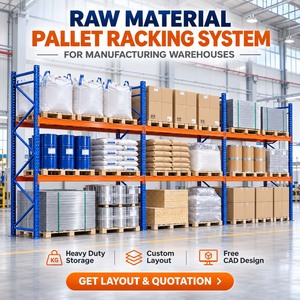
Pallet Racking System for Raw Material Warehouses
High-capacity structural racking engineered for heavy industrial coil, bulk chemical, and raw material storage. Reinforced beam connectors prevent impact deflection.
View Specifications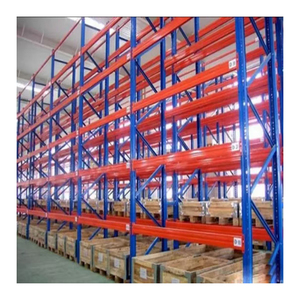
Mracking 500-5000kg/Layer Adjustable Heavy Duty Rack
Customizable heavy-duty steel pallet rack offering flexible beam pitch adjustments. Ideal for variable SKU profiles and high-turnover logistics hubs.
View Specifications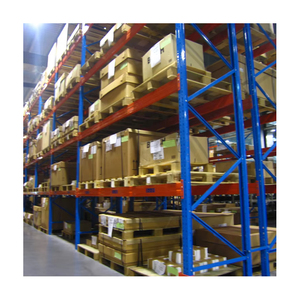
Heavy Duty Racking Storage Shelves & Stacking Units
Precision cold-rolled steel storage racks featuring modular stacking units. Epoxy powder-coated for superior corrosion resistance in demanding facilities.
View Specifications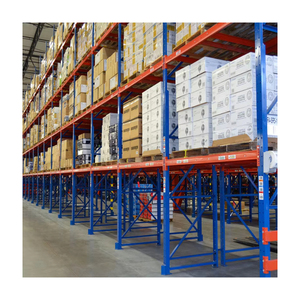
Wholesale Selective Steel Heavy-Duty Storage Racks
Factory-direct selective racking configured for 100% direct pallet accessibility. Optimized for fast reach-truck picking and high bay storage setups.
View Specifications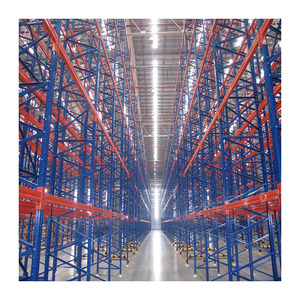
Mracking Industrial Palletized Rack (1000-4000kg Capacity)
Designed for severe industrial loading conditions with heavy-gauge upright columns and structural box beams. Fully certified for global safety compliance.
View Specifications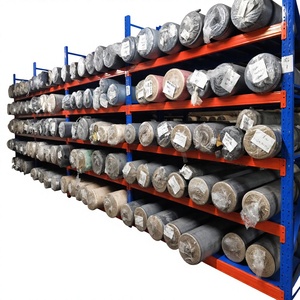
Commercial Multi-Level Powder Coated Medium Duty Rack
Multi-tiered medium duty shelf rack tailored for retail backrooms, e-commerce fulfilment centers, and supermarket inventory management.
View Specifications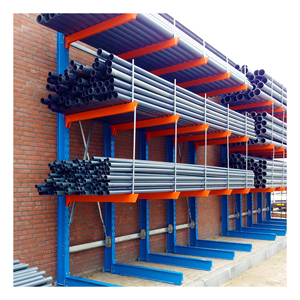
Industrial Heavy Duty Single Side Cantilever Rack
Specialized structural storage for long, bulky materials including steel pipes, timber, PVC tubes, and aluminum profiles without front-column obstruction.
View Specifications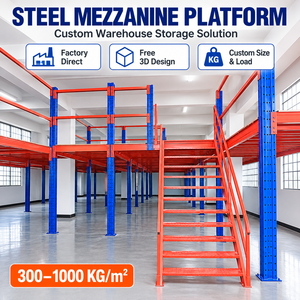
Customized Heavy Duty Steel Mezzanine Floor Platform
Engineered steel mezzanine system doubling usable floor area. Combines heavy upright supports with cold-formed steel joists and custom flooring panels.
View SpecificationsFactory Scale & Global Manufacturing Capacity
Direct OEM/ODM Manufacturing Excellence Backed by Stringent QA Standards
Enterprise Structural Engineering: Sourcing Pallet Racking from China
Selecting an industrial warehouse racking system is one of the most critical structural and capital expenditure decisions supply chain directors make. High-density storage facilities, distribution centers (3PL), and manufacturing plants require racking systems capable of bearing heavy static and dynamic loads while resisting structural fatigue, accidental forklift strikes, and environmental corrosion.
China has established itself as the global manufacturing hub for structural steel warehouse racking systems. Leading Chinese manufacturers leverage advanced automated continuous roll-forming lines, robotic welding stations, and automated electrostatic powder coating systems to supply structural storage equipment across Europe, the Americas, Australia, and the Asia-Pacific region.
When sourcing industrial racking from China, global procurement managers must evaluate structural engineering compliance, raw steel grades (such as Q235B and Q355B high-yield strength structural steel), surface pre-treatment regimes, and international safety compliance standards including FEM 10.2.02 (European Handling Institute), RMI (Rack Manufacturers Institute - USA), AS 4084-2012 (Australian Standard), and SEMA (UK Structural Requirements).
Core Manufacturing Capabilities & Enterprise Advantages
Standardized Production Protocols Designed for Demanding Logistics Environments
High-Tensile Steel Profiles
We utilize prime-grade Baosteel and Shougang Q235B / Q355B structural steel, cold-formed with engineered profile geometries to optimize section modulus, beam inertia, and ultimate load resilience.
Advanced Surface Pre-Treatment
Systems undergo a 9-stage chemical wash, iron-phosphate bath, and automated AkzoNobel electrostatic powder coating (60–80 µm thickness) or Hot-Dip Galvanizing (ISO 1461) for tropical and sub-zero storage applications.
Global Structural Compliance
Racking designs undergo rigorous Finite Element Analysis (FEA) and physical destructive load testing. Systems are engineered to meet localized seismic zone criteria, including US IBC and Latin American REP requirements.
Industrial Racking System Comparison Framework
Evaluating Density, Selectivity, and Operational Efficiency across Racking Types
| Racking Architecture | Storage Density | SKU Selectivity | Load Capacity per Level | Forklift Accessibility | Optimal Application |
|---|---|---|---|---|---|
| Selective Pallet Rack | Standard (40-50%) | 100% Direct Access | 500 - 4,500 kg | Standard Counterbalance / Reach | FMCG, 3PL, Multi-SKU Distribution |
| Drive-In / Drive-Thru | High (75-85%) | Low (LIFO / FIFO) | 1,000 - 2,000 kg | Specialized Narrow Counterbalance | Cold Storage, Bulk Uniform Inventory |
| Radio Shuttle System | Ultra-High (85-90%) | Medium (Automated Row Access) | 500 - 2,000 kg | Standard Forklift + Automated Cart | High-Throughput Food & Beverage |
| Heavy-Duty Cantilever | Custom (Unobstructed) | 100% Side Access | 500 - 6,000 kg per Arm | Side Loader / Specialized Forklift | Pipes, Lumber, Steel Profiles, Tubing |
| Steel Mezzanine Platform | Floor Area Doubling (100%) | Flexible Manual / Pallet | 300 - 1,500 kg / m² | Pallet Gate / Conveyor / Lift | E-commerce Picking, Spare Parts, Assembly |
Future Procurement Trends in Industrial Warehouse Storage Systems
The global warehousing and logistics sector is experiencing rapid technological evolution driven by automated inventory management, localized supply chain resilience, and stringent ESG (Environmental, Social, and Governance) targets. When procuring warehouse racking from Chinese manufacturing leaders, modern logistics planners are focusing on four key future trends:
- Integration with Automated Guided Vehicles (AGVs) & AMRs: Racking design is shifting from human-operated forklift clearances to sub-millimeter tolerances tailored for Autonomous Mobile Robots (AMRs) and Automated Storage and Retrieval Systems (ASRS). Structural columns now integrate retroreflective guidance markers, wire-way conduits, and floor-anchored docking frames.
- Anti-Corrosion Surface Innovations for Cold-Chain Logistics: With global expansion in cold-chain logistics for pharmaceuticals and perishable food items, demand for Hot-Dip Galvanized (HDG) racking components and specialized low-temperature powder coatings has spiked. These coatings prevent micro-cracking and rust formation at temperatures as low as -30°C.
- Modular Teardrop & Universal Pitch Interoperability: International logistics operators are increasingly specifying 2-inch pitch (American Teardrop style) and 76.2mm pitch (Australian standard) systems that permit seamless replacement, retrofit expansion, and interchangability across global warehouse networks.
- Sustainable Green Steel Sourcing: Top-tier Chinese manufacturers are adopting decarbonized steel manufacturing processes and solar-powered powder coating lines, assisting multinational buyers in lowering Scope 3 embodied carbon metrics across their global real estate footprints.
Technological Developments in Steel Racking Manufacturing
Modern steel rack manufacturing in China has progressed beyond simple metal fabrication into precision structural engineering. Key technological developments include:
1. Automated Continuous Roll-Forming: Computer-controlled multi-station cold roll-forming machines create upright profiles with up to 24 bending stages. This process induces work-hardening within the steel corners, enhancing load capacity while reducing structural weight.
2. Robot-Assisted Beam Welding: Automated 6-axis robotic welding cells execute continuous fillet welds between horizontal box beams and end-connectors. This eliminates human thermal variation and guarantees uniform fatigue resistance under heavy cyclic loading.
3. Advanced Finite Element Method (FEM) Simulation: Prior to steel cutting, structural engineers utilize 3D FEM software to simulate linear elastic strain, second-order ($P-\Delta$ and $P-\delta$) frame stability effects, dynamic seismic acceleration, and beam-to-column joint stiffness, ensuring complete structural reliability.
Warehouse Racking Sourcing FAQ
Expert Guidance on Structural Specifications, Lead Times, Shipping, and Global Standards
What steel grades are used in high-quality Chinese warehouse racking?
Leading Chinese racking manufacturers primarily use high-grade cold-rolled structural steel conforming to Q235B (yield strength $\ge 235$ MPa, comparable to ASTM A36 / SS400) for standard applications and Q355B (yield strength $\ge 355$ MPa, comparable to ASTM A572 Grade 50) for heavy-duty, high-bay, or high-seismic upright profiles. Utilizing Q355B steel allows for lighter structural weight without sacrificing load capacity.
How do Chinese racking manufacturers meet overseas structural safety standards (RMI, FEM, AS 4084)?
Established export-oriented factories maintain dedicated engineering departments fluent in international building codes. Factory engineers perform structural calculations using design software programmed according to FEM 10.2.02 (European standard), RMI specifications (American standard), and AS 4084-2012 (Australian standard). Third-party inspections from independent testing bodies like SGS, TÜV, or Bureau Veritas are regularly conducted for verification.
What surface finish options are recommended for high-humidity or coastal warehouse sites?
For standard indoor distribution centers, a 9-stage pre-treatment clean followed by electrostatic epoxy-polyester powder coating (60–80 µm) offers excellent scratch resistance and durability. For high-humidity coastal zones (such as port distribution centers) or sub-zero cold storage facilities, Hot-Dip Galvanizing (HDG) to ISO 1461 standards is recommended. HDG applies a protective zinc layer (min. 65–85 µm) that metallurgically bonds with steel to provide decades of rust prevention.
What technical parameters are required to generate a custom warehouse racking CAD layout?
To produce an accurate floor plan layout, structural load calculation, and quotation, please provide:
- Architectural floor plan drawing (CAD or PDF) showing clear building height, column spacing, wall locations, and floor obstacle details.
- Pallet specifications: Length × Width × Overall Height (including goods) and maximum unit load weight.
- Forklift truck specifications: Maximum lift height, aisle turning radius ($Ast$), and mast collapse height.
- Operating temperature range (Ambient, Chilled, or Freezer zone) and local seismic site parameters.
How are heavy pallet racks packaged to prevent transit damage during sea freight container shipping?
Export components undergo export packaging: upright frames and horizontal beams are bundled using steel strapping, protected by plastic film wraps, and fitted with thick corrugated corner protectors. Decks and smaller components are palletized on wooden or steel skids. Non-slip dunnage timber and air-bag bracing are placed inside 40ft High Cube (40HC) containers to eliminate movement during oceanic transportation.
What is the typical manufacturing lead time for full container load (FCL) orders?
Standard manufacturing lead times for customized pallet racking projects range from 14 to 25 calendar days following structural drawing sign-off and deposit confirmation. Specialized automated systems, such as Radio Shuttle carts or custom automated ASRS structural components, typically require 30 to 45 days for full assembly, factory acceptance testing (FAT), and integrated electronics commissioning.
Optimize Your Warehouse Density & Storage Layout Today
Our senior structural engineering team provides complimentary 24-hour CAD layout design, static load calculations, and factory-direct OEM pricing quotes tailored to your exact facility dimensions.