Engineered Industrial Storage Systems
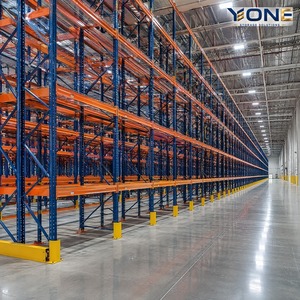
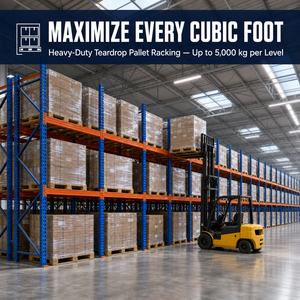
Factory-direct structural steel racking systems engineered for high load capacities, maximum volumetric storage efficiency, and seamless logistics integration.
Engineering Rigor & Enterprise OEM Capabilities
Understanding structural steel grades, yield thresholds, and anti-corrosion science for international warehouse developments.
High-Tensile Cold-Formed Steel Selection
Our industrial shelving systems utilize prime Q235B and Q355B (equivalent to ASTM A1011 Grade 50) structural steel sourced directly from top-tier state steel mills. Cold-roll forming continuous profile upright columns with complex multi-fold cross-sections ensures maximal moment of inertia, structural rigidity, and resistance to buckling under dynamic forklift impact loads.
Climatic Adaptation & Anti-Corrosion Finishing
For coastal distribution centers (such as Panama Free Zone, Southeast Asian ports, or Caribbean hubs), standard coatings suffer from rapid oxidation. We apply automated 9-stage pre-treatment wash cycles followed by electrostatic thermosetting epoxy-polyester powder coating (60–80 μm thickness) or complete Hot-Dip Galvanizing (HDG according to ISO 1461) to withstand saline atmospheric humidity and cold-room condensation.
Global Racking System Matrix & Engineering Specs
Comprehensive comparative data to assist logistics directors and warehouse structural engineers in selecting optimal racking architecture.
| Racking Architecture | Primary Storage Profile | Selectivity Rate | Volumetric Efficiency | Standard Load Capacity | Seismic & FEM Compliance |
|---|---|---|---|---|---|
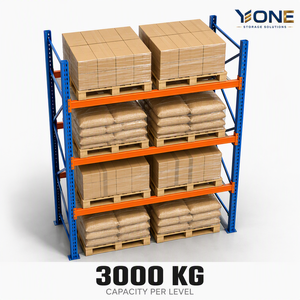
| Selective Pallet Racking | High SKU diversity, fast turnover | 100% Direct Access | 40% - 50% Space Utilization | 1,000kg - 4,500kg / Beam Level | FEM 10.2.02, RMI, AS 4084 |
| Radio Shuttle Racking | Low SKU count, high bulk volume | Filtered Batch Access | 75% - 85% Space Utilization | 1,500kg / Pallet (Automated) | CE Certified Shuttle, ISO 9001 |
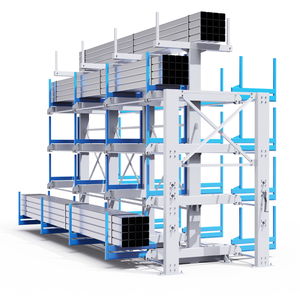
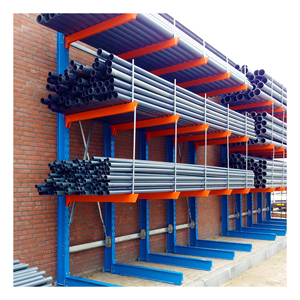
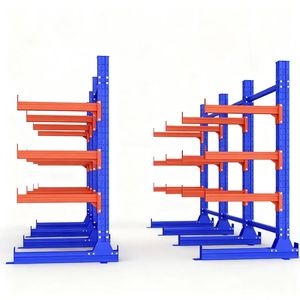
| Heavy Duty Cantilever | Pipes, lumber, steel bars, sheet metal | 100% Unobstructed Arm Access | 60% - 70% Space Utilization | 500kg - 3,000kg / Arm | BS EN 15668, Heavy Structural H-Beam |
| Drive-In / Drive-Thru | Homogeneous bulk materials, LIFO/FIFO | Sequential Channel Access | 65% - 75% Space Utilization | 1,000kg - 1,500kg / Pallet Spot | SEMA Code of Practice, FEM 10.2.07 |
| Multi-Tier Mezzanine Platform | E-commerce piece picking, archive storage | 100% Floor Access | 150% - 200% Floor Expansion | 300kg - 1,000kg / m² Floor Deck | EC 3 (EN 1993) Structural Steel Design |
Future Procurement Trends in Warehouse Racking
Strategic market shifts impacting global B2B procurement, supply chain resilience, and automated warehouse construction.
1. Integration of Automation-Ready Infrastructure
Modern distribution centers are moving away from purely manual racking toward semi-automated and fully automated hybrid systems. Racking structures must now be engineered with ultra-tight manufacturing tolerances (±0.5mm frame straightness) to seamlessly accommodate Automated Guided Vehicles (AGVs), Autonomous Mobile Robots (AMRs), and Radio Shuttle units.
2. Digital Twin Layouts & FEA Stress Modeling
Procurement teams no longer accept static 2D drawings. Advanced B2B buyers mandate 3D Digital Twin BIM models integrated with Finite Element Analysis (FEA). This simulates dynamic seismic loading, live floor slab settlement, and beam deflection under asymmetric weight distribution prior to factory roll-forming.
3. ESG Compliance & Low-Carbon Steel Supply Chains
Sustainability metrics are becoming key criteria in B2B procurement tenders. Leading Chinese export manufacturers are adopting closed-loop powder recovery systems, zero-VOC paint lines, and recycled steel sourcing to reduce scope 3 emissions for multinational logistics operations.
Navigating Supply Chain Dynamics: Direct Factory OEM vs. Regional Trading Intermediaries
When executing large-scale warehouse outfitting, overseas buyers face significant variance in pricing, structural integrity, and structural compliance. Direct factory collaboration with Chinese OEM rack manufacturers delivers distinct strategic advantages:
Direct Factory Sourcing Benefits
- 15%-30% Cost Reduction: Eliminates middleman markups and local dealer distribution margins.
- Custom Structural Engineering: Direct communication with in-house structural engineers to adapt pitch distances, beam profiles, and floor slab anchor plates.
- Container Loading Density Optimization: Custom nested packaging protocols that maximize FEU/TEU cubic capacity and reduce ocean freight cost per pallet position.
Quality Assurance & Compliance Verification
- Material Test Certificates (MTC): Full traceability from raw steel billets conforming to EN 10204 3.1 standards.
- Certified Load Signage: Standard safety labels detailing maximum permissible bay loads and safety factors (typically 1.5 to 1.65).
- Third-Party Mill Inspection: Pre-shipment verification by SGS, BV, or TÜV Rheinland.
Frequently Asked Questions (B2B Sourcing FAQ)
Technical and logistical insights for overseas warehouse project managers, facility engineers, and procurement directors.
Optimize Your Warehouse Volumetric Efficiency Today
Submit your warehouse layout drawings or storage parameters. Our senior structural engineers will prepare custom CAD layout drawings, structural load calculations, and a competitive factory-direct quote within 24 hours.
Send an Inquiry