China Wholesale Warehouse Shelving and Racks Supply Strategy: An Engineering Overview
In modern industrial logistics, supply chain efficiency relies heavily on structural storage architecture. As global supply networks evolve toward automation, rapid throughput, and high-density inventory management, choosing the right industrial warehouse racking manufacturer becomes a critical strategic decision. China has established itself as the global hub for precision-engineered cold-rolled steel storage systems. Leading Chinese racking suppliers deliver high-performance structural configurations designed for international commercial operations.
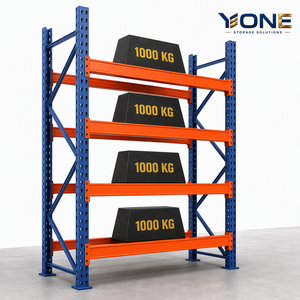
Industrial racking systems are structural frameworks designed to endure heavy dynamic and static loads over decades. Specifying heavy-duty selective pallet racks, drive-in systems, cantilever structures, or automated radio shuttle platforms requires a deep technical understanding of metallurgy, profile geometry, dynamic deflections, and site-specific environmental factors.
Premium warehouse racking relies on high-grade cold-rolled structural steel, primarily Q235B and Q355B. Q355B steel offers yield strengths exceeding 355 MPa, allowing for thinner upright profiles without compromising axial load capacities. This reduces structural deadweight while maintaining a safety factor of 1.65 to 1.9 based on FEM design calculations.
Technical Matrix: Comparative Analysis of Main Storage Rack Architectures
Selecting the optimal racking system depends on your operational profile, SKU velocity, floor slab capacity, and pallet handling equipment. Below is an engineering benchmark comparison:
| Racking System Type | Storage Density | SKU Selectivity | Handling Equipment Required | Optimal Application |
|---|---|---|---|---|
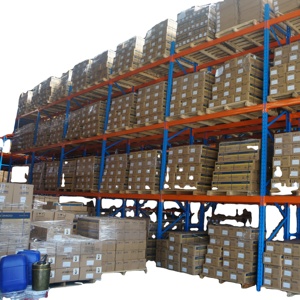
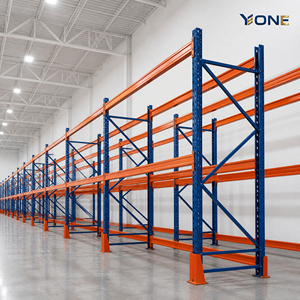
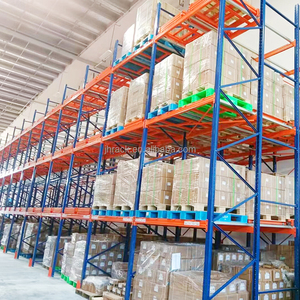
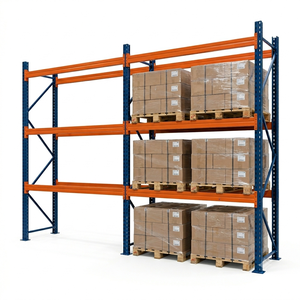
| Selective Pallet Racking | Standard (40%-50%) | 100% Direct Access | Standard Counterbalance / Reach Trucks | High SKU variety, fast-moving consumer goods (FMCG), 3PL hub operations. |
| Radio Shuttle Racking | Very High (75%-85%) | Filo / Fifo Batch Access | Standard Forklift + Autonomous Radio Shuttle Shuttle | Cold storage, food & beverage distribution, high-volume bulk SKU units. |
| Push-Back Racking | High (60%-70%) | LIFO (Last-In, First-Out) | Reach Truck / Counterbalance Truck | Medium SKU velocity, lane-level batch storage, footprint optimization. |
| Drive-In / Drive-Thru | High (65%-75%) | LIFO / FIFO Lanes | Specialized Narrow Counterbalance Forklifts | Homogeneous bulk items, seasonal inventory, non-perishable goods. |
| Heavy-Duty Cantilever | Variable (Linear) | 100% Side Access | Side Loaders / Multi-directional Forklifts | Long structural loads, steel pipes, timber, PVC tubes, and sheet materials. |
International Engineering Standards: RMI, FEM, AS 4084 & SEMA
When sourcing industrial warehouse shelving and racking from Chinese wholesalers, global compliance ensures operational safety, structural integrity, and local code authorization. Professional manufacturers design their profiles to comply with four primary international engineering codes:
- RMI Standards (Specification for the Design, Testing and Utilization of Industrial Steel Storage Racks - USA): Focuses on teardrop connection geometry, 2-inch pitch adjustability, column splice integrity, and seismic frame design following IBC/ASCE 7 guidelines.
- FEM 10.2.02 (European Federation of Materials Handling): Mandates rigorous finite element analysis (FEA), strict beam deflection limits (typically $L/200$), and comprehensive dynamic sway movement safety factors under full load.
- AS 4084:2023 (Steel Storage Racking - Australia): Specifies 76.2mm (3-inch) pitch configurations, stringent baseplate anchoring calculations, verticality tolerances, and impact resistance factors for upright protectors.
- SEMA Code (Storage Equipment Manufacturers Association - UK): Emphasizes operational safety signage, safe working load (SWL) certification, and structural testing methodologies for rack beam connectors.
Procurement & Technology Trends in Global Warehouse Storage (2025–2030)
The global warehousing and logistics industry is undergoing a major structural transformation. Key procurement and technological trends shaping future industrial storage facilities include:
1. Shift Toward High-Density Semi-Automated Systems
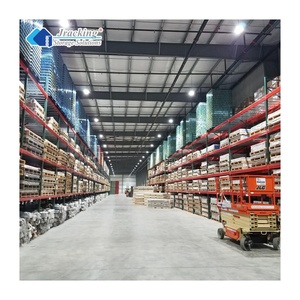
Rising industrial land prices and labor costs are driving a transition from traditional selective racking to high-density semi-automated architectures. Radio Shuttle Racking and Automated Storage and Retrieval Systems (ASRS) maximize vertical clear height (up to 40 meters) while reducing aisle footprints. Procurement strategies increasingly prioritize system scalability and integration with Warehouse Management Systems (WMS).
2. Seismic Engineering & Advanced Geotechnical Modeling
Modern distribution hubs require specialized structural engineering designed for seismic zones (e.g., Pacific Ring of Fire, Central/South American seismic zones). Racking uprights now integrate heavier gauge footplates, dual-anchor expansion bolts, and specialized top bracing frameworks to absorb lateral dynamic loads without structural failure.
3. Climate-Adapted Surface Coatings for Coastal & Cold Storage Facilities
Environmental durability is a key driver in Total Cost of Ownership (TCO) calculations. Standard powder coating can degrade in high-humidity or coastal warehouse locations (such as port free zones). Leading Chinese racking wholesalers offer specialized pre-galvanized profiles, hot-dip galvanizing (zinc thickness > 65 µm), and marine-grade epoxy coatings to prevent sub-surface oxidation over decades of operation.