Engineered Industrial Warehouse Racking & Storage Systems
Factory-certified heavy-duty steel pallet racks, automated radio shuttle platforms, and wide-span shelving designed to FEM 10.2.02, RMI, and AS 4084 standards.
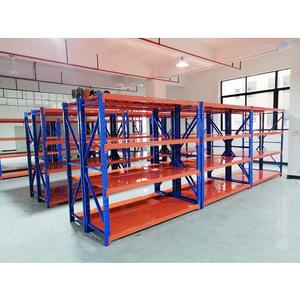
Industrial Shelving Wholesale Widespan Shelves System Warehouse Storage Racking Pallet Racks Drive in Pallet Racking System
Heavy-duty longspan and drive-in hybrid architecture engineered for versatile bulk inventory and manual picking operations.
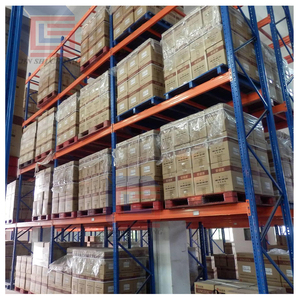
Industrial Heavy Duty Steel Pallet Rack Warehouse Shelving System for Storage, Distribution Center and Factory Use
High-capacity Q235B steel frame system constructed for maximum load-bearing efficiency in regional logistics hubs.
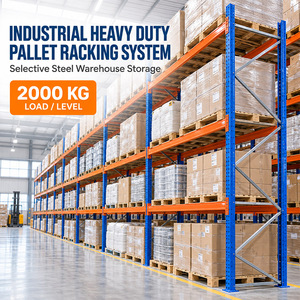
Industrial Heavy Duty Pallet Racking System 2000kg Load Selective Steel Warehouse Storage Rack System
Selective pallet beam configurations providing 100% direct product accessibility with strict safety factors up to 2000kg/pair.
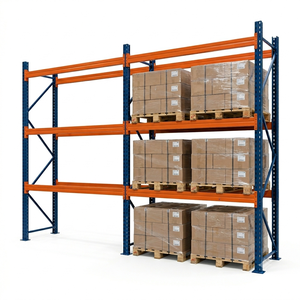
Heavy Duty Pallet Racking System 2000kg Per Layer Warehouse Shelving Adjustable Boltless Steel Storage Rack for Logistics Center
Modular boltless beam adjustment with 50mm/75mm height pitch flexibility for dynamic cold chain and fulfillment centers.
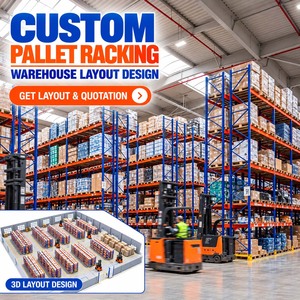
Custom Warehouse Pallet Racking System with Layout Design
Turnkey CAD engineering and space optimization planning customized to building clear height, slab load, and forklift turning radii.
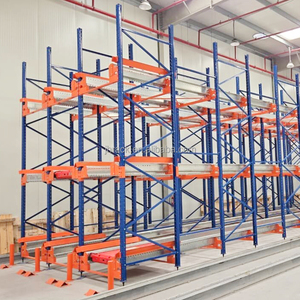
Heavy Duty Industrial Warehouse Storage Radio Shuttle Racking System Automated Pallet Shuttle Rack for High Density Storage
Semi-automated deep-lane pallet retrieval technology multiplying storage density up to 80% compared to traditional selective racking.
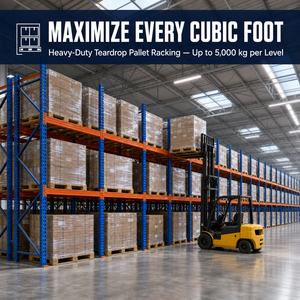
Large Scale E-Commerce Logistics Warehouse Pallet Racking System Customized High Load Industrial Conventional Heavy Duty Rack
Designed for intense 24/7 throughput environments featuring continuous impact protection, heavy bracing, and dual-anchor baseplates.
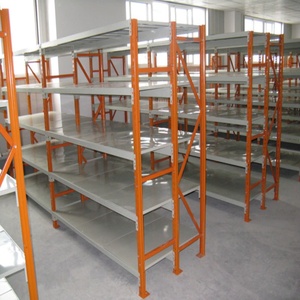
CE Certified Heavy Duty Industrial Steel Racking System Customized Layers High Capacity Warehouse Storage Rack
Fully compliant with European CE safety certifications, featuring electrostatic powder-coated or hot-dip galvanized structural finishes.
Strategic Engineering Overview: Sourcing Warehouse Racking from China Wholesale Suppliers
In modern global supply chain operations, optimizing volumetric storage capacity while maintaining stringent safety margins is a primary operational objective. As distribution hubs transition from localized storage to mega-fulfillment centers, selecting high-performance steel pallet racking systems becomes a critical capital expenditure. China has established itself as the world's apex manufacturing center for heavy-duty storage racks, combining advanced cold-roll forming technology, high-grade structural metallurgy (Q235B and Q355B cold-rolled steel), and automated powder-coating processes.
When enterprise buyers evaluate China wholesale warehouse shelving racks suppliers & wholesalers, technical due diligence extends far beyond base metric pricing per kilogram. Structural integrity under static and dynamic loading, finite element analysis (FEA), compliance with international design codes (such as standard EN 15512, FEM 10.2.02, American RMI MH16.1, and Australian AS 4084-2023), and environmental corrosion resistance represent the foundational pillars of robust procurement planning.
Information Gain Executive Summary: Structural failure in industrial warehouse racking often stems from underestimated buckling length ratios, poor weld seam penetration, or substandard grade steel. Premier Chinese racking manufacturers employ automated continuous cold-roll forming mills with inline ultrasonic flaw detection to ensure zero-defect upright profiles.
Structural Engineering Analysis of Industrial Racking Systems
Industrial pallet racks are non-building structures designed to resist severe gravity loads alongside lateral seismic and wind loads (in semi-open or rack-supported building applications). Understanding the structural physics behind frame profiles and beam connections is imperative for procurement officers and logistics consultants.
1. Upright Profile Geometry & Cold-Formed Steel Dynamics
The column frame (upright) serves as the primary vertical load-bearing component. Leading manufacturers utilize multi-stage roll-forming machinery to transform flat structural steel strips into complex, cold-formed open sections featuring 10 to 13 bending ribs. These folded ribs dramatically increase the moment of inertia ($I_x, I_y$) and radius of gyration, preventing localized torsional-flexural buckling under axial compressions.
Steel grades such as Q355B (yield strength $\sigma_y \ge 355 \text{ MPa}$) are increasingly deployed for lower-level column sections supporting extreme bay weights exceeding 15,000 kg, while Q235B ($\sigma_y \ge 235 \text{ MPa}$) provides economical stability for standard height applications. Upright teardrop or diamond hole pitches (typically 50mm, 75mm, or 76.2mm / 3-inch pitch) are precision-punched via CNC automated stamping presses prior to roll forming, ensuring consistent spatial alignment across multi-tiered high-bay rack assemblies.
2. Box Beam Architecture and Lock-Jaw Connector Mechanics
Step beams and box beams support horizontal pallet loads. Modern high-capacity box beams are fabricated by seam-welding two C-profile sections together via continuous robotic MAG (Metal Active Gas) welding units. This enclosed rectangular profile delivers superior torsional rigidity compared to traditional open structural channels.
Beam-to-column connections rely on multi-claw structural steel connectors (end-plates) featuring self-engaging safety locks. When a forklift lowers a pallet onto the beam, the downward force engages a natural mechanical wedging action between the beam connector pins and the upright slots, drastically reducing connection rotation (semirigid joint behavior) and mitigating overall structural sway.
Comparative Data Matrix: Industrial Racking System Specifications
| Racking Architecture | Pallet Access ratio | Storage Density Index | Max Load per Level | Structural Standard Compliance | Ideal Application Profile |
|---|---|---|---|---|---|
| Selective Pallet Rack | 100% Direct Access | Standard (40-50% Floor Utilized) | Up to 4,500 kg / pair | FEM 10.2.02 / RMI MH16.1 | High-SKU diversity, fast turnover 3PL fulfillment |
| Drive-In / Drive-Through | LIFO / FIFO (Filtered) | High (65-75% Floor Utilized) | Up to 1,800 kg / pallet | EN 15512 / ISO 9001 | Homogeneous high-volume products, cold storage |
| Radio Shuttle Racking | Automated LIFO / FIFO | Ultra-High (80-88% Floor Utilized) | Up to 2,000 kg / shuttle unit | CE / FEM 10.2.08 / AS 4084 | Deep-lane high-density bulk goods & beverage hubs |
| Heavy Duty Cantilever | 100% Unobstructed Front | Variable (Linear Storage) | Up to 6,000 kg / arm | SEMA / BS EN 15629 | Pipes, steel profiles, timber, structural tubing |
| Mezzanine Steel Platform | Multi-Level Access | Doubles/Triples Floor Space | 300 - 1,500 kg / m² | GB50017 / AISC Specifications | E-commerce bin-picking, manual assembly zones |
Why Tier-1 Chinese Wholesalers Lead Global Sourcing
Integrating end-to-end steel mill sourcing, robotic precision manufacturing, and international quality management certifications.
Full-Scale Metallurgy & Procurement Control
Direct supply partnerships with major state-owned steel conglomerates (such as Baosteel and Shougang) guarantee prime-grade hot-rolled coil inputs with zero recycled scrap impurities. All steel billets undergo chemical spectrographic analysis and mechanical tensile testing before processing.
Global Engineering Compliance & Certifications
Advanced structural engineering teams utilize ANSYS structural modeling software to simulate seismic shockwaves, dynamic forklift collisions, and maximum frame deflections, certifying compliance across European CE, ISO 9001, Australian AS 4084, and North American RMI standards.
Surface Treatment & Anti-Corrosion Systems
Utilizing 9-stage automatic phosphate pretreatment wash bays combined with Swiss Gema electrostatic epoxy-polyester powder coating lines (60-80μm film thickness), yielding salt-spray corrosion resistance up to 500 hours (EN ISO 9227 compliant). Hot-dip galvanizing (HDG) options available for extreme cold-chain or humid coastal logistics zones.
Strategic Procurement Trends for Wholesale Warehouse Racking (2025–2030)
The industrial storage equipment sector is undergoing a profound paradigm shift driven by e-commerce velocity, urban land scarcity, labor cost inflation, and corporate sustainability mandates. Supply chain directors sourcing from Chinese manufacturers must realign their procurement strategies with four overarching market trends:
1. Shift from CapEx-Driven Pricing to Total Cost of Ownership (TCO)
Traditionally, B2B racking procurement focused heavily on initial FOB container prices. However, progressive enterprise buyers now calculate overall lifecycle TCO. High TCO factors include structural modularity, ease of rack height reconfiguration, replacement component availability, and anti-impact durability. Investing in heavy-duty column protectors, heavy-gauge row spacers, and reinforced bottom-upright profiles drastically reduces annual repair downtime caused by material handling equipment (MHE) collisions.
2. Hyper-Density Optimization & Vertical Expansion
With industrial real estate lease rates rising globally, standard 6-meter vertical ceiling clearances are being replaced by high-bay logistics centers exceeding 12 to 24 meters in clear height. This shift demands rack structures with extreme vertical stability, tighter manufacturing tolerances (per EN 15620 Class 300/400 tolerances), and high-rigidity structural beam connectors capable of maintaining frame plumbness over extended height ratios.
3. Customized Direct-From-Factory OEM Sourcing Models
Modern B2B buyers are bypassing intermediary distributors in favor of direct collaboration with Chinese OEM/ODM factories. Direct factory engagement enables tailored engineering—such as custom beam lengths matched to non-standard Euro/Asian/GMA pallet dimensions, localized seismic anchor hole patterns, and custom corporate powder-coat branding.
Technical Development Trends in Industrial Racking Systems
The convergence of industrial automation, Internet of Things (IoT) sensors, and sustainable metallurgical processing is ushering in a new generation of intelligent warehouse storage systems.
1. Deep Integration with Automated Storage and Retrieval Systems (ASRS)
Static storage racks are rapidly evolving into high-precision structural skeletons for fully automated warehouse platforms. Clad-rack buildings (where the racking system forms the structural support frame for the building walls and roof) integrated with automated stacker cranes, high-speed miniload systems, and autonomous mobile robots (AMRs) represent the cutting edge of industrial logistics infrastructure. Chinese manufacturers lead in producing ultra-precise rack frames capable of supporting sub-millimeter positioning sensors required by stacker crane optical guidance systems.
2. IoT-Enabled Radio Shuttle & Autonomous Fleet Ecosystems
Deep-lane Radio Shuttle racking systems have revolutionized high-density storage. The integration of lithium-iron-phosphate ($LiFePO_4$) powered shuttles controlled via Wi-Fi or 5G industrial networks allows real-time inventory tracking, automatic pallet compaction, and seamless synchronization with Warehouse Management Software (WMS). Future shuttle tracks will feature embedded wireless charging strips and real-time weight sensor grids built directly into the guide rails.
3. Structural Health Monitoring (SHM) & Smart Impact Sensing
Enterprise logistics hubs are beginning to implement IoT strain gauges and RFID-enabled accelerometer impact sensors attached to racking columns. When a forklift accidentally strikes an upright frame, the sensor logs the impact G-force vector and immediately alerts facility managers via SMS or WMS notification, pinpointing the exact rack location requiring structural integrity inspection before catastrophic deflection can occur.
4. Sustainable Green Steel Procurement & Low-VOC Coatings
Environmental, Social, and Governance (ESG) criteria are exerting strong influence over global supplier selections. Premier Chinese racking factories are transitioning to solar-powered manufacturing plants, utilizing green hydrogen-reduced steel coils, and replacing solvent-borne paints with 100% recyclable powder coatings featuring zero volatile organic compounds (VOCs).
Frequently Asked Questions (FAQ) for B2B Racking Procurement
Comprehensive technical answers addressing load calculations, climate suitability, international engineering codes, and ocean logistics.
How do Chinese racking manufacturers guarantee structural safety factors under heavy dynamic loads?
Tier-1 Chinese racking suppliers manufacture systems in strict compliance with international structural standards including FEM 10.2.02 (European Code), RMI MH16.1 (American Standard), and AS 4084-2023 (Australian Code). Safety factors typically range between 1.5 to 1.95 depending on component type. Every column profile and beam section undergoes rigorous Finite Element Analysis (FEA) computer simulations followed by physical destructive testing—such as stub column compression tests, beam bending deflection tests (ensuring deflection does not exceed $L/200$), and connector beam-end assembly shear tests.
Which surface finish (Powder Coating vs. Hot-Dip Galvanizing) is optimal for high-humidity or cold-chain environments?
For standard temperature-controlled warehouses, an electrostatic epoxy-polyester powder coating (60 to 80 microns thick) provides excellent scratch resistance and visual color-coding for safety aisles. However, for deep-freeze cold storage facilities (down to -30°C), semi-outdoor storage sheds, or coastal port warehouses exposed to salt spray, Hot-Dip Galvanizing (HDG) per ISO 1461 is highly recommended. HDG applies a zinc coating layer of 60 to 100 microns that metallurgical bonds to the steel, offering self-healing cathodic corrosion protection for over 25 years.
What technical parameters are required to receive an engineered warehouse layout drawing and quotation?
To prepare an optimized CAD layout and accurate bill of materials, buyers should provide: (1) Architectural warehouse floor plan (PDF or DWG format) showing column positions, building clear height, slab thickness, and door openings; (2) Pallet specifications including entry side dimensions, depth, height, and maximum gross weight per pallet; (3) Material handling equipment details (forklift type, lift height, minimum aisle width requirement); and (4) Operating temperature and local seismic code zone data.
How are long upright columns and heavy steel beams packed to prevent transit damage during ocean freight shipping?
Export packaging utilizes heavy-duty steel strapping, corrugated corner protectors, wooden dunnage blocks, and waterproof PE stretch film wrapping. Upright frames are systematically bundled to maximize 40-foot High Cube (40HC) container space utilization, while box beams are nested using protective plastic foam spacers to eliminate paint abrasion during ocean transport. All wood packaging materials comply with ISPM-15 heat treatment (fumigation) standards for seamless customs clearance worldwide.
Can Chinese racking systems be customized to match existing US Teardrop or European standard racks?
Yes. Leading Chinese OEM manufacturers maintain dedicated tooling dies for 2-inch pitch American Standard Teardrop racking (compatible with Interlake, Advance, and Hannibal systems), 50mm pitch European standard systems (compatible with Dexion, Stow, and Mecalux profiles), and 76.2mm pitch Australian standard racks. This allows seamless expansions, beam height adjustments, and component replacements for existing warehouse installations.
Optimize Your Warehouse Capacity with Direct Chinese OEM Engineering
Connect with our senior engineering team to receive a complimentary structural load analysis, custom CAD space planning layout, and competitive wholesale factory pricing tailored to your logistics requirements.
Inquire Now