Heavy-Duty Storage Racking Systems
Explore our comprehensive selection of industrial storage racking, cantilever systems, and heavy-duty wire mesh decking engineered to international standards for distribution centers and regional logistics hubs.
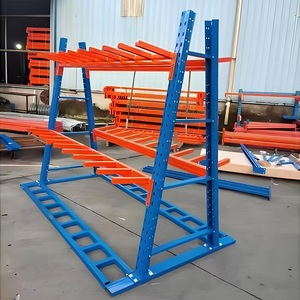
Industrial Warehouse A Shape Cantilever Rack Heavy Duty Steel Long Material Storage
View Product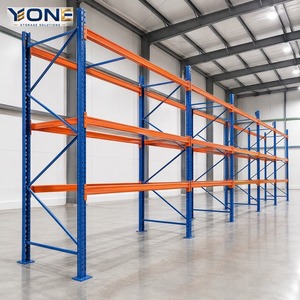
Steel Storage Rack Warehouse Heavy Duty Selective Pallet Rack System
View Product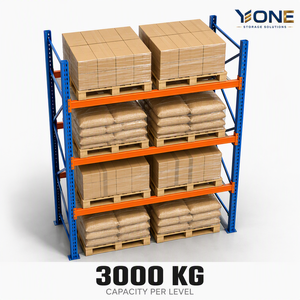
Factory Heavy Duty Steel Pallet Rack 2000kg Capacity Warehouse System
View Product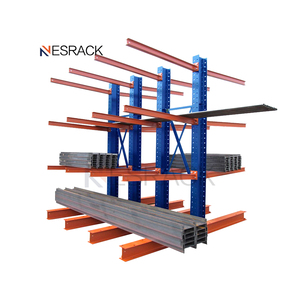
Heavy Duty Double Sided Storage Racks Cantilever Racking for Warehouse
View Product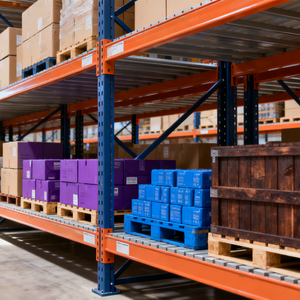
High-Capacity 5-Layer Durable Iron Steel Heavy Duty Corrosion Protection Rack
View Product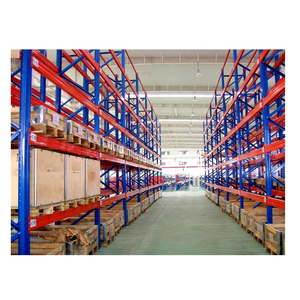
HEDA Guangzhou Steel Pallet Racking System Warehouse Storage Shelves
View Product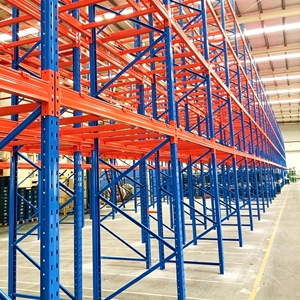
Hot Selling Adjustable Heavy Duty Steel Industrial Racks High Bay System
View Product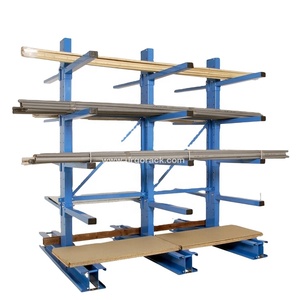
2026 Car Cantilever Assemble Warehouse Rack and Cantilever Racking
View Product1. Architectural Kinematics & Structural Engineering of Push Back Racking
In modern logistics infrastructure and cold-chain operations, maximizing volumetric floor storage density while preserving operational velocity is a core mandate. Push Back Racking Systems represent a peak evolution in dynamic, high-density accumulator storage. Operating on a Last-In, First-Out (LIFO) inventory control principle, push back systems enable warehouses to store pallets from 2 to 6 deep while utilizing a single aisle for both loading and retrieval operations.
Unlike standard drive-in racking—which requires forklift trucks to physically drive into the structural rack matrix, increasing cycle times and structural risk—a push back racking system utilizes a series of nested, low-profile wheeled carts riding along inclined structural steel rails. The rails are set at a precise engineered slope gradient (typically 3% to 5%). When an operator loads the first pallet onto the top cart, the subsequent pallet is used to push the first pallet back, exposing the second nested cart. This mechanical movement repeats for up to 6 pallet depths per storage lane.
Nested Cart Precision
Custom-fabricated steel carts nested vertically with precision-sealed bearings, minimizing height loss and providing ultra-smooth movement across broad temperature ranges (-30°C to +40°C).
Gravity-Assisted Flow
Controlled dynamic inclination gradients ensure smooth self-propulsion during pallet retrieval, eliminating mechanical drag while incorporating anti-lift safety tabs to prevent derailment.
Safety & Structural Integrity
Manufactured strictly to FEM 10.2.02 and RMI specifications using high-tensile cold-rolled or structural channel steel with heavy-duty column protectors and load-stop beams.
2. Comparative Engineering Analysis: Storage Systems Matrix
Selecting the correct high-density storage framework requires an empirical evaluation of spatial efficiency, SKU diversity, forklift operator accessibility, and capital expenditure (CAPEX) per pallet position. Below is a comparative engineering benchmark compiled by our structural design team:
| System Architecture | Storage Density (%) | Selective Accessibility | Operational Risk / Collision | Fulfillment Velocity | Ideal SKU Application |
|---|---|---|---|---|---|
| Push Back Racking (2-6 Deep) | 75% - 85% | Medium (1 SKU per Lane) | Very Low (Forklift stays in aisle) | High (Fast LIFO cycles) | Medium-volume, 2-6 pallets/SKU |
| Drive-In Racking | 65% - 75% | Low (1 SKU per Bay) | High (Forklift enters rack frame) | Low (Slow vehicle maneuvering) | High-volume, low-SKU count |
| Selective Pallet Racking | 35% - 45% | 100% Immediate | Minimal | Very High | Low-volume, high-SKU variation |
| Radio Shuttle Racking | 85% - 92% | System Dependent (LIFO/FIFO) | Very Low (Automated Shuttle) | High (Robotic movement) | Deep lane cold storage & bulk 3PL |
| Pallet Live Flow (Gravity) | 80% - 90% | High FIFO Control | Low | Very High | Perishable goods, fast FMCG flow |
As evidenced by the technical matrix above, Custom OEM Push Back Racking delivers an ideal equilibrium between footprint consolidation and picking throughput. By allowing each lane to hold a distinct SKU while eliminating forklift entry into the structural bays, facility managers achieve up to 90% higher rack storage density compared to standard selective layouts, while dramatically reducing maintenance costs associated with upright column collisions.
3. Global OEM Sourcing & Technological Horizon Trends (2026–2030)
As global supply chains shift toward automated intra-logistics, green building certifications (LEED), and real-time inventory tracking, procurement executives must evaluate push back racking suppliers through the lens of long-term technological adaptability. Key trends shaping procurement strategy include:
1. Cold Storage Optimization & Galvanization
With the global growth of cold-chain logistics, push back systems are increasingly deployed in -30°C freezer environments. Modern OEM suppliers utilize hot-dip galvanizing (HDG) and specialized low-temperature synthetic cart lubricants that prevent fluid crystallization, ensuring zero-jam operation under severe thermal stress.
2. Hybrid AMR/AGV Aisle Interfaces
The integration of Autonomous Mobile Robots (AMRs) and Automated Guided Vehicles (AGVs) requires push back cart tolerance standards to shrink. Upright beam tolerances must meet millimeter-level precision. Our OEM factories utilize robotic laser cutting and automated continuous roll-forming lines to guarantee precise tolerances for AGV alignment.
3. Seismic Performance & REP Compliance
Global logistics nodes located in high seismic risk zones (such as Central and South America under the Reglamento Estructural Panameño - REP or US West Coast RMI guidelines) require advanced finite element analysis (FEA). Custom push back engineering now incorporates dynamic baseplates, high-grade anchor bolts, and reinforced heavy-duty horizontal bracing.
4. OEM/ODM Custom Manufacturing & Quality Assurance Standards
As a premier tier-1 global manufacturer and wholesaler, our industrial production infrastructure spans over 150,000 m² of modern intelligent production space with an annual steel throughput exceeding 100,000 metric tons. We specialize in bespoke OEM and ODM rack manufacturing, allowing international distributors, integrators, and project end-users to tailor every dimension of their storage rack system:
- Pitch Customization: Standard 50mm, 75mm, 76.2mm (Australian AS 4084 standard), and 2-inch teardrop pitch profiles (American RMI standard).
- Steel Grade Engineering: High-tensile Q235B, Q355B structural steel, and SS400 cold-rolled profiles engineered for optimal strength-to-weight ratios.
- Advanced Surface Treatment: 14-stage pre-treatment wash followed by electrostatically applied epoxy powder coating (60–80 microns thickness) or heavy-duty hot-dip galvanizing for coastal/corrosive industrial zones.
- Export Ocean Freight Packaging: Dedicated steel banding, protective corner guards, plastic shrink wrapping, and wood-lumber cradles designed to eliminate transit corrosion and friction damage during trans-oceanic shipping.
5. Push Back Racking Procurement FAQ
What is the maximum pallet capacity and depth for custom push back racking systems?
How does a push back system handle defective or misaligned pallets?
What vertical clear height is lost when installing nested push back carts?
What international quality certifications do your racking systems comply with?
Can push back systems be installed in semi-outdoor or coastal shipping zone sheds?
What layout data is required to receive a formal structural design proposal and CAD plan?
What is the typical production lead time for wholesale OEM container orders?
Do you offer white-label OEM manufacturing for regional racking distributors?
Engineer Your High-Density Storage Project Today
Connect directly with our senior structural engineering team for complimentary warehouse space planning, 3D CAD modeling, structural load calculations, and factory-direct OEM pricing.
Contact Us