Featured Heavy-Duty Racking Systems
Factory-direct OEM/ODM warehouse storage equipment manufactured under ISO 9001, FEM 10.2.02, and RMI structural design benchmarks.
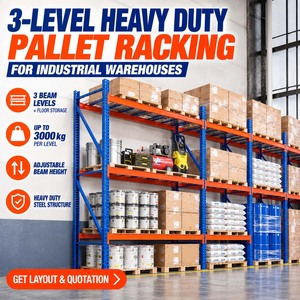
3-Level Heavy Duty Pallet Racking System for Industrial Warehouses
High-strength structural beam configuration engineered for heavy unit loads, multi-tier pallet storage, and maximum forklift accessibility.
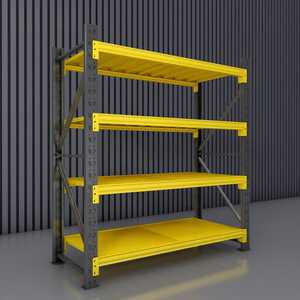
Kimsuk 5 Layers 100-500KG Load Warehouse Rack Wire Storage Shelf
Versatile multi-layer boltless steel shelving engineered for commercial goods, manual picking, and adjustable tier spacing.
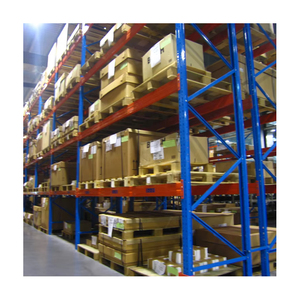
Heavy Duty Racking Storage Shelves Systems Stacking Metal Units
Rigid metal frame racking optimized for heavy bulk pallet storage, industrial manufacturing hubs, and distribution centers.
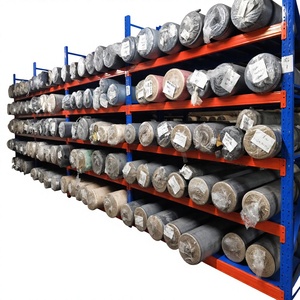
Commercial Steel Multi-Level Powder Coated Medium Duty Storage Rack
Powder-coated finish with superior corrosion resistance for supermarket logistics, spare parts inventory, and light industrial storage.
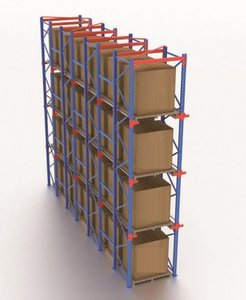
High Density Commercial Storage Warehouse Drive-In Pallet Rack System
Eliminates aisles to maximize warehouse space for high-volume homogenous pallet loads requiring LIFO inventory management.
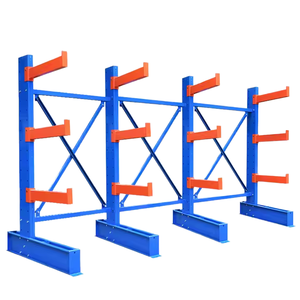
Strong Durable Industrial Cantilever Rack Boltless Heavy Duty Unit
Unobstructed arm columns designed specifically for handling long, bulky materials such as steel pipes, aluminum extrusions, and timber.
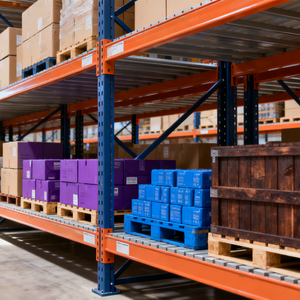
High-Capacity 5-Layer Durable Steel Corrosion Protection Pallet Rack
Electrostatic pretreatment and specialized anti-corrosion coating engineered for cold-room storage and high-humidity warehouse environments.
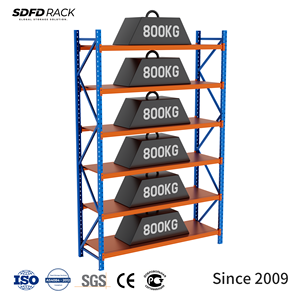
Adjustable Custom 4-6 Layer Selective Pallet Racking System (800kg/beam)
Fully customizable beam height pitch with high flexibility for multi-SKU retail logistics and rapid forklift loading cycles.
Engineering White Paper: Technical Principles of Industrial Push-Back Racking Systems
As modern supply chains demand higher volumetric efficiency without sacrificing operational velocity, Push-Back Racking Systems (Push Racks) have emerged as a premier high-density storage technology for industrial warehouses, cold storage facilities, and high-turnover staging hubs. Operating on a Last-In, First-Out (LIFO) inventory control paradigm, push-back racking enables warehouses to store pallets from 2 to 6 deep while retaining immediate front-aisle access to multiple individual SKUs.
Unlike standard drive-in racking where forklifts must physically maneuver inside structural channels—increasing cycle times and structural impact hazards—push racks utilize nested, gravity-inclined cart assemblies riding on precision-engineered steel rails. When a forklift loads a new pallet into a lane, it gently pushes the preceding pallet back to expose the next nested cart. Upon retrieval, gravity automatically glides the remaining pallets forward to the pick face at controlled speeds.
Information Gain Insight: The mechanical efficiency of an OEM/ODM push-back racking installation depends on the precise calculation of rail incline gradients (typically 3% to 5%), wheel bearing coefficient of friction, and cold-formed steel section modulus. A 0.5° variance in gradient can impact cart acceleration rates and cause pallet hang-ups or violent impact at the stop face.
Kinematic Physics & Nesting Cart Mechanical Dynamics
Custom OEM/ODM push rack manufacturing requires rigid metallurgical control and precise mechanical tolerances. The system comprises four primary dynamic components:
- Nested Cart Matrix: A series of low-profile, heavy-duty steel carts that telescope over one another on a unified rail structure. Low-profile designs preserve vertical bay height, allowing maximum stacking levels under low-headroom ceilings.
- Precision Flow Rails: Fabricated from structural steel channels or heavy-gauge roll-formed sections, set at an exact pitch to ensure smooth gravity acceleration while preventing runaway velocity.
- Sealed Heavy-Duty Bearing Wheels: Machined steel or high-impact polyurethane wheels fitted with dust-shielded, maintenance-free ball bearings capable of handling ambient temperatures down to -30°C in freezing environments.
- Safety Retainers & Impact Stops: Reinforced front-end mechanical stops designed to absorb terminal momentum when pallets move forward to the picking aisle, protecting both operators and stored goods.
Metallurgical Standards & Custom OEM/ODM Capabilities
Our industrial production facilities utilize high-tensile cold-rolled steel (specifically Q235B and Q355B grades, equivalent to ASTM A1011 Grade 50) to deliver maximum strength-to-weight ratios. Upright frame profiles are manufactured using continuous automatic roll-forming lines with custom hole punching patterns (including 50mm pitch, 75mm pitch, and 2-inch teardrop profiles), fully compatible with global operational practices.
| System Dimension | OEM Customization Range | Engineering Specification | Industry Standard Compliance |
|---|---|---|---|
| Pallet Depth Configuration | 2, 3, 4, 5, or 6 Pallets Deep | Gravity-Inclined Telescoping Carts | FEM 10.2.02 / RMI Guidelines |
| Cart Load Capacity | 500 kg to 2,500 kg per position | Heavy-Duty Machined Steel Bearings | ISO 9001 / SEMA Structural Code |
| Structural Frame Steel Grade | Q235B / Q355B Cold-Rolled Steel | Tensile Yield Strength > 355 MPa | ASTM A1011 / EN 10025 Standard |
| Surface Protection Finish | Epoxy Powder Coating / Hot-Dip Galvanized | 60–80 µm Coating Thickness | ISO 12944 Anti-Corrosion Class |
| Operational Temperature Range | -30°C to +50°C Ambient Range | Low-Temp Bearing Lubricants & Steel | Cold Storage Logistics Approved |
Comparative Analysis: Evaluating High-Density Pallet Racking Architectures
Selecting the optimal warehouse storage architecture requires balancing volumetric space utilization against SKU selectivity, forklift cycle speeds, and total cost of ownership (TCO). The data matrix below provides warehouse logistics directors with a direct comparative overview of OEM Push-Back Racking versus alternative high-density warehouse systems.
| Racking Architecture | Storage Density | SKU Selectivity | Forklift Risk Level | Capital Investment (CAPEX) | Best Suited Application |
|---|---|---|---|---|---|
| Push-Back Racking | High (Up to 75%) | Medium (1 SKU per lane) | Low (Forklift stays outside aisle) | Moderate (Mechanical Carts) | Medium SKU counts, 2-6 pallet depth, high-turnover LIFO. |
| Selective Pallet Rack | Low (Approx 40%) | High (100% Direct Access) | Low (Standard Aisles) | Low (Basic Frame & Beams) | High SKU variance, low-volume individual pallet retrieval. |
| Drive-In Racking | Very High (Up to 85%) | Very Low (1 SKU per block) | High (Truck drives into rack) | Low-Moderate | Bulk homogeneous goods, seasonal inventory, low turnover. |
| Radio Shuttle Racks | Maximum (85%+) | Medium-Low | Minimal (Automated Shuttle) | High (Robotic Integration) | Large-scale automated distribution centers & cold stores. |
Why Strategic Buyers Choose OEM/ODM Push-Back Systems
Compared to Drive-In systems, Push-Back racking increases operator picking productivity by up to 50%. Because forklift operators never enter the rack structure, forklift travel distance per pick is drastically reduced, while frame collision damage—a major source of maintenance overhead and safety liability in Drive-In layouts—is virtually eliminated.
Enterprise OEM/ODM Manufacturing Capabilities: Why Partner with Us
As a global supplier with over two decades of structural engineering leadership, CanalRack Industrial Storage S.A. translates deep metallurgical expertise into customizable, high-performance warehouse solutions. Operating out of a state-of-the-art 70,000 square meter intelligent manufacturing center, we deliver end-to-end design, fabrication, surface finishing, and international export capabilities.
1. Automated Precision Manufacturing
Our facility houses 18 continuous automatic cold roll-forming lines, robotic laser cutting units, and automated multi-axis welding stations. This automated infrastructure ensures sub-millimeter tolerances across complex push-back cart rail channels, guaranteeing unhindered cart movement under maximum load conditions.
2. Rigorous Quality Control & Testing
Every steel coil undergoes raw material tensile testing, yield analysis, and ultrasonic flaw detection. Assembled cart components undergo dynamic loading fatigue tests, static deflection verification, and extreme thermal cycling to guarantee flawless performance under continuous industrial operation.
3. Tailored OEM/ODM Structural Customization
We do not impose standard size limitations. Our engineering team designs push-back systems adapted precisely to your existing building clear heights, floor slab load capacity, non-standard pallet dimensions (e.g., Euro, GMA, Australian standards), and specific forklift reach profiles.
4. Export-Grade Protective Packaging & Logistics
International ocean freight exposes steel components to salt humidity and thermal fluctuations. We utilize specialized export bundlings, protective corner guards, steel-strapped wooden skids, and heavy-duty shrink wrapping to ensure zero coating degradation upon arrival at container terminals worldwide.
Future Procurement Trends in Industrial Racking & OEM Systems
Navigating the next decade of supply chain evolution requires warehouse operators and global distributors to anticipate structural and technological shifts in industrial rack procurement:
1. Hybrid Integration with Semi-Automated Robotics
Future-ready warehouses are increasingly adopting hybrid storage models. OEM push-back cart configurations are now engineered with sensor-ready rail frames, allowing seamless integration with automated guided vehicles (AGVs) and autonomous mobile robots (AMRs) to replace traditional manual forklift placement.
2. Sustainable Green Metallurgy & Zero-VOC Coatings
Corporate Scope 3 emissions commitments are reshaping procurement criteria. We lead the industry by utilizing eco-certified, zero-VOC electrostatic powder coatings and sourcing structural steel billets produced via low-carbon electric arc furnace (EAF) processing, allowing your warehouse expansion to align with international ESG metrics.
3. Smart Sensor Embedded Push Carts
Emerging ODM push-back systems incorporate IoT weight and position micro-sensors within individual flow carts. These smart sensors wirelessly transmit real-time lane occupancy, load weight metrics, and cart return speed anomalies directly to Warehouse Management Systems (WMS), alerting facilities to preventive maintenance requirements before structural wear occurs.
4. Modular Standardization for Rapid Global Expansion
Multinational logistics providers are standardizing their warehouse footprints using modular OEM push-back structural kits. Interchangeable frame connectors and universal beam adapters reduce custom lead times by up to 35%, facilitating rapid facility commissioning across overseas free-trade distribution zones.
Technological & Engineering Innovations in Push Racks Manufacturing
Continuous mechanical refinement is unlocking higher safety margins and operational smooth-ness in dynamic rack manufacturing. Key technological developments include:
- Low-Friction Polyurethane-Steel Composite Wheels: Replacing standard nylon or basic steel wheels, modern composite wheel designs combine high load-bearing steel cores with shock-absorbing polyurethane treads, significantly reducing operational acoustic noise levels during pallet loading cycles.
- Seismic-Resistant Upright Baseplate Engineering: Advanced finite element analysis (FEA) modeling allows our structural engineers to design dynamic baseplate anchors that absorb lateral seismic forces (compliant with IBC, REP, and ASCE parameters), preventing bay twist during earthquake events.
- Cold-Chain Sub-Zero Lubrication Formulation: Standard bearing greases harden and seize up in deep-freeze facilities (-20°C to -30°C). Breakthrough synthetic fluorinated lubricants ensure push carts maintain uniform rolling resistance regardless of freezing thermal stress.
Frequently Asked Questions: B2B Procurement & Engineering
Essential answers for warehouse operations managers, procurement officers, and structural engineers planning push rack installations.
What is the primary operational difference between Push-Back Racking and Drive-In Racking?
Push-Back Racking utilizes dynamic telescoping carts on inclined rails where forklifts load and pick entirely from the front aisle. Drive-In Racking requires forklift operators to physically drive inside the racking structure to place or retrieve pallets. Push-Back systems offer significantly faster cycle times, higher safety margins, reduced frame damage risks, and support multi-SKU lane management superior to Drive-In layouts.
How does an OEM/ODM manufacturer determine the precise gradient for push-back flow rails?
The optimal slope (typically between 3% and 5%) is calculated based on total pallet unit weight range, cart wheel bearing friction coefficient, pallet bottom runner configuration (e.g., block vs. perimeter base), and operating ambient temperature. Our engineers utilize computer simulations to ensure pallets roll smoothly without uncontrolled acceleration or mid-lane friction stalls.
Can existing selective pallet racking frames be retrofitted into a push-back cart system?
Yes, provided existing upright frames possess adequate load capacity, vertical bay height, and structural depth. Our engineering team can supply custom OEM push-back rail assemblies and nested cart matrices designed to bolt directly onto your current heavy-duty selective rack uprights, drastically reducing hardware retrofitting expenses.
What surface finish is recommended for cold storage facilities using push racks?
For high-humidity or sub-zero freezer environments (-30°C), we recommend hot-dip galvanizing (HDG) or specialized dual-layer zinc-rich epoxy powder coatings. Hot-dip galvanizing provides complete zinc coverage inside hollow profiles and roll-formed edges, offering lifelong protection against condensation corrosion and metal embrittlement.
What structural engineering standards do CanalRack OEM push racking systems comply with?
All our storage systems are designed, calculated, and manufactured in full accordance with international structural codes including European FEM 10.2.02 (Design of Static Steel Pallet Racking), American RMI (Rack Manufacturers Institute), Australian AS 4084, UK SEMA codes, and ISO 9001 certified quality control processes.
What information is required to receive a formal OEM CAD layout and detailed price quote?
To prepare an accurate structural proposal and bill of materials, please provide: (1) Warehouse CAD floor plan detailing clear height and column locations, (2) Pallet dimensions (Width x Depth x Height including load), (3) Maximum weight per pallet, (4) Desired pallet storage depth (2 to 6 deep), and (5) Forklift model, maximum lift height, and operating aisle width constraints.
Transform Your Warehouse Storage Density Today
Partner directly with an established OEM/ODM manufacturer. Receive a complimentary engineering consultation, custom CAD layout, and factory-direct price quotation within 24 hours.