Industrial Racking & Storage Product Portfolio
Explore our factory-engineered heavy-duty storage racks, automated shuttle platforms, and long-span cantilever shelving systems designed for high-turnover logistics centers.
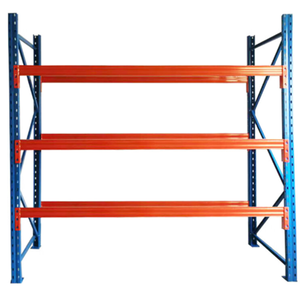
Mracking Industrial Warehouse Pallet Racking Shelving System
Heavy-duty structural selective frame designed for 100% pallet accessibility and varied SKU profiling.
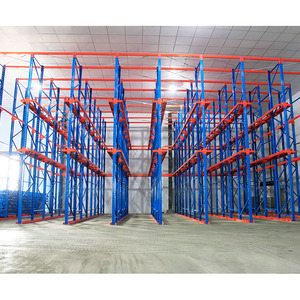
Drive-Through Pallet Rack Heavy Duty High Density Storage Rack
Maximizes floor cube utilization by eliminating traditional aisles for high-volume homogenous goods.
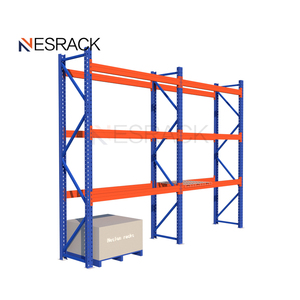
European Industrial Steel Selective Pallet Racking System
FEM 10.2.02 standard compliant with multi-level anti-corrosion powder coating finish.
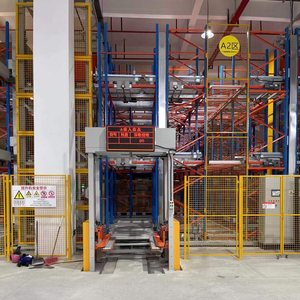
ASRS Industrial Automatic High Density Pallet Racking System
Automated retrieval architecture integrating stacker cranes and WMS software for dark warehousing.
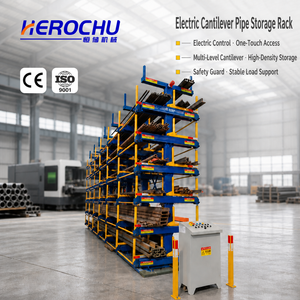
Automated Electric Cantilever Rack for Industrial Pipe Storage
Motorized mobile cantilever base tailored for heavy steel tubes, timber, and long stock material.
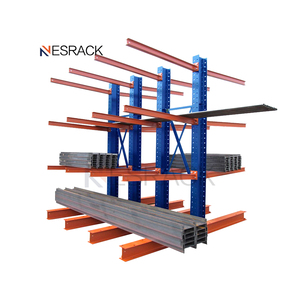
Heavy Duty Double Sided Warehouse Cantilever Racking
Unobstructed front handling columns optimized for crane and heavy forklift overhead access.
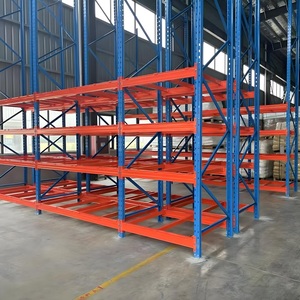
Custom Heavy Duty Selective Racking with Cross Brace Beams
Tailor-engineered structural steel profiles with custom pitch dimensions and seismic bracing.
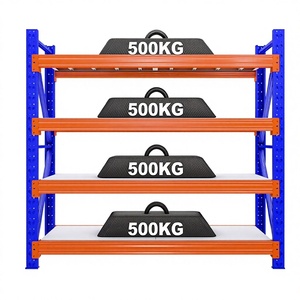
Adjustable Medium Duty Steel Warehouse Storage Shelves
Boltless longspan shelving ideal for hand-picked operations, e-commerce, and bin storage.
Why Source Industrial Racking Direct from China's Premier Manufacturer
Combining over two decades of metallurgical precision, certified dynamic design standards, and integrated overseas EPC project execution.
Automated Roll-Forming Precision
Our facility utilizes over 30 continuous automated roll-forming profile lines and robotic laser-welding stations. Frame columns and load beams are manufactured with tolerances within ±0.5mm, ensuring structural interlock perfection under maximum static loads.
Certified Global Compliance
Every industrial storage system engineered in our factory aligns strictly with international structural parameters including European FEM 10.2.02, American RMI (Rack Manufacturers Institute), Australian AS 4084-2012, and ISO 9001 quality management benchmarks.
High-Grade Q235B & Q355B Steel
We source certified prime steel coils from top-tier mills (Baosteel, Shougang). Combined with automated continuous surface pre-treatment and electrostatic epoxy-polyester powder coating, our racks offer superior yield strength and salt-spray corrosion resistance.
Full Turnkey OEM / ODM Service
From initial warehouse CAD laylink planning, floor slab dynamic stress calculations, custom color matching, packaging optimization to ocean shipping customs documentation and installation supervision, we provide a unified point of engineering accountability.
Technological Development Trends in Heavy-Duty Warehousing
An engineering analysis of how modern materials science, robotics, and logistics software are transforming structural storage racking into intelligent assets.
1. Transition to Dense Automated Shuttle Storage
Static selective racking systems, while reliable, leave up to 60% of vertical building volume underutilized due to forklift aisle requirements. The industry is rapidly shifting toward 4-Way Radio Shuttle Racking and Automated Storage and Retrieval Systems (ASRS). By embedding automated shuttles into structural racking channels, warehouses achieve ultra-high pallet density, reduce operating labor costs by 45%, and eliminate forklift collision risks inside rack channels.
2. Advanced Surface Treatment & Anti-Corrosion Alloys
Environmental factors such as cold-chain condensation (-30°C freezer operations) and coastal humidity accelerate steel degradation. Modern industrial suppliers are adopting dual-action coatings: automated 9-stage phosphate wash pre-treatment, non-toxic lead-free thermoplastic powder application, and full Hot-Dip Galvanizing (HDG) conforming to ISO 1461. This ensures zero structural rust creep over a 25-year operational lifecycle.
3. Seismic Engineering & Structural Finite Element Analysis (FEA)
As rack heights scale to 15m–40m in self-supporting rack-clad buildings, seismic design has become paramount. Modern engineering utilizes ANSYS and STAAD.Pro software to perform non-linear dynamic simulation under simulated earthquake conditions. Cold-formed steel profiles now feature engineered omega-shaped column cross-sections with variable pitch perforation patterns, giving optimal strength-to-weight ratios.
4. IoT Integrated Rack Health Monitoring Sensors
Next-generation industrial shelving is incorporating structural health monitoring systems. Wireless strain gauges, tilt sensors, and impact detection units attached to critical frame uprights transmit real-time deflection data directly to warehouse management dashboards. Overloads or structural forklift impacts trigger instant alerts before permanent yield failures can occur.
Technical Insight: Selecting the correct profile width (80mm, 90mm, 100mm, 120mm, 140mm) and beam section height (80mm to 160mm box beams) requires evaluating the ratio of maximum beam deflection ($L/200$) under full rated load. Partnering directly with a factory engineer eliminates costly over-specifying while guaranteeing full safety margins.
Future Procurement Trends for Industrial B2B Buyers
Strategic guidance for supply chain directors, logistics project managers, and EPC contractors sourcing structural steel racks from China.
Shift to Turnkey EPC Procurement
Procurement managers no longer buy loose components. Modern B2B sourcing focuses on comprehensive EPC contracts covering warehouse CAD design, structural slab load verification, customized factory manufacturing, international ocean freight consolidation, and certified local assembly supervision.
Modular Standard Compatibility
Global buyers demand multi-standard interchangeability. High-volume factories are standardizing 50mm, 75mm, 76.2mm (Australian standard), and 2-inch pitch (American teardrop pitch) beam hook connectors, allowing seamless integration with existing legacy racking installations.
Total Cost of Ownership (TCO) Sourcing
Evaluating suppliers purely on FOB steel price per kilogram is obsolete. Advanced procurement frameworks factor in container loading efficiency (optimizing 40ft HQ cube density), installation speed via boltless connectors, and long-term frame replacement costs over a 15-year horizon.
Comparative Technical Sourcing Matrix
| Racking Type | Storage Density | SKU Selectivity | Handling Equipment | Optimal Industry Application |
|---|---|---|---|---|
| Selective Pallet Racking | Standard (40-50%) | 100% Direct Access | Standard Counterbalance / Reach Truck | 3PL, General Retail, Mixed SKU Distribution |
| Drive-In / Drive-Through | High (65-75%) | Low (LIFO / FIFO) | Reach Truck / Specialized Forklift | Cold Storage, Food & Beverage, Seasonal Goods |
| Radio Shuttle Racking | Very High (80-85%) | Medium (Channel-based) | Standard Forklift + Automated Shuttle | High-Volume Manufacturing, Bulk Raw Materials |
| Cantilever Racking | Variable (Specialized) | 100% Side Access | Side-loader / Overhead Crane / Forklift | Steel Pipes, Lumber, PVC Tubing, Aluminum Profiles |
| Automated ASRS Systems | Maximum (85-95%) | 100% Automated Access | Stacker Crane / AGV / Conveyor Network | Smart Manufacturing, E-commerce Mega-Hubs |
Frequently Asked Questions (Procurement FAQ)
Expert engineering answers addressing technical requirements, structural quality assurance, and international shipping execution.
Q1: How do I determine whether to choose Selective Pallet Racking or a High-Density Shuttle System?
The choice hinges on SKU velocity and inventory diversity. Selective Pallet Racking provides 100% direct access to every pallet position, making it optimal if you manage hundreds of distinct SKUs with moderate pallet counts per SKU. Conversely, if you store high-volume homogenous products (few SKUs with hundreds of pallets per SKU), a Radio Shuttle Racking System dramatically increases warehouse volume utilization from 40% up to 85% while reducing forklift transit distances.
Q2: What key steel grades and standard certifications should B2B buyers mandate?
High-capacity structural racking demands high-yield structural steel. Ensure your supplier specifies prime cold-rolled steel grades such as Q235B (yield strength ≥235 MPa) or Q355B / SS50 (yield strength ≥355 MPa for ultra-heavy uprights). Mechanically, the racking structure must be validated under international codes: FEM 10.2.02 (European standard for static steel racking), RMI ANSI MH16.1 (American standard), or AS 4084-2012 (Australian steel storage racking standard).
Q3: How does hot-dip galvanizing compare with electrostatic powder coating for coastal or cold storage facilities?
Electrostatic epoxy-polyester powder coating (60–80 microns thick) provides excellent impact resistance and visual color coding for dry indoor ambient warehouses. However, for refrigerated cold storage rooms (-25°C), semi-open sheds, or coastal port warehouses exposed to high humidity and airborne salt, Hot-Dip Galvanizing (HDG) according to ISO 1461 is essential. HDG coats both the interior and exterior of tubular steel profiles with a 65–85 micron zinc alloy layer, preventing subsurface oxidation for decades.
Q4: What technical parameters must a buyer provide to receive an engineered layout and quote?
To produce an accurate CAD structural layout and bill of materials, provide your supplier with:
1. Building floor plan (CAD or PDF) indicating clear height beneath sprinklers/trusses, column grid spacing, and door positions.
2. Pallet dimensions (Width x Depth x Height including cargo overhang).
3. Maximum load weight per pallet (e.g., 1000 kg / 1500 kg).
4. Forklift truck specifications (maximum lift height, turning radius, aisle width requirement).
5. Concrete floor slab specs (thickness and floor load capacity in tons/m²).
Q5: How are overseas orders packaged and loaded to prevent transit damage during sea freight?
Export packaging is critical for high-finish painted steel profiles. Frame uprights and beam bundles are wrapped with heavy-duty protective PE film, corrugated corner protectors, and steel banding strapped onto heavy timber skids. Structural components are bundled in precise sequence matching container dimensions (20GP / 40HQ) to maximize ocean freight space while facilitating easy unloading via forklift at the destination site.
Q6: What is the typical production lead time and installation workflow for custom factory orders?
Standard manufacturing lead time is 15 to 25 calendar days for full container loads (500 to 2,000 pallet positions). Upon order confirmation, final CAD approval drawings are issued within 48 hours. Post-production, every shipment includes step-by-step 3D assembly guides, component installation drawings, and load capacity warning signage. For large automated projects, field engineers can be dispatched for on-site installation management.
Transform Your Warehouse Space into a High-Density Operational Engine
Contact our engineering desk today for a free floor space optimization layout, load capacity calculation, and factory-direct price quotation.