Engineered Product Catalog
Heavy-Duty Warehouse Racking Systems & Beams
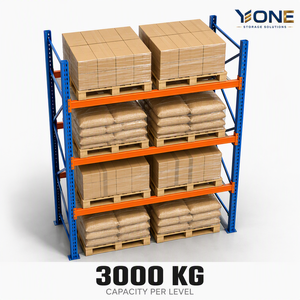
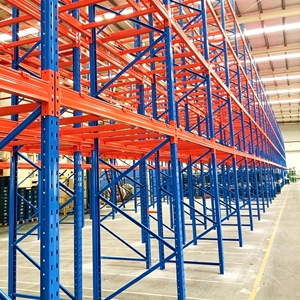
Explore our factory-engineered selective racking beams, teardrop configurations, and heavy-duty structural platforms built to international ISO 9001, FEM 10.2.02, and RMI standards.
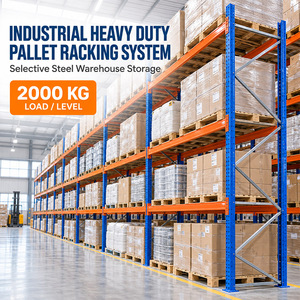
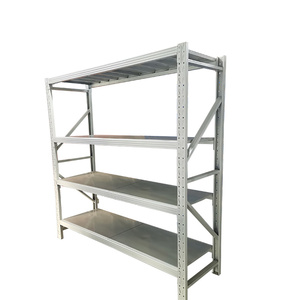
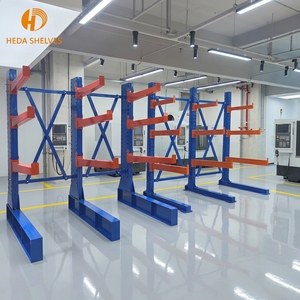
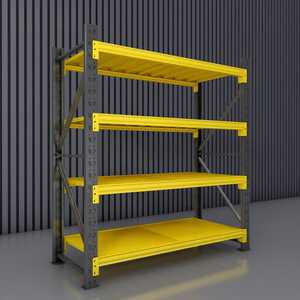
150,000 m²
Production Base
100,000 Tons
Annual Processing Capacity
5,000+
Containers Exported / Year
ISO / FEM / RMI
Certified Standards
1. Engineering Integrity of Structural Racking Beams: An Executive Overview
In modern high-bay logistics centers, automated fulfillment hubs, and cold-chain storage infrastructure, the primary horizontal load-bearing component of any pallet storage system is the warehouse racking beam. Functioning as a flexural member subjected to heavy vertical static loads, asymmetrical pallet placements, dynamic forklift impacts, and potential seismic forces, the beam’s cross-sectional geometry and connection locking mechanisms dictate overall system safety and volumetric efficiency.
China has emerged as the global epicenter for precision cold-formed steel manufacturing. As premier China warehouse racking beams suppliers and exporters, leading manufacturers employ continuous roll-forming lines integrated with automated laser notchers, robotic seam welding, and electrostatic thermosetting powder coat lines. This whitepaper analyzes the structural engineering principles, metallurgical specifications, global procurement trends, and quality control frameworks essential for international supply chain directors, industrial civil engineers, and warehouse logistics managers evaluating factory suppliers in China.
Key Structural Engineering Metrics
Warehouse racking beams are designed under strict flexural stress limits. According to FEM 10.2.02 (European standard) and RMI Specification MH16.1 (American standard), vertical beam deflection under full design load must not exceed L/200 (where L is the clear beam span). For automated ASRS installations, tighter deflections of L/300 or L/400 are enforced to ensure optical sensor clearance and robotic shuttle positioning precision.
2. Deep Dive into Beam Structural Mechanics & Metallurgical Standards
Selecting the optimal beam profile requires understanding the mechanical stress state under live loading. Below is an engineering analysis of the main beam geometries exported by top Chinese manufacturers:
2.1 Box Beams vs. Step Beams vs. Structural Channels
- Interlocking Cold-Formed Box Beams: Fabricated by seam-welding two C-sections or roll-forming a continuous closed box profile. Box beams provide exceptional torsional rigidity and high resistance to lateral-torsional buckling (LTB). They are the dominant choice for European, Middle Eastern, and Latin American heavy-duty selective pallet racking.
- Step Beams (American Teardrop Standard): Designed with a continuous 1-5/8 inch interior step along the upper flange. This step allows wire mesh decking, structural steel cross bars, or timber drop-in panels to sit flush with the top surface of the beam. Step beams are heavily exported to North American markets adhering to RMI teardrop hole pitch standards (2-inch vertical adjustment).
- Hot-Rolled Structural Channel Beams (Structural Racks): Manufactured from hot-rolled structural C-channels with bolted end plates. Designed for high-impact environments, outdoor timber/steel storage yards, and severe heavy-duty applications exceeding 4,000 kg per level.
2.2 Metallurgy, Steel Grades & Yield Strength Optimization
Top China racking beam exporters source structural steel coil directly from Tier-1 state-owned steel mills (such as Baosteel, Shougang Group, and Ansteel). Mechanical integrity relies on precise chemical compositions and stress testing:
| Steel Grade (Standard) | Yield Strength (Fy - MPa) | Tensile Strength (Fu - MPa) | Primary Application in Racking |
|---|---|---|---|
| Q235B (GB/T 700 / Equivalent to S235JR) | ≥ 235 MPa | 375 - 500 MPa | Standard duty box beams (1,000kg - 2,000kg per level), wire mesh decks, shelf panels. |
| Q355B / Q355D (GB/T 1591 / Tensile S355JR) | ≥ 355 MPa | 470 - 630 MPa | Heavy-duty high-bay box beams (>3,000kg load), drive-in top beams, high-rise ASRS rails. |
| ASTM A1011 SS Grade 50 (US Standard) | ≥ 345 MPa (50 ksi) | ≥ 450 MPa (65 ksi) | Custom export step beams engineered for North American distribution networks. |
2.3 Beam-to-Column Connector Claws & Auto-Lock Safety Pins
The moment resistance of a pallet rack system depends heavily on the rotational stiffness of the connection between the beam connector claw and the upright column. Top Chinese factories engineer multi-hook connection brackets (3-hook, 4-hook, and 5-hook patterns) stamped from heavy-gauge high-tensile steel plate (up to 4.5mm thickness).
Every connection must include an automatic safety lock (spring-loaded pin or drop-in galvanized locking pin) capable of resisting upward dislodgement forces of at least 5.0 kN (1,124 lbs) as mandated by ANSI MH16.1 to prevent accidental beam dislodgement during forklift maneuvering.
3. Global Procurement Trends for Industrial Racking Beams (2025–2035)
As global supply chains shift toward automation, nearshoring hubs, and strict carbon accounting, international procurement directors are altering their sourcing strategies for China-made racking components:
Trend 1: Demand for ASRS Precision-Toleranced Beams
With automated storage and retrieval systems (ASRS) expanding worldwide, beam manufacturing tolerances are becoming increasingly stringent. Standard racking beam length tolerances of ±2.0mm are being tightened to ±0.5mm. Automatic guided vehicles (AGVs) and stacker cranes demand perfectly flat top surfaces without twist or camber to prevent optical sensor faults.
Trend 2: Eco-Friendly Powder Coatings & EPD Certifications
Global logistics REITs and multinational 3PL operators now mandate Environmental Product Declarations (EPDs) for structural steel. Top Chinese exporters are adopting solvent-free, zero-VOC electrostatic epoxy-polyester powder coating lines and closed-loop water treatment systems to satisfy international ESG (Environmental, Social, and Governance) compliance audits.
Trend 3: High-Yield Steel Down-Gauging
Advanced roll-forming technology enables Chinese suppliers to process ultra-high-strength steel grades (such as Q460 and Q550). By using thinner profiles with cold-worked stiffening ribs while preserving structural load metrics, overall steel weight per meter is reduced by 12-18%. This lowers ocean freight cost per pallet position and mitigates raw material price volatility.
4. Advanced Manufacturing & Surface Finish Quality Control
High-performance racking beams undergo a multi-stage production sequence inside China's leading smart factories:
- Continuous Cold Roll-Forming: 18 to 26-station precision roll-forming mills shape steel coil into box or step profiles without inducing localized stress fractures.
- Robotic Continuous Seam Welding: Dual-arm industrial robots execute MIG/MAG welds along the full length of the box beam profile and around the connector claw joints, ensuring zero penetration gaps or burn-throughs.
- 9-Stage Surface Pre-Treatment: Steel beams are subjected to hot alkaline degreasing, acid rust removal, zinc-phosphate conversion coating, and DI water rinses to guarantee paint adhesion strength.
- Electrostatic Powder Curing: Thermosetting resin powder is applied at 60-90 microns thickness and cured in high-temperature ovens at 200°C (392°F), passing 500-hour cross-hatch adhesion and salt-spray corrosion tests (ISO 9227).
Why Partner With Us
Direct Factory Engineering & Global Export Powerhouse
Backed by decades of industrial manufacturing experience, our enterprise delivers end-to-end racking solutions for multinational distribution hubs.
150,000 m² Production Base
Our modern manufacturing complex features automated roll-forming lines, laser cutting centers, and robotic welding cells handling over 100,000 tons of structural steel annually.
Global Multi-Standard Compliance
Engineered strictly in compliance with international racking codes: European FEM 10.2.02, American RMI MH16.1, Australian AS 4084, SEMA, and ISO 9001 certified quality control systems.
5,000+ Export Containers Yearly
Extensive global shipping experience serving buyers across Panama, North America, Europe, Australia, the Middle East, and Southeast Asia with export-grade protective packaging.
Custom OEM/ODM Engineering
Tailor-made beam profile dimensions, custom claw pitch patterns (50mm, 75mm, 76.2mm, 2-inch teardrop), specialized colors, and hot-dip galvanized finishes for cold storage.
Full FEA Structural Calculations
Our in-house structural engineering office delivers comprehensive Finite Element Analysis (FEA) reports, CAD layouts, load signage, and seismic parameter compliance for local building permits.
Lifecycle Technical Support
From site survey analysis and container loading optimization to remote assembly video guidance or supervisor dispatch, we ensure seamless execution from factory to site.
5. 5-Step Procurement Protocol for Qualifiying China Racking Suppliers
When sourcing industrial racking beams directly from China suppliers, overseas procurement managers must institute a rigorous factory verification protocol to mitigate structural risks:
- Step 1: Raw Material Verification: Insist on Mill Test Certificates (MTC) according to EN 10204 3.1 verifying chemical heat analysis, yield strength ($F_y$), and elongation percentage.
- Step 2: Weld Integrity Testing: Audit factory quality control for ultrasonic weld defect testing and visual inspection according to AWS D1.1 (American Welding Society) or ISO 5817.
- Step 3: Loading Destructive Testing: Request empirical beam destruction test videos and third-party lab certification (SGS, TÜV, or Bureau Veritas) validating deflection limits at 100%, 150%, and 200% design load.
- Step 4: Surface Coating Thickness Checks: Verify powder coating thickness using electromagnetic gauges across 10 random sample points per batch (minimum threshold: 60 microns).
- Step 5: Export Packaging Inspection: Ensure beams are packed with steel strapping, corner edge protectors, plastic wrapping, and timber dunnage to prevent transit scratch corrosion during container sea freight.
6. Comprehensive Sourcing & Engineering FAQ
Answers to common questions from international buyers, logistics engineers, and warehouse managers sourcing racking beams from China:
What is the standard allowable vertical deflection for warehouse racking beams? +
According to international standards such as FEM 10.2.02 and RMI MH16.1, maximum vertical deflection under full working static load must not exceed L/200, where L is the clear span of the beam (e.g., maximum 13.5 mm deflection for a 2700 mm beam). For automated ASRS warehouses or narrow aisle (VNA) applications, deflection criteria are typically tightened to L/300 or L/400 to prevent equipment collision risks.
What is the difference between box beams and step beams? +
Box beams feature a continuous, closed rectangular profile created by welding two cold-formed C-channels together. They offer high torsional resistance and are used globally with standard pallets. Step beams have a recessed 1-5/8 inch ledge along the top inside edge, designed specifically to hold drop-in wire mesh decking, cross bars, or shelf panels flush with the top of the beam. Step beams are most common in North American teardrop systems.
How do Chinese factories ensure compliance with international racking standards like RMI, FEM, and AS 4084? +
Reputable Chinese manufacturers employ dedicated structural engineering teams utilizing Finite Element Analysis (FEA) software tailored to cold-formed thin-walled steel structures. Raw steel is tested for yield strength, beam connectors are certified for moment rotation stiffness, and physical load-to-failure testing is conducted in accordance with FEM 10.2.02, RMI MH16.1, and AS 4084 guidelines.
Which surface finish is recommended for humid, coastal, or cold-storage environments? +
For standard ambient dry warehouses, electrostatic epoxy-polyester powder coating (60–80 microns thick) provides excellent scratch and chemical resistance. For coastal areas with high humidity, salt fog (e.g., port free zones), or sub-zero food cold storage rooms (-25°C), Hot-Dip Galvanizing (HDG to ISO 1461) or zinc-rich primer pre-coating is strongly recommended to eliminate rust formation.
Can Chinese manufacturers produce custom beam connector claw pitches for existing racking brands? +
Yes. Premier China suppliers maintain extensive tooling suites for various connector hole patterns, including American 2-inch teardrop pitch, European 50mm pitch, 75mm pitch, and Australian 76.2mm pitch. Custom stamping tooling can also be engineered to produce replacement beams compatible with existing OEM brand frame columns.
How are racking beams packed to prevent shipping damage during sea freight? +
Racking beams are bundled into tight, square packs strapped with high-tensile PET or steel bands. Non-woven fabric layers, plastic stretch film, and heavy-duty corrugated corner guards are applied to protect the powder-coated finish from rubbing during ocean transit. Wooden skid blocks are placed under bundles to facilitate forklift unloading from 40ft High Cube containers.
What minimum information is required to get a precise structural beam quotation? +
To calculate beam dimensions and steel gauges, engineers require: (1) Clear beam span length (e.g., 2700mm, 3600mm, 96 inches); (2) Maximum load capacity required per level (e.g., 2000kg / 5000 lbs across two pallets); (3) Pallet dimensions and weight distribution; (4) Decking type (wire mesh, wood, or none); and (5) Upright frame depth and column profile interface.
Engineering Support & Direct Factory Pricing
Optimize Your Warehouse Storage Capacity Today
Connect directly with our structural engineering team to receive customized CAD layouts, FEA load calculations, and competitive factory-direct pricing for your warehouse project.