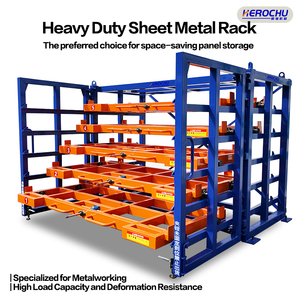
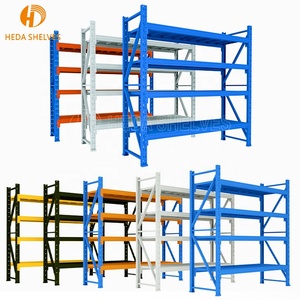
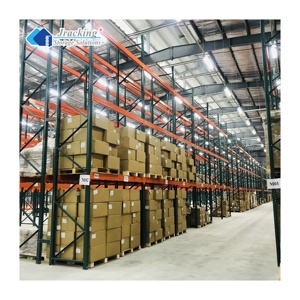
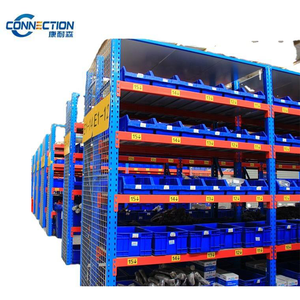
Top Trusted Warehouse Pallet Storage Suppliers & Exporter

Global Heavy-Duty Racking Engineering · ISO 9001 Certified · High-Density Selective, Shuttle & Cantilever Structural Engineering Whitepaper

Export-Grade Heavy Duty Systems

Engineered Warehouse Pallet Racking Products

Explore our direct factory-manufactured pallet storage systems, precision-built for international logistics hubs, distribution facilities, and heavy industrial storage compliance.

Factory Direct Engineering Excellence

Global Manufacturing Leadership & Supply Chain Strength

Operating over 150,000 square meters of automated manufacturing infrastructure, CanalRack Industrial Storage S.A. serves global logistics hubs across North America, Latin America, Europe, Australia, and the Middle East with structural steel racking certified to rigorous international codes.

20+
Years Engineering Expertise
100,000 t
Annual Steel Processing
5,000+
Export Containers Delivered
ISO 9001
FEM / RMI / AS4084 Compliant

Structural Design Standards & Quality Assurance Protocol

Procuring warehouse storage racks internationally demands uncompromising adherence to load testing, structural integrity, and anti-corrosion science. Every upright frame, beam connector, and rack locking system manufactured in our automated roll-forming lines complies strictly with FEM 10.2.02 (European Handling Federation), RMI ANSI MH16.1 (Rack Manufacturers Institute - USA), and AS 4084-2012 (Australian Steel Storage Racking Standard).

From structural finite element analysis (FEA) to high-precision automatic continuous punching, our cold-formed high-tensile steel profiles (Q235B & Q355B structural steel grade) guarantee exact deflection limits under heavy static and dynamic floor loads.

Verified Quality Control Checklist

  • ✓ Raw Steel Tensile & Yield Testing (Mill Test Report Certified)
  • ✓ Automatic Robotic Continuous Welding (EN ISO 3834-2)
  • ✓ Pre-treatment Acid Pickling & Phosphating Line
  • ✓ Electrostatic Powder Coating Thickness (60–80 μm minimum)
  • ✓ Salt Spray Resistance Test (ISO 9227 > 500 Hours)
  • ✓ Ocean Export Packaging & Anti-Vibration Wooden Palletizing
Technical Engineering Deep-Dive

Structural Architecture & Engineering Specifications

A technical comparison matrix of industrial warehouse racking systems for supply chain procurement directors, logistics engineers, and warehouse operations specialists.

Racking System Type Pitch & Connection Standard Storage Density Rating Pallet Accessibility (FIFO/LIFO) Max Height & Beam Span Primary Industrial Application
Selective Pallet Racking 50mm / 75mm EU / 76.2mm AU Standard (40-50% Floor Util.) 100% Direct Selective (FIFO) Up to 15m Height / 3.9m Beam FMCG Distribution, 3PL Hubs, Retail Warehousing
Teardrop Pallet Rack 2-Inch (50.8mm) US Pitch Standard-Medium 100% Direct Selective (FIFO) Up to 12m Height / 3.6m Beam North & Latin American Freight Terminals, Import Depots
Radio Shuttle Racking Custom Heavy Rail Section Ultra-High (80-85% Floor Util.) FIFO & LIFO Automated Mode Up to 25m Height / Deep Channel Cold Storage Facilities, Food & Beverage, High Volume SKUs
Push Back Racking Nested Nesting Cart System High Density (60-70% Floor Util.) LIFO (2 to 6 Pallets Deep) Up to 9m Height / Custom Lane Buffer Storage, Seasonal Goods, Bulk Package Holding
Heavy Duty Cantilever Bolted / Pin Arm Connection Specialized Linear Storage 100% Continuous Side Access Up to 12m Height / Extended Arm Steel Pipes, Lumber, PVC Extrusions, Solar Panel Arrays
Mezzanine & Steel Deck Heavy Column Beam Platform 200% Floor Space Expansion Multi-Level Manual / Conveyor Custom Multi-Tier (2-4 Levels) E-commerce Picking Centers, Auto Spare Parts, Assembly
Information Gain Insight — Cold-Rolled Profile Optimization: Modern high-bay racking systems utilize open-profile cold-formed omega upright columns with 11-fold to 13-fold bending structures. This complex cross-sectional geometry enhances section modulus and torsional rigidity while reducing total steel weight by up to 14%, offering exceptional load-to-weight ratios without sacrificing safety factors under seismic shear force conditions.
Industry Horizon 2025–2030

Global Procurement Trends & Automation Evolution

Warehouse operational landscapes are rapidly evolving. Industrial buyers are transitioning from standard static storage toward high-density automation, climate-adaptive coatings, and modular warehouse infrastructure.

1. Transition to Radio Shuttle & Semi-Automated High Density

Rising industrial land prices in port-adjacent logistics zones (such as Panama City, Colón Free Zone, Rotterdam, and Dubai) have made drive-in racking obsolete. Supply chain buyers are heavily favoring Radio Shuttle systems that utilize self-powered robotic shuttles to transport pallets along deep channels, drastically reducing forklift travel time, pallet damage, and labor costs.

2. Climate-Adaptive Surface Technology (HDG vs. Epoxy)

Warehouses located in coastal environments, high-humidity regions, or sub-zero cold chains require advanced anti-corrosion protection. Procurement specifications now emphasize micro-textured electrostatic epoxy powder coatings or Hot-Dip Galvanizing (HDG according to ISO 1461 standards) for uprights, beams, and wire mesh decking to guarantee a 25+ year structural lifespan.

3. Hybrid Modular Mezzanine Architecture

To accommodate rapid e-commerce order fulfillment and micro-fulfillment centers, industrial developers are adopting rack-supported multi-tier steel mezzanines. These integrated platforms leverage structural steel uprights to create elevated floor levels for manual picking while maintaining heavy pallet storage on ground tiers.

Structural R&D Breakthroughs

Pallet Rack Technology Development Trends

How structural metallurgy, computerized finite element engineering, and safety integration are setting new benchmarks for industrial warehouse reliability.

High-Tensile Cold-Rolled Steel Formulations

Historical racking designs relied heavily on standard hot-rolled structural channels. Modern pallet rack suppliers utilize precision cold-rolled high-tensile steel coils (Q355B equivalent to S355JR European grade) with yield strengths exceeding 355 MPa.

This engineering leap enables thinner, lighter wall profiles with significantly higher buckling resistance, lower carbon footprint per pallet position, and improved structural elasticity under seismic dynamic loads.

Seismic Structural Resilience & REP / AS4084 Compliance

Global logistics facilities located in active seismic zones (such as the Pacific Rim, Latin America, and Southern Europe) require customized baseplate anchor engineering and bracing geometry. Advanced finite element analysis models dynamic earthquake ground accelerations to optimize cross-bracing schedules, heavy-duty floor anchors, and top-tie beams.

Every system engineered by CanalRack can be tailored to meet regional structural codes, including the Reglamento Estructural Panameño (REP) and Chilean NCh2369 seismic standards.

End-to-End Project Execution

Why Logistics Leaders Choose CanalRack Engineering

From site layout engineering to direct factory loading and international installation support, we eliminate project friction at every stage.

01

Layout & CAD Consultation

Free 24-hour CAD layout design, forklift aisle clearance calculations, and load capacity structural verification in English and Spanish.

02

Custom Manufacturing

Tailored beam spans, upright profile depths, and custom load accessories manufactured across 70,000m² of automated factory floor space.

03

Ocean Freight Export Packing

Export bundling with protective plastic wrapping, steel strapping, and specialized container loading optimization to prevent transit abrasion.

04

Installation & QC Support

Comprehensive assembly drawings, video installation guides, engineer site supervision, and annual structural inspection protocols.

Procurement Guidance & Compliance

Warehouse Racking Purchasing FAQ

Essential technical, logistical, and design questions answered by CanalRack industrial storage structural engineers.

What essential warehouse parameters are required to generate an engineering layout and quotation? +

To produce an accurate structural racking layout and bill of materials (BOM), our engineering team requires five core input parameters:

1. Building CAD/PDF Drawing: Clear ceiling height beneath fire sprinklers/trusses, column location grid, building entrance doors, and floor slope.
2. Pallet Specifications: Width, depth, overall stacked height (including pallet), and gross weight per pallet.
3. Forklift Truck Specifications: Model, maximum lift height, collapsed mast height, and minimum aisle turning radius (Right Angle Stacking Aisle).
4. SKU Profile & Inventory Flow: Total pallet positions required, number of SKUs, and picking preference (FIFO or LIFO).
5. Concrete Slab Capacity: Floor slab thickness, concrete compressive strength (e.g., C25/C30 grade), and subgrade reinforcement.
How do American Teardrop, European 50mm/75mm, and Australian 76.2mm pitch racking standards differ? +

Industrial pallet racking design is governed by regional manufacturing standards:

• American Standard Teardrop (RMI): Features a slide-in 2-inch (50.8mm) hole pitch connector with a drop-in pin lock mechanism. It is universally compatible with standard North American and Latin American racking hardware.

• European Standard (FEM 10.2.02): Utilizes a 50mm or 75mm upright slot pitch with hook-type beam connectors and safety locking pins. Highly favored in Europe, Asia, and Middle Eastern distribution hubs.

• Australian Standard (AS 4084-2012): Features a 76.2mm (3-inch) pitch pattern with strict safety margins, mandatory dynamic frame bracing, and robust column footplate anchoring.

CanalRack manufactures all three profile formats on automated roll-forming equipment to match your existing warehouse infrastructure.

Which surface finish is recommended for high-humidity coastal zones and cold storage warehouses? +

Surface coating selection directly impacts structural longevity based on operational environment:

• Electrostatic Powder Coating: Ideal for dry indoor ambient warehouses. Pretreated with automatic acid washing and iron phosphating, followed by a 60–80 micron thermosetting epoxy powder coat for impact and scratch resistance.

• Hot-Dip Galvanizing (HDG - ISO 1461): Crucial for coastal warehouses near port zones (salt ocean air), outdoor open-air storage yards, or deep freeze cold rooms (-30°C) with condensation risks. Steel components are fully submerged in molten zinc, forming a metallurgical zinc-iron alloy barrier that provides decades of anti-rust protection.

What safety accessories should be installed on heavy-duty selective pallet racking? +

To comply with OSHA, SEMA, and European EN safety mandates, industrial pallet racks must integrate safety accessories:

• Wire Mesh Decking: Prevents non-standard pallets or loose cartons from falling while allowing water penetration from ceiling fire sprinklers.
• Upright Column Protectors: Heavy-gauge steel floor guards installed at row ends and main fork truck aisles to absorb direct forklift mast impacts.
• Frame End Barriers: Heavy tubular double-rail guards placed at aisle ends to shield main structural uprights from turning vehicles.
• Pallet Back Stops: Safety beam stops installed on double-entry rows to prevent rear pallet over-travel.

Do you supply international shipping, export customs documentation, and ocean freight logistics support? +

Yes. CanalRack Industrial Storage S.A. regularly exports full container load (FCL 20GP/40HQ) orders to major international ocean container terminals, including Balboa and Manzanillo (Panama), Santos (Brazil), Callao (Peru), Hamburg (Germany), Sydney (Australia), and Los Angeles (USA).

Every order is provided with complete shipping documentation: Commercial Invoice, Packing List, Bill of Lading (B/L), Certificate of Origin (Form E/Form F/CO), Mill Test Reports, and ISO 9001 quality certificates.

How are structural load capacities verified for custom beam lengths and frame heights? +

All beam load capacities are calculated according to maximum permissible deflection limits. Under FEM 10.2.02 standards, maximum beam deflection under full static load must not exceed L/200 (where L is the clear beam length between columns).

Upright frame load ratings are determined by structural buckling analysis, considering beam level height spacing, unbraced vertical length, dynamic forklift impact factors, and safety loading margins of at least 1.55 to 1.65.

Accelerate Your Warehouse Capacity with Certified Racking Engineering

Contact our engineering team today for a complimentary warehouse layout analysis, load calculation report, and direct factory export quote tailored to your operational specifications.