

Industrial Storage Shelving System Selection Guide: Engineering Standards, High-Density Automation, and Global Supply Chain Procurement Trends
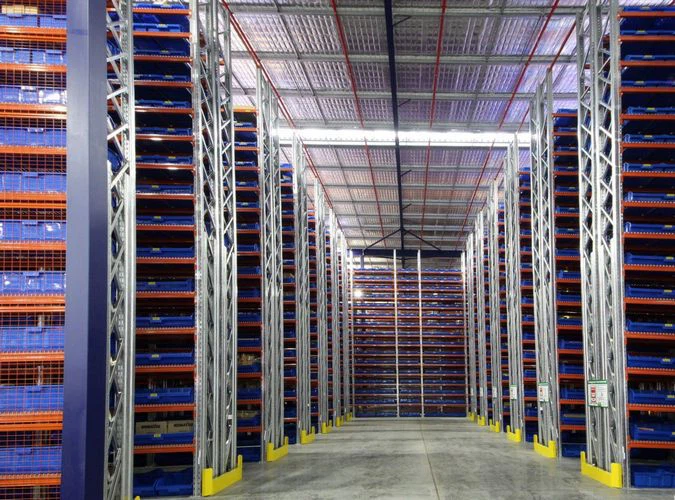
In modern global logistics and manufacturing operations, the selection of an Industrial Storage Shelving System directly governs operational profitability, warehouse volumetric space utilization, safety compliance, and throughput velocity. As supply chains transition toward automated fulfillment, nearshoring distribution, and high-density inventory models, procurement executives and warehouse operations managers face complex decisions. Selecting the correct racking infrastructure is no longer simply buying steel profiles; it requires rigid finite element structural calculation, material science engineering, and alignment with international safety standards such as FEM 10.2.02, RMI, and AS 4084-2012.
This comprehensive technical guide written by the engineering team at CanalRack Industrial Storage S.A. addresses critical procurement queries, structural mechanics, future automation trends, and technical evaluation metrics required to engineer a high-gain warehouse storage environment.
Key Takeaways for Procurement Specialists & Warehouse Engineers
100% selective pallet systems deliver complete SKU accessibility, while shuttle and ASRS systems convert up to 85% of dead aisle space into revenue-generating pallet positions. Material selection (Q235B vs. Q355B cold-rolled steel) and certified surface coatings (electrostatic powder coat vs. hot-dip galvanizing) dictate structural lifespan under severe environmental and dynamic loading conditions.
1. Structural Classifications & Architectural Engineering Specs
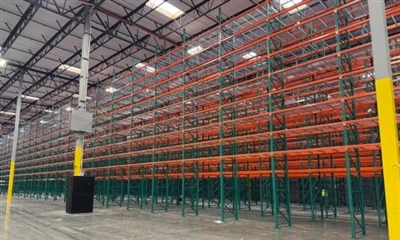
An optimal Industrial Storage Shelving System balances storage density against SKU accessibility. The technical structural matrix below outlines the performance thresholds of primary racking architectures engineered by CanalRack Industrial Storage S.A.:
| Racking System Type | Space Utilization Efficiency | SKU Selectivity Ratio | Stock Management Flow | Recommended Application |
|---|---|---|---|---|
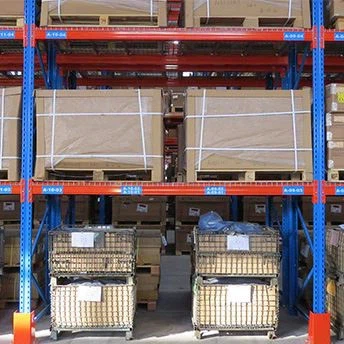
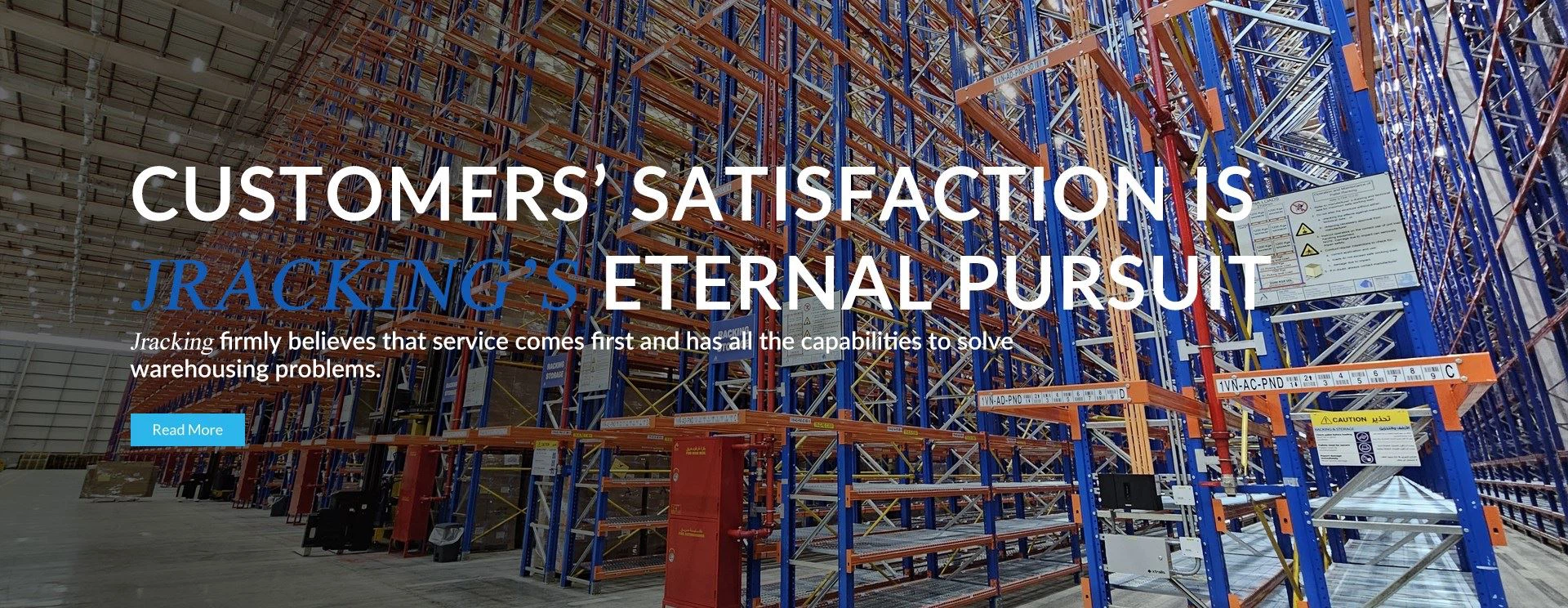
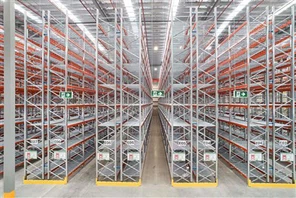
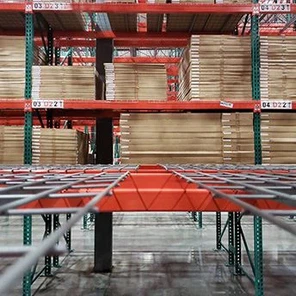
| Selective Pallet Racking | 40% – 50% | 100% Immediate Access | FIFO (First-In, First-Out) | FMCG, 3PL Warehouses, E-Commerce Hubs |
| Radio Shuttle Racking | 75% – 85% | Index-Based Selective | FIFO / LIFO Flexible | Cold Storage, Food & Beverage, High Volume |
| Drive-In / Drive-Through | 65% – 75% | Low SKU Selectivity | LIFO / FIFO Dedicated | Bulk Raw Materials, Seasonal Uniform Inventory |
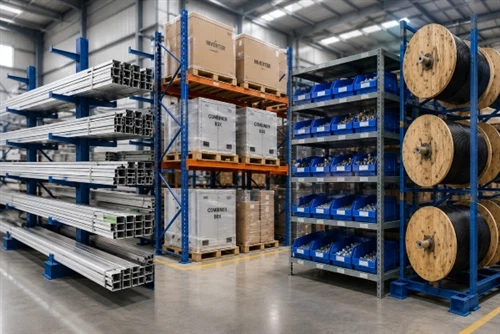
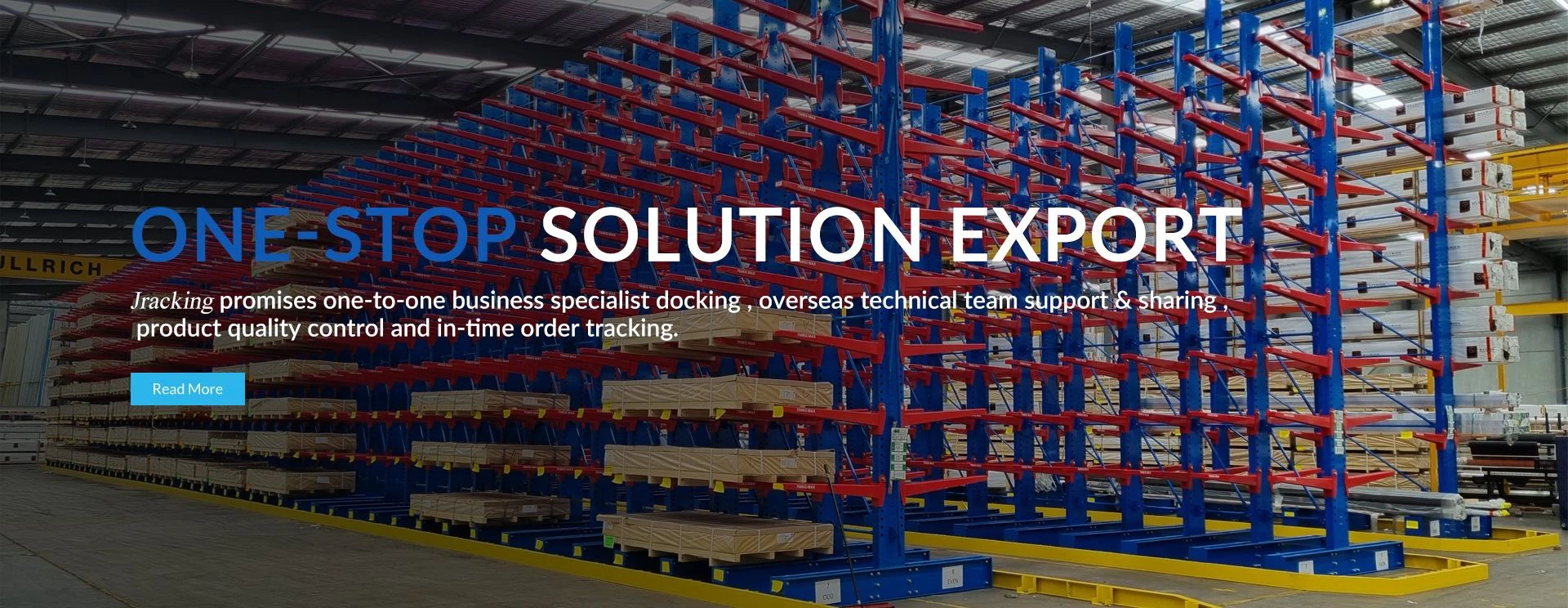
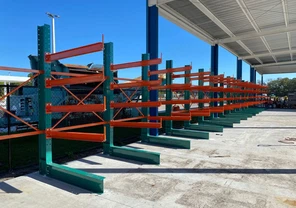
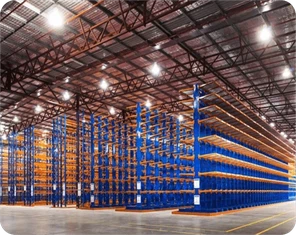
| Heavy-Duty Cantilever Rack | 60% – 70% | 100% Linear Access | Direct Overhead/Fork Lift | Pipes, Steel Tubing, Timber, Extrusions |
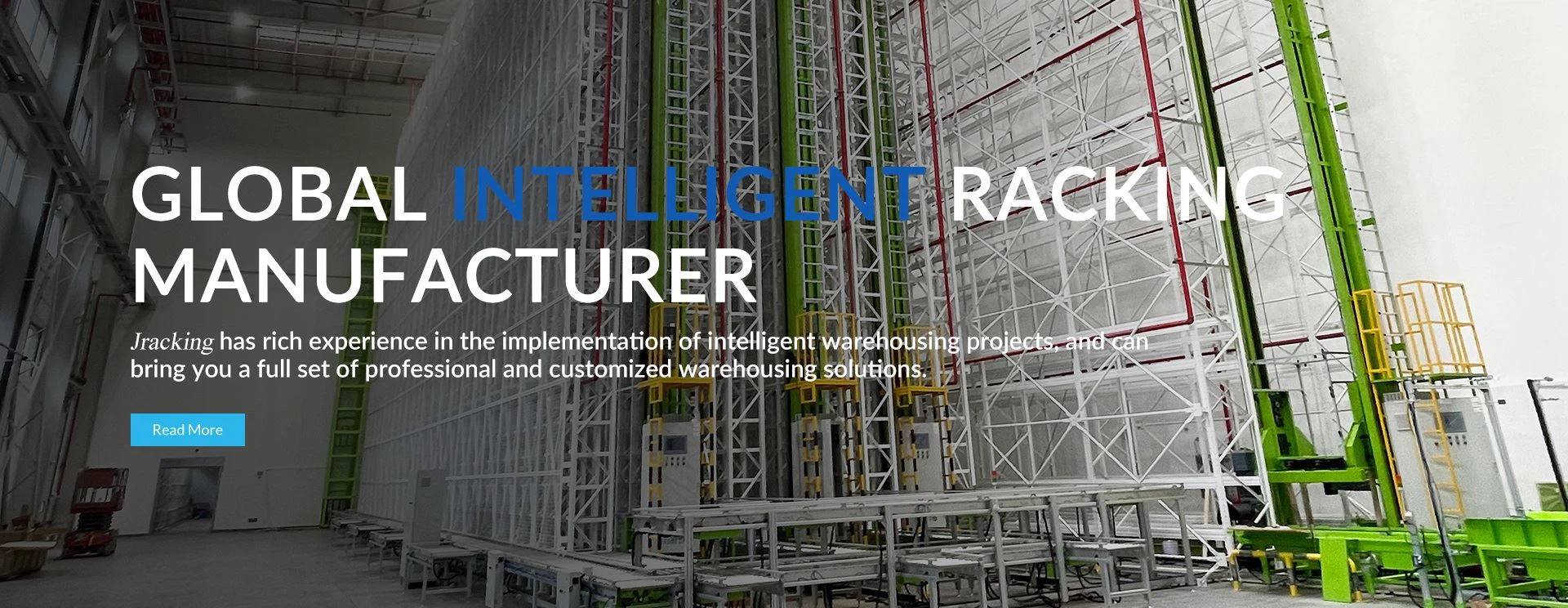
| ASRS Automated Storage | 85% – 95% | 100% Computer Automated | Software-Driven FIFO | Smart Factories, Automated Distribution Centers |
1.1 Cold-Roll Formed Steel Mechanics & Profile Geometry
Structural reliability in an Industrial Storage Shelving System relies on profile geometry and raw steel tensile strength. At CanalRack Industrial Storage S.A., upright columns are manufactured using continuous cold-roll forming machines from prime Q235B and Q355B structural steel coils. Cold-forming enhances yield strength through work hardening without adding dead weight to the structural frame.
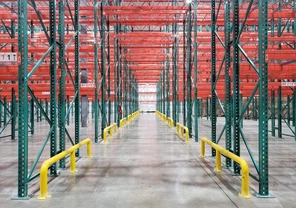
Upright columns feature multi-ribbed profiles with up to 13 bending points along the cross-section. This geometry delivers high moment of inertia and torsional rigidity, resisting buckling caused by eccentric forklift positioning or lateral seismic forces. Step beams and box beams utilize double-C interlocking welded profiles with heavy-duty 3, 4, or 5-hook connector claws that lock tightly into column perforations, eliminating joint rotation under maximum deflection limits (deflection controlled to within L/200 of beam span under full load).
2. Future Procurement Trends in Industrial Storage Shelving Systems
Global procurement metrics for warehouse infrastructure are evolving rapidly under pressure from global supply chain realignment, nearshoring, and rising real estate cost per square meter. Key future procurement trends include:
2.1 Transition from Static Racking to Semi-Automated Shuttle Infrastructure
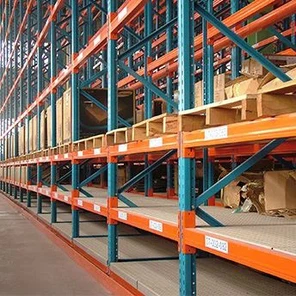
Industrial real estate costs have driven enterprise procurement away from traditional wide-aisle static racking. Procurement leads are actively shifting capital expenditure toward high-density Radio Shuttle Racking Systems. By placing self-powered lithium-battery shuttle cars on dedicated rack rails, warehouses eliminate internal forklift aisle space. This transition increases total pallet capacity by 60% to 80% within the exact same building footprint, reducing long-term facility overhead and cost-per-pallet stored.
2.2 Modular, Reconfigurable, and Hybrid System Designs
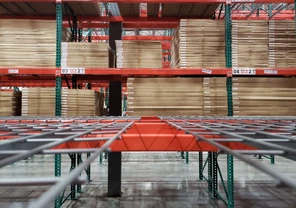
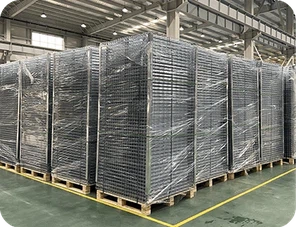
Supply chain volatility demands adaptable warehouse structures. Modern buyers demand modular Industrial Storage Shelving Systems featuring standardized teardrop (2-inch pitch) or European (50mm/75mm pitch) punch patterns. This structural standardization permits rapid adjustment of beam levels, integration of wire mesh decks, conversion to pick-module floors, or retrofitting with automated guided vehicles (AGVs) without discarding existing structural steel columns.
2.3 Sustainable Procurement & Low-Carbon Steel Manufacturing
Environmental, Social, and Governance (ESG) guidelines now impact international B2B storage procurement. Buyers require suppliers to offer certified green manufacturing processes. CanalRack Industrial Storage S.A. utilizes fully recyclable high-tensile steel, low-VOC thermosetting powder coatings, and energy-efficient automated production lines, enabling enterprise clients to fulfill scope 3 carbon reduction mandates.
3. Technological & Engineering Development Trends
The industrial storage industry is undergoing a digital and structural transformation. The following developments represent the cutting edge of industrial storage engineering:
3.1 Advanced Anti-Corrosion Technologies for Harsh & Cold Chain Environments
Corrosion severely threatens structural stability, particularly in cold storage facilities (-30°C) and coastal logistics hubs exposed to high humidity and atmospheric salinity. Industrial storage shelving systems now utilize advanced surface protection:
- Electrostatic Thermosetting Powder Coating: Multi-stage chemical washing (iron phosphate degreasing followed by passivation) followed by electrostatic application of epoxy-polyester powder baked at 200°C. This creates a impact-resistant skin (60–80 microns thick) resistant to chemical exposure and abrasion.
- Hot-Dip Galvanizing (HDG): Conforming to ISO 1461, structural steel components are immersed in molten zinc at 450°C, producing a metallurgically bonded zinc-iron alloy layer (above 85 microns thickness). HDG offers self-healing cathodic protection, making it ideal for outdoor cantilever yards and sub-zero freezer applications.
3.2 Seismic Design Compliance & Structural Safety Engineering
Dynamic safety engineering requires precise structural calculations based on local seismic conditions. Modern rack engineering uses 3D Finite Element Analysis (FEA) to simulate cross-aisle and down-aisle seismic displacement, frame ductility, and baseplate anchor shear stresses. Systems designed by CanalRack Industrial Storage S.A. incorporate heavy-duty baseplates, expanded anchor bolt patterns, continuous diagonal frame bracing, and dynamic beam locks to ensure zero collapse under seismic events.