[email protected]Serving Global Procurement · Industrial Storage Engineering
EN / ES
Kinematic Engineering · ISO 9001 · FEM 10.2.02 Compliant
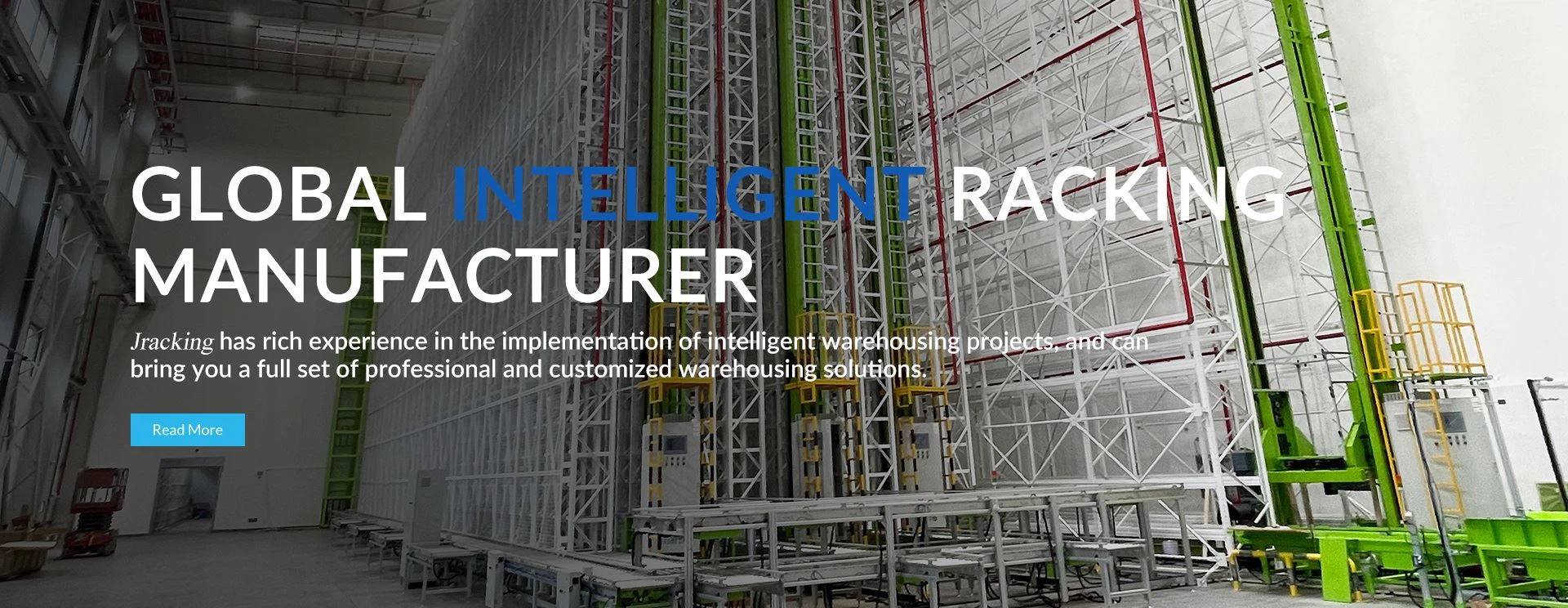
High-Density Shuttle Rack System Architecture: Technical Procurement & Engineering Guide
Maximize storage volumetric utilization by up to 85% while reducing forklift operational cycles and labor overhead with CanalRack Industrial Storage S.A. semi-automated radio shuttle racking technology.
Why Global Supply Chain Leaders Are Transitioning to Shuttle Rack Systems
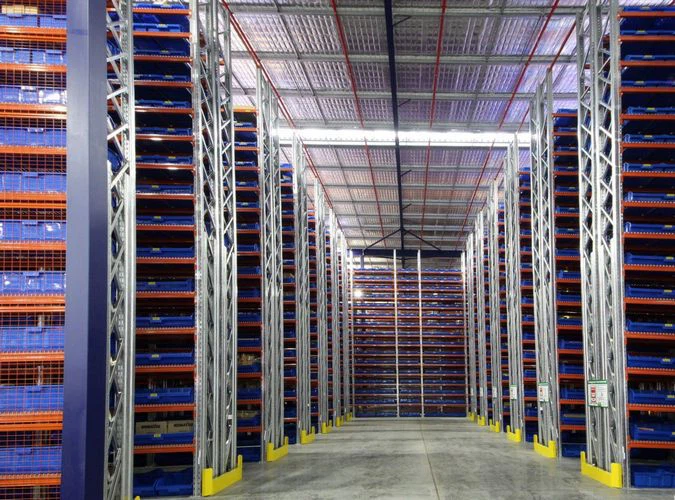
In modern industrial logistics, modern warehouse operations face a triple challenge: escalating land costs, severe labor shortages, and increasing demand for rapid order fulfillment. Global procurement teams and warehouse operations managers searching for high-density storage solutions often compare traditional drive-in racking, selective pallet racking, and automated storage systems. The Shuttle Rack System (also referred to as the Radio Shuttle Racking System or Pallet Runner System) has emerged as the definitive benchmark for high-density semi-automated warehouse storage.
At CanalRack Industrial Storage S.A., our structural engineers and automation specialists design high-density Shuttle Rack Systems to eliminate the mechanical vulnerabilities and operational bottlenecks of legacy storage methods. By replacing forklift travel inside rack channels with autonomous, remote-controlled, or WMS-guided electric shuttles, facility operators achieve unprecedented pallet density, superior throughput speed, and enhanced structural safety.
Kinematic & Volumetric Comparison: Storage Systems Benchmark
To assist procurement engineers and warehouse directors in evaluating capital expenditure (CAPEX) versus long-term operational expenditure (OPEX), the table below details the performance parameters of leading industrial racking configurations:
Performance Criterion
Shuttle Rack System
Drive-In Racking
Selective Pallet Rack
Push-Back Rack
Volumetric Utilization
80% - 85%
60% - 65%
35% - 40%
55% - 65%
Stock Management Flow
FIFO or LIFO (Dual Mode)
LIFO Only
100% Selective (FIFO)
LIFO Only
Forklift Damage Risk
Extremely Low (Outside Lane)
High (Navigates Inside Bays)
Low
Moderate
Throughput Efficiency
High (Simultaneous Operations)
Low to Moderate
Moderate
Moderate
Channel Storage Depth
40+ Pallets Deep
8 - 10 Pallets Max
2 Pallets Deep Max
4 - 6 Pallets Deep
Structural Deflection Tolerance
Rigid FEM 10.2.02 Standards
Standard Structural Steel
Standard RMI Profile
Inclined Rail Constraints
Product Catalog & Technical Configurations
CanalRack Industrial Storage S.A. Shuttle System Variants
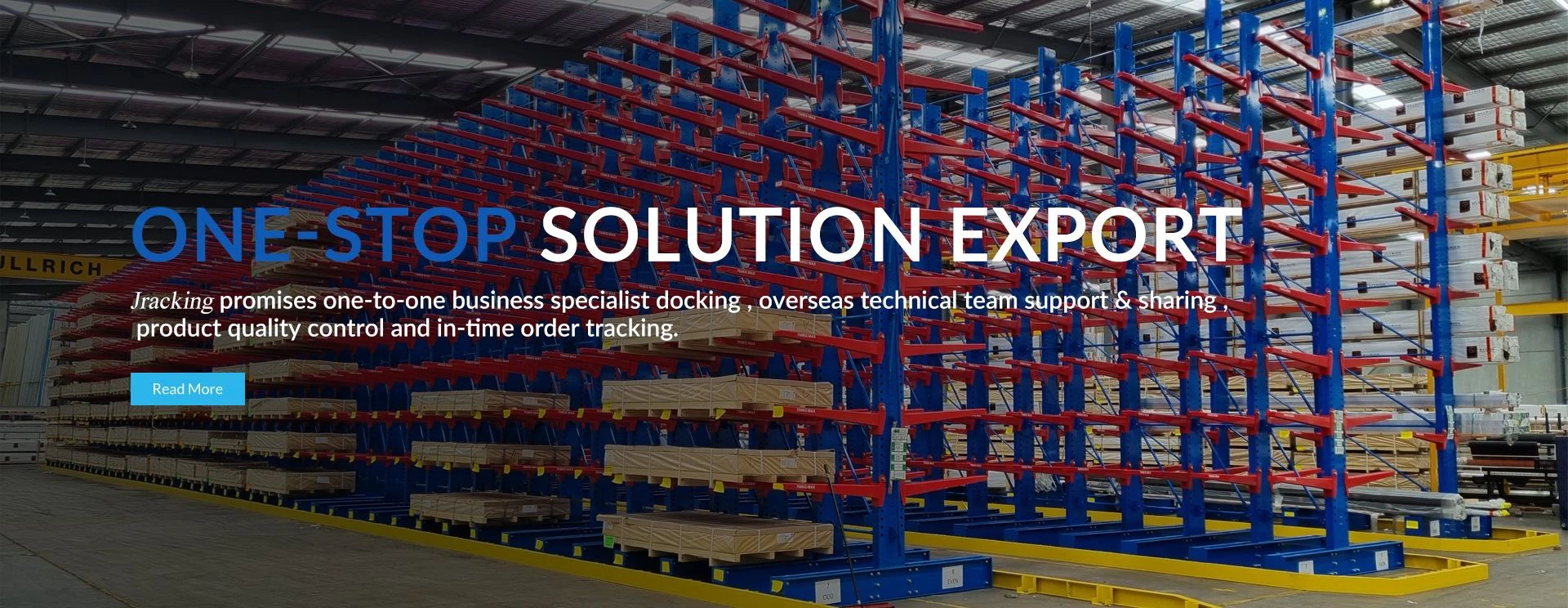
Custom-engineered radio shuttle racking hardware built to comply with ISO 9001, FEM 10.2.02, RMI, and AS 4084 international design codes.
Ambient Storage
Standard Industrial Radio Shuttle Rack System
Engineered for fast-moving consumer goods (FMCG), beverage distribution, and general industrial warehousing. Supports pallet loads up to 1,500 kg per position with travel speeds reaching 1.1 m/s (unloaded) and 0.8 m/s (loaded).
Specifically designed for cold room applications operating down to -30°C. Features low-temperature resistant electrical components, IP65-rated sensor housings, and specialized lithium iron phosphate (LiFePO4) thermal battery packs.
Constructed with cold-rolled high-tensile steel (Q355Bgrade) upright profiles and specialized structural guide rails to accommodate high-bay automated warehouse layouts up to 25 meters in vertical elevation.
Equipped with Wi-Fi / 5G industrial communication modules, photoelectric obstruction sensors, and seamless WMS API integration for automated inventory tracking and fleet dispatch control.
Future Procurement Trends in High-Density Shuttle Storage
As warehouse logistics shift toward full automation, global procurement officers must evaluate not only immediate equipment costs but also long-term adaptability. Over the next decade (2025–2035), several technological trends are reshaping how enterprises procure and deploy Shuttle Rack Systems:
1. Transition from 2-Way Semi-Automated Shuttles to 4-Way Automated Systems
While traditional 2-way radio shuttles move linearly within dedicated channels (requiring a forklift to transfer the shuttle between lanes), market demand is expanding into 4-Way Shuttle Systems. 4-way shuttles travel longitudinally and laterally across cross-aisles, directly integrating with vertical lifts to create fully automated storage and retrieval systems (ASRS) without requiring direct forklift intervention.
Legacy lead-acid battery packs are rapidly being phased out in favor of high-energy-density Lithium Iron Phosphate (LiFePO4) batteries and supercapacitor quick-charging stations. Modern shuttles manufactured by CanalRack Industrial Storage S.A. operate up to 10 hours on a single charge and offer fast-charging capabilities (80% charge achieved in 30 minutes), ensuring continuous multi-shift operations.
3. Integration with Predictive Analytics & Digital Twin Software
Enterprise buyers now prioritize racking systems capable of transmitting real-time telematics. Integrated laser sensors and optical encoders monitor shuttle health, wheel wear, battery degradation, and rack displacement. This telemetry feeds directly into WMS and Digital Twin platforms, allowing facilities to perform predictive maintenance before operational downtime occurs.
4. Cold Chain Sustainability & Energy Footprint Reduction
Energy consumption in sub-zero refrigerated warehouses is directly proportional to cubic volume. By utilizing a compact Shuttle Rack System, cold storage operators can store the same quantity of pallets in 40% less cubic building volume compared to selective pallet racking, significantly lowering refrigeration power requirements and operational carbon footprints.
2004Pioneering Storage Engineering
Enterprise Strength
SINCE 2004
Factory Direct Manufacturing & Global Engineering Excellence
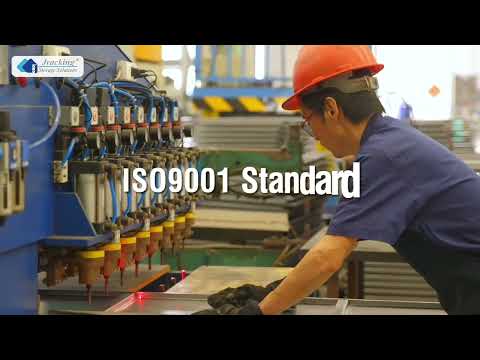
CanalRack Industrial Storage S.A. operates a modern 70,000 m² automated manufacturing facility backed by an expansive 150,000 m² industrial manufacturing base. With an annual steel processing capacity exceeding 100,000 metric tons, we deliver high-precision rack components engineered for structural integrity and operational longevity.
Our automated production infrastructure features high-frequency cold-roll forming mills, robotic laser welding cells, and electrostatic powder-coating lines. Every Shuttle Rack System is custom-designed by structural engineers using finite element analysis (FEA) software to guarantee compliance with regional seismic codes and international standards including ISO 9001, FEM 10.2.02, AS 4084, SEMA, and RMI.
In-house testing rig for dynamic shuttle rail deflection, structural load capacity, and anti-corrosion spray testing
Custom engineering for non-standard pallet sizes, heavy-duty industrial loads, and sub-zero cold room environments
Export-grade packaging that protects coated structural steel and precision guide rails during transoceanic shipping
Turnkey project support: from CAD drafting and structural engineering calculations to global installation supervision
Production Capacity Behind Global Storage Infrastructure
Our comprehensive production infrastructure and rigorous quality control protocols enable CanalRack Industrial Storage S.A. to handle large-scale international warehouse projects on schedule and with absolute engineering precision.
Comprehensive technical answers provided by our senior racking engineers to assist global buyers in system selection, floor slab preparation, and operational deployment.
Engineering Notice: High-density shuttle systems require specific floor flatness tolerances (compliant with EN 15620 or ACI 117 standards) and structural rail alignment to ensure seamless autonomous shuttle traversal. Contact our technical team for detailed civil engineering guidelines.
What are the precise technical requirements for floor slab flatness (FF/FL) in a Shuttle Rack installation?
Because radio shuttles travel at high speeds along dedicated guide rails, uneven floor slabs can induce racking frame tilt or uneven wheel contact. CanalRack Industrial Storage S.A. recommends floor specifications compliant with EN 15620 Class 300 or ASTM E1155 FF 35 / FL 25 flatness metrics. For high-bay installations exceeding 12 meters, dynamic floor stiffness and anchor pull-out ratings must be evaluated prior to installation.
How does a Shuttle Rack System handle sub-zero cold room environments (-25°C to -30°C)?
Operating in cold storage environments requires specialized engineering. CanalRack shuttles designed for sub-zero temperatures feature low-temperature synthetic lubricants, sealed IP65 electrical junction boxes, internal heating elements for sensitive optics, and high-capacity Lithium Iron Phosphate (LiFePO4) battery packs with integrated thermal management circuits to prevent rapid discharge and capacity loss.
Can a Shuttle Rack System operate under both FIFO (First-In, First-Out) and LIFO (Last-In, First-Out) modes?
Yes. Unlike Drive-In racking which is strictly restricted to LIFO stock movement, a Shuttle Rack System offers full dual-mode flexibility. For LIFO operations, loading and retrieval occur from the same side of the rack aisle. For FIFO operations, loading occurs on the rear face while picking occurs on the front face. Operating modes can be switched via handheld wireless remotes or automatically via WMS API commands.
What onboard safety features prevent shuttle derailment or pallet collisions?
CanalRack radio shuttles are engineered with a multi-layered sensor safety matrix. This includes photoelectric sensors for front/rear obstruction detection, side-scanning ultrasonic position sensors, mechanical anti-rail-lifting hooks, emergency optical stop sensors, and anti-collision bumpers. If an irregular pallet bottom or obstruction is detected, the shuttle automatically halts travel and alerts the operator.
What information does CanalRack Industrial Storage S.A. require to produce a custom technical proposal?
To prepare a structural calculation, CAD layout, and formal commercial quotation, please provide: 1) CAD drawings of the warehouse building specifying column grids and clear height; 2) Pallet dimensions (length, width, height including cargo overhang); 3) Pallet gross weight (minimum/maximum); 4) Operating temperature range; 5) Desired throughput rate (pallets per hour); and 6) Forklift specification (lift height and mast type).
Engineer Your High-Density Automated Storage System Today
Contact the engineering specialists at CanalRack Industrial Storage S.A. to receive detailed CAD layouts, load calculations, and comprehensive technical documentation.