CE Certified Industrial Racking & Shelving Systems
Precision-engineered cold-rolled steel storage units optimized for maximum load-bearing efficiency, warehouse safety compliance, and rapid supply chain deployment.
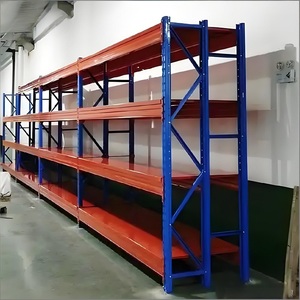
Professional Grade 3 Post Industrial Shelving for Heavy Duty Storage
Heavy-duty structural framework featuring a 3-post upright assembly to reinforce lateral stability and prevent longitudinal deflection under continuous multi-ton loads.
View Product Specifications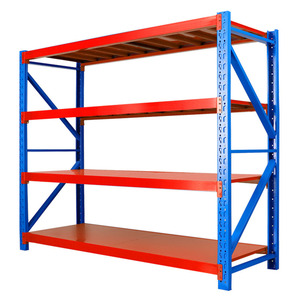
Medium/Heavy Duty Storage Equipment Warehouse Steel Cargo Racks
Industrial powder-coated cargo racks designed for supermarket bulk storage and warehouse tool logistics. Features adjustable beam pitch configurations.
View Product Specifications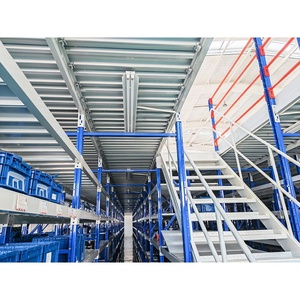
E-commerce and Chemical Plant Warehouse Storage Mezzanine Shelving
Multi-tier raised steel platform system certified for 500kg/m² uniform load distribution. Ideal for e-commerce picking and chemical plant inventory.
View Product Specifications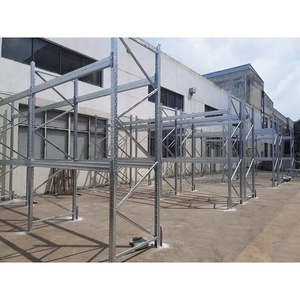
Corrosion-Resistant Hot Dip Galvanized Outdoor Pallet Rack
Heavy galvanization treatment engineered for extreme coastal humidity, chemical exposure, and semi-open yard storage without surface degradation.
View Product Specifications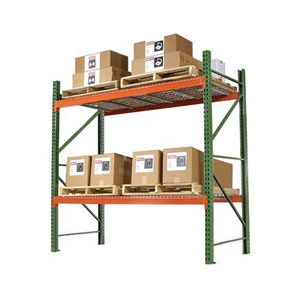
Steel Selective Pallet Rack Adjustable Heavy Duty Storage Shelving
Universal 100% direct-access selective pallet racking system utilizing high-tensile steel frames with customizable beam levels for dynamic distribution hubs.
View Product Specifications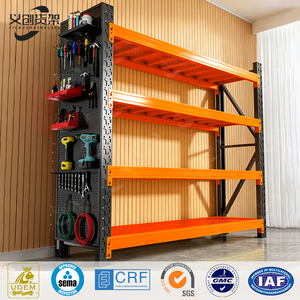
Custom Adjustable Medium-Duty 500kg/Layer Steel Modular Shelving
Flexible boltless modular racking system configured for hand-loaded inventory, heavy machinery parts, and industrial workshop organizing.
View Product Specifications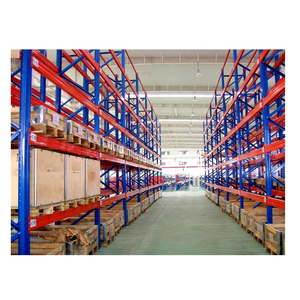
Heavy Duty Steel Pallet Racking System Warehouse Storage Racks
Reinforced structural racking with drop-in beam locks and dynamic safety pins designed to withstand high forklift impact energy in busy FMCG centers.
View Product Specifications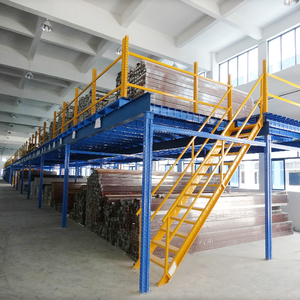
Q235B Steel Mezzanine Racking System Modular Raised Heavy Duty Platform
Space-multiplying structural steel platform engineered with certified Q235B cold-rolled profiles to double vertical floor utilization instantly.
View Product SpecificationsEngineering Excellence & Export Supremacy
Backing international supply chains with state-of-the-art cold roll-forming lines, automated laser cutting, and certified structural steel testing.
150,000 m² Production Base
Operating three modernized smart facilities equipped with continuous automated roll-forming lines, robotic welding stations, and zero-emission powder coating lines.
CE EN 1090 & FEM Compliant
Strict adherence to European EN 1090-1 execution classes, FEM 10.2.02 racking standards, RMI safety parameters, and ISO 9001:2015 quality control frameworks.
5,000+ Containers Annual Export
Decades of specialized container packing experience ensuring high structural steel protection against maritime salt spray corrosion during transoceanic shipping.
Technical White Paper: The Comprehensive Guide to CE Certified Warehouse Storage Racks & Industrial Shelving Architecture
In modern industrial logistics, supply chain efficiency relies heavily on the structural integrity, safety compliance, and volumetric efficiency of warehouse racking installations. As international commerce accelerates across logistics hubs, free trade zones, and distribution facilities, selecting verified CE Certified Warehouse Storage Shelving Exporters & Wholesalers has become a mission-critical objective for procurement directors, logistics engineers, and warehouse operations managers.
This technical white paper examines structural steel racking engineering, surface finish science, regulatory compliance standards, and market procurement forecasts to provide enterprise buyers with actionable engineering insights.
CE marking according to EN 1090-1 is legally mandatory for structural steel racking components imported into the European Economic Area (EEA) and widely specified across global jurisdictions. It confirms compliance with strict load-bearing capacity, factory production control (FPC), and weld integrity standards.
1. Structural Metallurgy & Mechanical Properties of Industrial Racks
Industrial storage shelving and pallet racking systems rely on premium structural steel profiles to achieve high strength-to-weight ratios. The primary raw material used in heavy-duty rack manufacturing is high-tensile cold-rolled steel, predominantly Q235B and Q355B structural steel grades (equivalent to European S235JR and S355JR under EN 10025 standards).
| Steel Grade | Yield Strength (Fy - MPa) | Tensile Strength (Fu - MPa) | Elongation (%) | Recommended Application |
|---|---|---|---|---|
| Q235B (S235JR) | ≥ 235 MPa | 360 - 510 MPa | ≥ 26% | Standard Selective Pallet Racking, Medium-Duty Shelving, Wire Decks |
| Q355B (S355JR) | ≥ 355 MPa | 470 - 630 MPa | ≥ 22% | High-Bay ASRS, Multi-Tier Mezzanines, Heavy Cantilever Columns |
| Pre-Galvanized Coil | ≥ 250 MPa | ≥ 330 MPa | ≥ 20% | Cold Storage Facilities, Humid Ambient Warehouses, Step Beams |
Cold-rolled structural steel undergoes continuous roll-forming processes to form complex cross-sectional geometries (such as 80mm to 120mm open-profile uprights with multiple stiffening ribs). These engineered profiles resist torsional buckling, localized buckling, and lateral movement during loading cycles.
2. Engineering Standards: FEM 10.2.02, RMI, & CE EN 1090 Requirements
Structural reliability in modern warehouse design depends on established international design codes. Certified exporters must engineer racking frameworks to satisfy rigorous structural calculations under dynamic and static loads:
- FEM 10.2.02 (European Federation of Materials Handling): Dictates the structural design of adjustable pallet racking, establishing allowable beam deflection limits (typically restricted to L/200 under maximum working loads) and safety coefficients for frame sway stability.
- RMI (Rack Manufacturers Institute - Spec MH16.1): The primary North American structural standard governing the design, testing, and application of industrial steel storage racks, specifying column baseplate anchoring and seismic zone response parameters.
- CE EN 1090-1 / EN 1090-2 (Execution of Steel Structures): Regulates factory production control, certified welder qualifications, non-destructive testing (NDT) of load connectors, and structural safety certification necessary for global market distribution.
- AS 4084-2012 (Australian Standard for Steel Storage Racking): Sets rigid testing procedures for beam-to-upright connector stiffness, upright compression tests, and floor plate shear resistance.
3. Advanced Surface Protection Science: Powder Coating vs. Hot-Dip Galvanizing
Environmental factors inside distribution centers—ranging from chemical fumes and coastal atmospheric salinity to high humidity and sub-zero cold room condensation—require specialized surface treatments to prevent oxidation and structural fatigue.
Thermo-setting Electrostatic Polyester Powder Coating: Pre-treated through a multi-stage chemical washing and phosphatizing process, the steel components are electrostatically coated with thermosetting epoxy-polyester resin (60–80 microns thickness) and cured in high-temperature ovens at 180°C–200°C. This delivers superior scratch resistance, impact durability, and vibrant color-coded safety identification (e.g., RAL 5015 Blue uprights, RAL 2004 Orange beams).
Hot-Dip Galvanizing (HDG according to ISO 1461): For outdoor yards, semi-enclosed sheds, or high-humidity coastal warehouses (such as port logistics facilities in Panama, Southeast Asia, or the Middle East), components undergo full immersion in molten zinc at approximately 450°C. This forms a metallurgically bonded zinc-iron alloy layer (65–85 microns thick) providing cathodic protection for over 25 years of maintenance-free service life.
4. Structural Load Calculations & Safety Deflection Thresholds
To ensure operational safety, certified racking engineers compute structural equilibrium based on dead load (rack self-weight), live load (palletized inventory weight), impact load (forklift engagement forces), and environmental load (seismic acceleration forces). Deflection tolerances are strictly defined to prevent permanent deformation of horizontal load beams:
Maximum Beam Deflection (δ) = L / 200 (where L = Beam Clear Span Length)
For example, a standard 2700mm pallet beam designed to support 3,000 kg across two pallet positions must exhibit a maximum vertical deflection of less than 13.5mm under full load, returning to zero deflection upon complete unloading.
Future Procurement Trends in Global Warehouse Storage
Key market shifts transforming how enterprise buyers evaluate, source, and deploy high-density storage systems over the next decade.
Automation & AMR Integration
Shift toward automation-ready racking structures designed with precise millimetric tolerances to accommodate Autonomous Mobile Robots (AMR), Automated Guided Vehicles (AGV), and Radio Shuttle runners.
Modular & Reconfigurable Frameworks
Growing preference for flexible boltless teardrop and keyhole structural connections that enable rapid height adjustability, rack expansion, or conversion into multi-tier mezzanines without structural welding.
Eco-Friendly Low-Carbon Steel
Enterprise buyers are prioritizing green steel manufacturers utilizing scrap-recycled electric arc furnace (EAF) steel and zero-emission powder coatings to meet ESG carbon neutrality mandates.
Industry Development Trends: The Evolution of High-Density Storage Solutions
The global industrial warehouse shelving market is experiencing rapid technological evolution. Driven by rising urban land costs, real estate scarcity, and the rapid expansion of global e-commerce, warehousing infrastructure is shifting vertically. Modern logistics centers are moving away from traditional static selective pallet racks toward intelligent, automated, high-density storage systems.
Key Industry Transformations:
- ASRS (Automated Storage and Retrieval Systems) Growth: Integration of high-bay rack-supported buildings reaching structural heights of up to 40 meters, where the racking framework itself serves as the building's structural load-bearing support.
- Dynamic Flow & Shuttle Technology: High-density radio shuttle racks and gravity flow systems maximize storage volume by eliminating forklift aisles, boosting pallet position utilization up to 85% compared to 40% in standard selective configurations.
- Seismic Engineering & Resilience: Enhanced structural calculations incorporating dynamic seismic simulation software (finite element analysis - FEA) to ensure structural survivability in high-risk earthquake regions.
- Digital Twin Monitoring & RFID Tracking: Integration of sensor-embedded beam profiles capable of real-time strain monitoring, overload alerts, and automated rack inspection audit reporting.
Frequently Asked Questions by B2B Importers
Expert technical answers addressing certification, custom engineering, delivery logistics, and safety compliance for high-volume purchasing.
Why is CE Certification mandatory for importing warehouse racking systems?
CE Certification (specifically EN 1090-1 / EN 1090-2) certifies that structural steel racking units comply with rigorous European Union health, safety, and environmental protection standards. It mandates that raw steel materials, welded structural joints, and load-bearing calculations undergo accredited factory production control (FPC) audits, protecting importers from structural failures and legal compliance penalties.
What technical parameters are needed to request an accurate engineering rack layout and quote?
To prepare an engineered CAD layout and precise bill of materials (BOM), buyers should provide: (1) Warehouse structural layout drawings showing clear height, column spacing, and floor slab load capacity; (2) Pallet dimensions (W x D x H) including load overhang; (3) Maximum weight per pallet; (4) Forklift truck operational specifications (minimum aisle width and maximum lift height); and (5) Ambient temperature requirements (e.g., standard vs. cold storage).
Which surface finish is recommended for humid, coastal, or outdoor environments?
For standard indoor climate-controlled warehouses, electrostatic polyester powder coating (60–80 microns) provides excellent wear and chemical resistance. However, for outdoor yards, semi-open facilities, or coastal logistics locations exposed to salt vapor, Hot-Dip Galvanizing (HDG according to ISO 1461) is required to deliver long-term zinc-alloy cathodic corrosion protection.
How do you protect structural steel coatings against damage during ocean container transport?
Export components are packed using heavy-duty steel strapping, corrugated corner protection, wooden dunnage blocks, and moisture-proof plastic film wrapping. Upright frames and beams are bundled with non-abrasive protective interlayers to prevent metal-to-metal rubbing during sea freight ocean transit.
What design standards are followed for seismic zone racking installations?
For facilities located in seismic regions, racking design calculations are engineered according to FEM 10.2.08, RMI MH16.1, or local building codes (such as REP in Panama or Eurocode 8). Upright baseplates are enlarged, frame bracings are reinforced, and dynamic heavy-duty concrete anchor bolts are specified to absorb lateral seismic acceleration.
Do you provide installation engineering support for large overseas projects?
Yes. Every factory shipment includes detailed 3D assembly installation drawings, structural component lists, and safety load warning plaques. For large distribution projects, certified installation supervisors or remote video technical support teams can be assigned to guide local installation crews.