Executive Summary: The Strategic Value of Warehouse Mezzanines in Modern Logistics
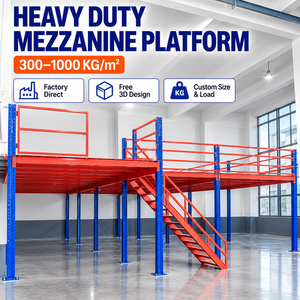
As global supply chains face escalating real estate acquisition costs, supply chain operators, 3PL providers, and industrial facilities are increasingly compelled to maximize volumetric efficiency rather than expanding horizontal footprints. High-bay warehouse structural steel platform systems—commonly termed Warehouse Racking Mezzanines—represent the most cost-effective solution to multiply usable floor space by 200% to 300% without incurring traditional building construction overheads.
Selecting an authoritative global manufacturing partner among the Top 10 Warehouse Racking Mezzanine Exporters & Wholesalers requires a rigorous technical evaluation spanning steel yield strength (Q235B vs. Q355B), finite element structural modeling (FEA), surface treatment anti-corrosion metrics (hot-dip galvanizing vs. electrostatic epoxy powder coating), and regional compliance standards such as European FEM 10.2.02, American RMI (ANSI MH16.1), and Australian AS 4084-2023.
Structural Classification: Rack-Supported Mezzanines vs. Free-Standing Structural Platforms
Procurement directors and warehouse safety engineers must distinguish between the two primary architectural topologies of vertical spatial extension:
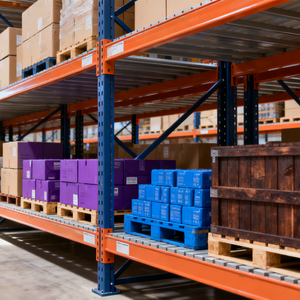
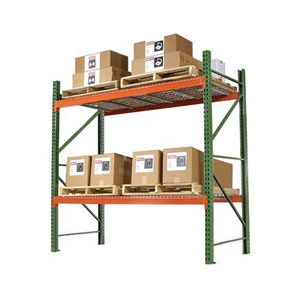
1. Rack-Supported Mezzanine Systems
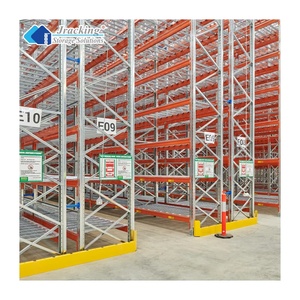
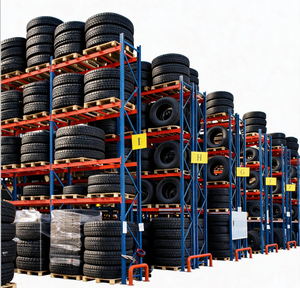
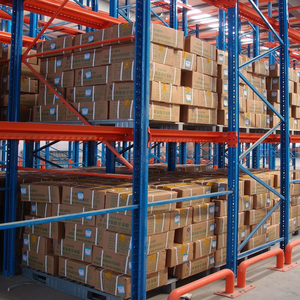
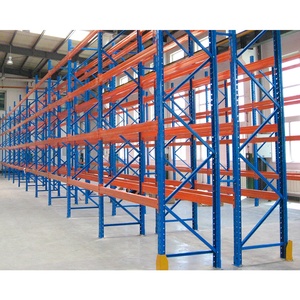
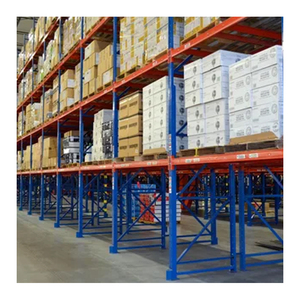
Utilizes heavy-duty selective pallet racking uprights and beams as the core vertical load-bearing structure. The upper levels accommodate picking aisles, secondary shelving, or light assembly zones.
- Optimal Load Profile: Uniformly Distributed Loads (UDL) up to 300 – 800 kg/m².
- Key Advantage: Extremely cost-efficient; integrates high-density pallet storage below with manual order picking above.
- Typical Applications: E-commerce fulfillment hubs, auto parts distribution, garment picking centers.
2. Structural Steel Heavy-Duty Platforms
Built using heavy hot-rolled steel H-beams, structural square hollow sections (SHS), and cold-formed C/Z purlins. Provides large clear spans beneath the platform without structural column interference.
- Optimal Load Profile: Heavy UDL loads ranging from 500 up to 2,000 kg/m² or high dynamic point loads.
- Key Advantage: Expansive ground floor accessibility suitable for AGVs, heavy machinery, or office modules.
- Typical Applications: Manufacturing shop floors, heavy machinery staging, automated sorting lines.
Technical Comparison: Decking Materials & Floor Slab Engineering
The operational longevity and safety of an industrial mezzanine heavily depend on selecting the appropriate floor deck profile matched to forklift axle loads, fire safety regulations, and ventilation needs.
| Decking Material Type | Load Capacity (UDL) | Fire Protection & Ventilation | Corrosion Resistance | Best Industry Application |
|---|---|---|---|---|
| Bar Grating (Welded Steel) | High (Up to 1,500 kg/m²) | Maximum (Open air & sprinkler penetration) | Hot-Dip Galvanized (HDG) / Painted | Chemical storage, hazardous zones, wet environments |
| Solid Steel Diamond Plate | Very High (500 – 2,000 kg/m²) | Solid barrier (Prevents debris drop) | Powder Coated / Galvanized | Heavy industrial manufacturing, tool staging |
| Perforated Steel Planks | Medium-High (300 – 1,000 kg/m²) | 30-50% Sprinkler flow compliance | Pre-Galvanized / Powder Coated | E-commerce multi-tier picking towers |
| B-Decking + High-Density Plywood | Medium (300 – 600 kg/m²) | Requires localized sprinkler systems underneath | Indoor Dry Rated | Mezzanine office spaces, archive storage |
Global Vendor Selection: Evaluation Standards for Top 10 Exporters & Wholesalers
When sourcing racking mezzanines internationally from top-tier exporters, procurement teams must look beyond basic FOB unit pricing. True Total Cost of Ownership (TCO) incorporates metallurgical integrity, seismic design compliance, ocean shipping container density optimization, and post-installation structural safety certification.
1. Metallurgical Rigor and Quality Management System (QMS)
Top-tier manufacturers utilize certified high-tensile structural steel profiles (Q235B and Q355B equivalent to ASTM A36 and S355JR). Raw materials must be backed by Mill Test Certificates (MTC) verifying yield strength, tensile limits, and elongation percentages. Production lines must operate under strict ISO 9001:2015 quality management protocols, featuring robotic continuous welding systems certified to EN ISO 3834 standards.
2. Surface Treatment and Coastal Climate Anti-Corrosion Engineering
For storage facilities located in tropical, humid, or coastal maritime environments—such as Panama City, Colón Free Zone, or Southeast Asian port logistics hubs—standard paint finishes suffer rapid oxidation. Leading exporters provide advanced anti-corrosion surface treatments:
- Electrostatic Epoxy Powder Coating: Automated 9-stage pre-treatment wash (degreasing, phosphating, passivation) followed by thermosetting powder coating cured at 200°C. Delivers coating thickness between 60µm to 90µm for scratch-resistant indoor use.
- Hot-Dip Galvanizing (HDG): Steel structural components are fully submerged in molten zinc at 450°C, forming a metallurgical zinc-iron alloy bond (minimum 65µm – 85µm zinc thickness per ISO 1461). Essential for cold rooms, semi-outdoor sheds, or coastal salt-spray environments.
3. Structural Calculations & Seismic Compliance
Top exporters maintain in-house engineering departments capable of generating finite element analysis (FEA) reports tailored to local building codes. Whether accounting for seismic zones under the Reglamento Estructural Panameño (REP), International Building Code (IBC), or European Eurocode 3, upright column baseplates and anchor bolt embedment depths must be verified against lateral shear and moment overturning forces.
Future Industry Trends: The Evolution of Warehouse Mezzanine Racking (2025–2030)
The industrial storage sector is undergoing a rapid technological transformation driven by warehouse automation, robotic fleet integration, and corporate ESG (Environmental, Social, and Governance) mandates.
Integration with Autonomous Mobile Robots (AMRs)
Modern mezzanine platforms are increasingly engineered to support fleet operations of sorting AMRs and Goods-to-Person (G2P) robots. This shift requires ultra-flat steel floor decking with high dynamic point load resistance and anti-slip friction coefficients.
IoT Structural Health Monitoring & Smart Racking Sensors
Next-generation racking mezzanines incorporate embedded strain gauges and impact sensors on critical upright protectors. Real-time telemetry alerts facility managers to structural overloads or forklift collision impacts before structural failure occurs.
Why Enterprise Buyers Partner with Our Manufacturing Ecosystem
With over two decades of engineering excellence, CanalRack Industrial Storage S.A. operates as a strategic manufacturing partner for distributors, 3PL integrators, and industrial facility developers across the Americas and global markets.
- 70,000 m² Advanced Production Facility: Equipped with automated cold-roll forming lines, high-precision fiber laser cutting, and multi-axis robotic welding cells.
- 100,000 Ton Annual Steel Processing Capacity: Direct raw material mill sourcing guarantees price stability, metallurgical consistency, and scalable order execution.
- Complete Export Container Packing Optimization: Customized timber-free steel bundling and heavy-duty shrink wrapping prevent transit damage during ocean freight to Balboa, Manzanillo, or global container terminals.
- Bilingual Engineering Support (English / Spanish): Complete project lifecycle management including 3D CAD layout design, structural load calculations, component labeling, and step-by-step installation guidance.